The Bangladesh Floods: A Human Look at the Aftermath in Sunamganj

Recent environmental disasters have left a permanent mark on the Sylhet division. In Sunamganj, families face an uphill battle as they attempt to rebuild homes destroyed by rising waters. This crisis reveals deep socioeconomic vulnerabilities that demand urgent attention.

Local communities show incredible resilience in these harsh conditions. Yet, individual strength alone cannot replace the need for systemic change. By looking at Sunamganj, we see how environmental shifts change lives. We also see why we need proactive solutions for future stability.

The Unfolding Crisis in Sunamganj

To understand the Sunamganj crisis, we must look at the area’s geography. It’s a natural basin that collects water from the hills around it.

The Geography of Vulnerability

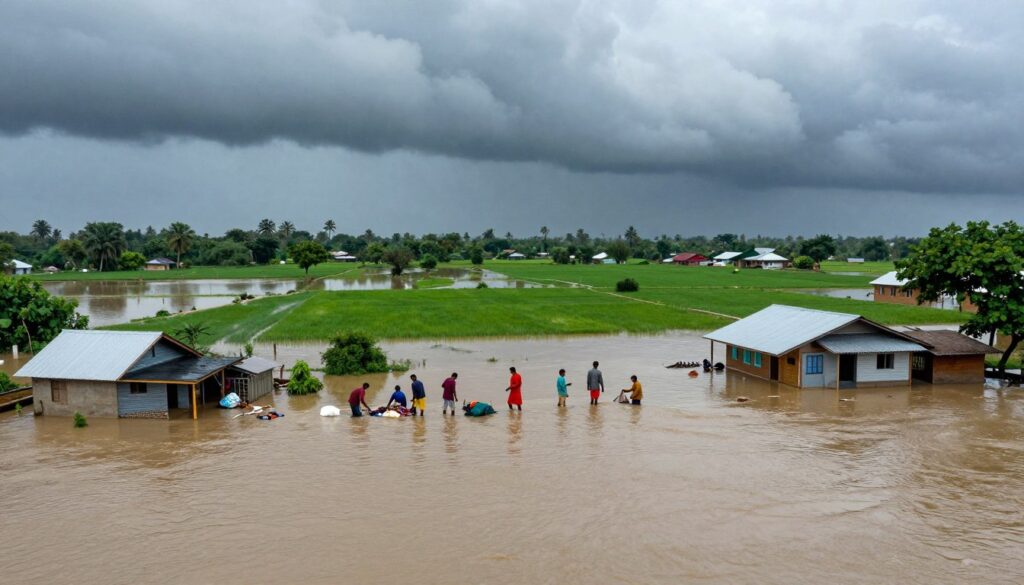
The land is very low-lying, making it very prone to Sylhet division floods. During the monsoon, rivers can’t drain water fast enough. This leads to overflow.

Even a little rain can cause big floods here. People in these areas always worry about rising waters. These waters can cut off communities in just hours.

Initial Impact and Emergency Response

The latest surge of water was too fast for local defenses. The Sylhet division floods surprised many, turning roads into rivers and cutting off communication.

A quick emergency response was needed to save lives and property. Local teams and volunteers worked hard to reach trapped villagers. But the disaster’s size made it hard for them.

Quick emergency response is key to lessening damage. Mobilizing resources fast is the best way to save lives in this risky area.

The Bangladesh Floods: A Human Look at the Aftermath

Every news report on the disaster tells a personal story of loss and survival. While numbers show the destruction, they miss the emotional weight of those affected. The Bangladesh Floods have changed thousands of lives, turning homes into memories.

Stories of Displacement and Loss

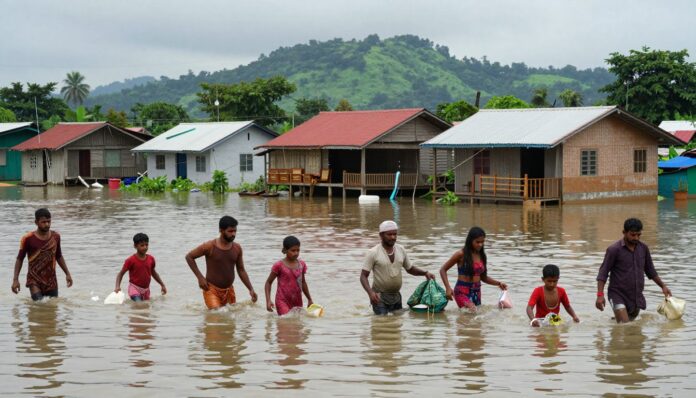
In Sunamganj, rising water forced people to leave everything behind. These displacement stories are about more than lost things. They’re about broken community ties and lost roots. Families had to leave with just the essentials, leaving crops, livestock, and precious items behind.

Moving from a self-sufficient life to temporary shelters has been hard. Many wonder if they can ever go back to their land. This loss of stability brings deep grief that lasts long after the water recedes.

The Psychological Toll on Local Families

The crisis has hit mental health hard, just as much as physical damage. Children and the elderly are most affected by the lingering trauma of losing their safe places. Young students face anxiety from disrupted routines.

Mental health support is key to recovery. Physical help is important, but healing emotional wounds is just as critical. By listening to displacement stories, aid groups can help more fully.

Infrastructure Collapse and Public Health Risks

Sunamganj faces a big problem: its buildings are destroyed and health risks are growing. The damage has made it hard to get basic services. We need to fix the infrastructure recovery fast to handle more storms.

Damage to Schools and Community Centers

Schools and community centers are gone, leaving a big hole in Sunamganj. These places were the heart of the community. They offered education and safety during hard times.

Now, families are without support. Rebuilding these structures is key to fixing the community. Losing these places makes recovery hard for families.

Waterborne Diseases and Medical Shortages

Sanitation failed, and water got dirty. This led to more waterborne diseases. Families are facing dangers from dirty water while trying to recover.

Medical supplies are low, making clinics struggle. They don’t have the necessary supplies to fight illnesses. We need to act fast to get clean water and medical help to those who need it.

Agricultural Devastation and Economic Ruin

Sunamganj’s economy is heavily based on its fertile fields. But, the recent flood has caused agricultural devastation. The floodwaters destroyed a lot of land, hitting the region’s finances hard.

This disaster has hurt many families who rely on the land for their living. It has made their daily survival very tough.

Loss of Boro Rice Crops

The Boro rice crop is key for this area, and its loss is a big crisis in food security. Farmers saw their crops go under water, turning their hard work into nothing. The loss of this harvest is not just a money problem; it’s a threat to everyone’s nutrition.

The Struggle for Small-Scale Farmers

Small-scale farmers now face a big economic problem. Without a harvest, they can’t make money for the next season. Building a more resilient system is key to avoid such big losses in the future.

Using state-of-the-art steel silos could help farmers keep their crops safe. The area also needs better transport systems. This includes roads, rails, and waterways to get resources to those who need them. Only then can Sunamganj’s food security be ensured.

The Role of Local and International Aid

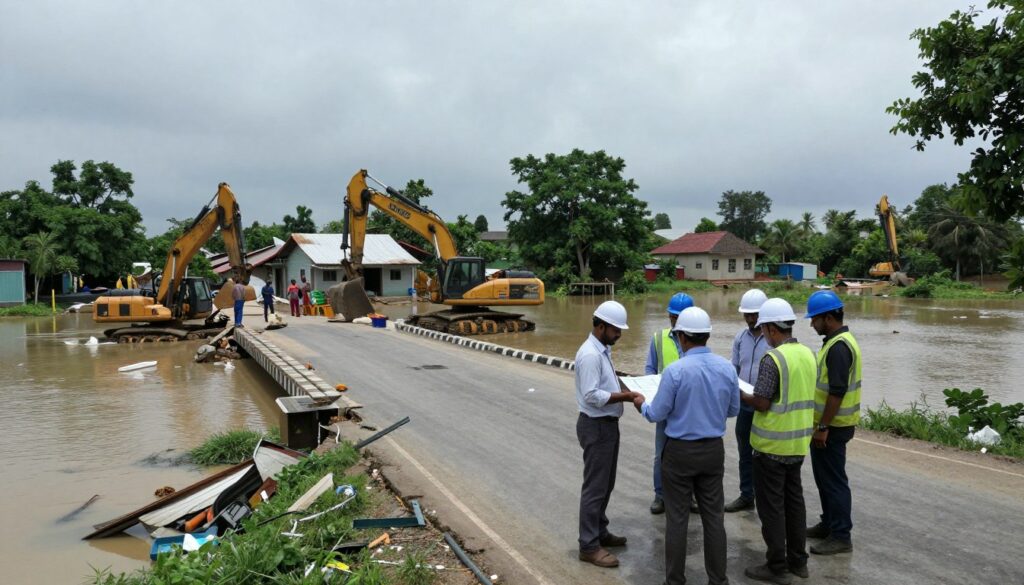
When the floodwaters rose in Sunamganj, the emergency response was urgent. Both officials and residents worked fast. The disaster’s scale needed a huge effort to help those in remote villages.

Institutional support was key for big logistics. But, the terrain’s complexity slowed down aid delivery.

Government Relief Efforts

The government aimed to give dry food, clean water, and shelter to displaced families. These actions were vital to lessen the agricultural devastation impact. But, reaching all areas was hard due to damaged roads and submerged infrastructure.

Government teams also tackled public health risks by sending mobile medical teams. They aimed to fight waterborne diseases in the worst-hit areas. Yet, the need for medicine and clean supplies often outgrew what was available.

Grassroots Organizations and Community Solidarity

Local networks filled the gap when big help was slow. Community solidarity was key in the recovery. Neighbors shared food and homes with those who lost everything.

These local efforts show community solidarity is vital in crises. Volunteers used local knowledge to reach areas big vehicles couldn’t. Their dedication was a lifeline, showing the strength of grassroots efforts.

Challenges in Rebuilding Sunamganj

The journey to rebuild Sunamganj faces big challenges. As the water goes down, the Sunamganj crisis moves from emergency to long-term fixing. This change needs a smart plan to make the area stronger than before.

Infrastructure recovery

Housing Reconstruction Hurdles

Many families are trying to fix homes damaged by floods. But, the cost of building materials is too high for poor families. They need help and affordable materials.

Experts say we should build homes that can stand up to floods. Using materials that resist water and building homes higher can help. This way, homes can protect against future floods.

Restoring Essential Utilities

The damage to power and water lines is a big worry. Thousands are without basic services. Fixing these is hard and needs money and teamwork.

We need to change policies to rebuild better. We should make systems that can handle bad weather. This will help avoid the worst of the Sunamganj crisis in the future.

Education and the Future of the Next Generation

The region is facing a silent crisis about the future of its children. Schools have been closed for a long time. This has caused a big educational disruption in Sunamganj.

The Long-Term Impact on Student Attendance

Many families are now under a lot of economic pressure. This makes kids choose work over school. There’s a fear that many students might never return to the classroom when the waters go down.

This change in priorities leads to a cycle of poverty. Without regular school, these young learners’ education is at risk of failing.

Temporary Learning Spaces and Their Limitations

Local authorities have set up temporary learning spaces to help. These efforts show community solidarity. But, they often lack the resources and stability needed for good learning.

These temporary places are often too crowded and lack basic teaching tools. True educational continuity needs a stronger plan that meets students’ needs during and after emergencies.

To build a resilient future, we must look beyond quick fixes. By working together, we can create safer, more lasting solutions. This way, no child will be left behind because of environmental issues.

Climate Change and the Future of Monsoon Resilience

The Sylhet division is facing a big challenge with the changing weather. The old ways of dealing with the monsoon no longer work. Now, we see more disasters than ever before. It’s key to understand how climate change affects us to protect our people.

Shifting Weather Patterns in the Sylhet Division

The monsoon season is changing, and it’s not following the old patterns. The unpredictability of rain in the Sylhet division floods the area suddenly. This is making it hard for our drainage systems to keep up.

Climate change impact on Sylhet division floods

Studies show that warmer air can hold more moisture. This makes the Sylhet division floods worse. Now, areas once safe are at risk. We must be resilient to survive in this new world.

Adapting Infrastructure for Future Flooding

Building infrastructure that can handle future floods is key. Engineers are using sustainable rebuilding methods. They’re building structures that can stand water for a long time.

To be monsoon resilient, we need both new tech and old wisdom. Local leaders are looking into new ways to manage water. This will help protect our homes and communities from climate change.

Our future depends on sustainable rebuilding. By working on monsoon resilience, we can face the challenges of a warmer world. This way, our communities will stay strong, even when the weather gets tough.

The Path Toward Long-Term Recovery

Sunamganj is at a turning point after the recent disasters. It needs a plan that combines new technology with local wisdom. This approach will help the area face the harsh weather better.

Keeping farming sustainable is key for local farmers. Using steel silos and better storage will help keep food safe in Sylhet Division. This way, families can always have what they need, even when the rains come.

Fixing schools is also vital for the next generation. Schools should be safe places during floods and also help students learn. This will help the young people of Bangladesh deal with climate change.

Support from around the world and ongoing funding are essential. By pushing for climate adaptation policies, we can help Sunamganj. Your support can make a big difference in creating a safer future for all families there.

spot_img

Related Articles

spot_img
PGA Championship 2026
Sports

PGA Championship 2026: Top Favorites for the Newtown Square Showdown ...

South Africa President Impeachment
Hungary’s "Tisza" Party

Hungary’s “Tisza” Party: Can the New Supermajority Restore Democracy?

Empowering LDC Youth

Empowering LDC Youth: The Strategic Investment Shaping Developing Nations

Gaza’s Health Crisis
Sustainable Computing
Boko Haram vs Chad

Boko Haram in Chad: The Loss of Two Generals and the...