Ukrainian President Volodymyr Zelenskyy has said that some of Ukraine’s international partners have raised concerns about Kyiv’s growing strikes on Russia’s oil infrastructure, as global energy prices rise amid broader geopolitical tensions linked to conflict in the Middle East.
Zelenskyy did not specify which countries made such appeals, and no official governments have publicly confirmed requesting a halt to Ukraine’s long-range attacks on Russian energy facilities.
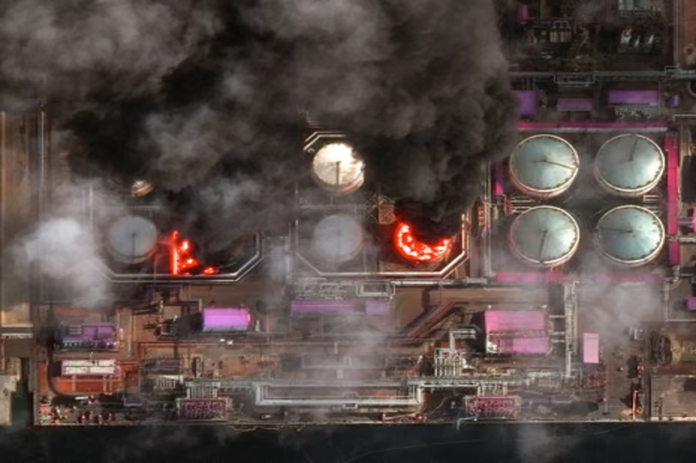
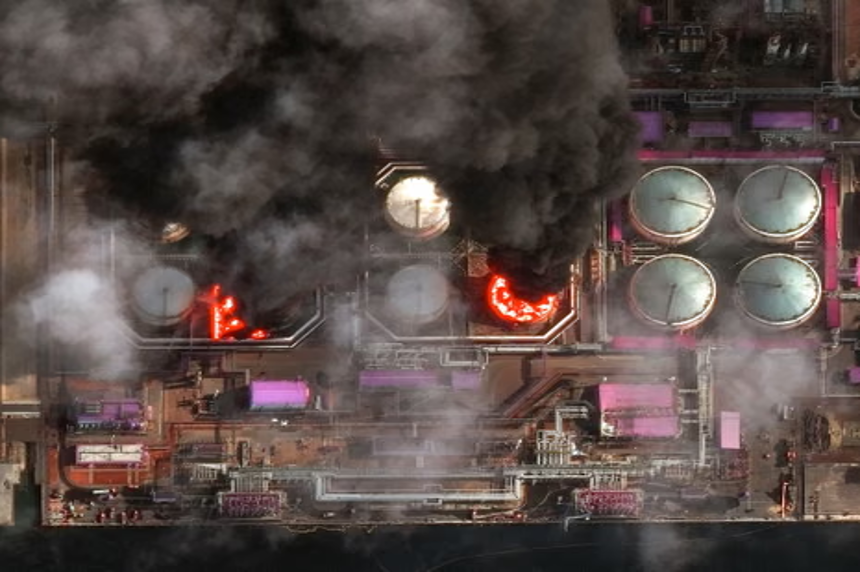
His comments come as Ukraine continues to intensify drone strikes on Russian oil terminals, refineries, and export infrastructure, which Kyiv says are central to Moscow’s ability to finance its war.
Center of the War
Ukraine has increasingly targeted Russia’s oil export system in recent months, focusing on ports and terminals on the Baltic Sea and Black Sea that are critical to global crude shipments.
These facilities are key nodes in Russia’s energy trade, handling exports to international markets despite ongoing Western sanctions.
Kyiv has argued that Russia’s oil revenue remains a primary source of funding for its military operations, making energy infrastructure a legitimate strategic target.
Some reports and analysts have suggested that Ukrainian strikes have temporarily disrupted Russian export capacity, but there is no independently verified figure.
While disruptions to specific terminals and shipping schedules have been reported, the overall scale of long-term export losses remains uncertain and contested.
Russia has continued to reroute shipments and maintain exports through alternative infrastructure, though at increased logistical and security costs.
Strikes Expand as Drone Capability Grows
Ukraine’s ability to conduct long-range strikes has expanded significantly due to its domestic production of drones and missiles.
Kyiv has invested heavily in developing unmanned systems capable of reaching deep into Russian territory, enabling repeated attacks on infrastructure hundreds of miles from the front lines.
Ukrainian officials say domestically produced systems allow greater operational flexibility compared to Western-supplied weapons, which often come with usage restrictions.
Economic Pressure on Moscow
Zelenskyy has repeatedly argued that Ukraine’s long-range strike capability is essential both for current defense needs and as a deterrent against future Russian aggression.
The strategy behind targeting oil infrastructure is to increase economic pressure on Moscow by disrupting its most important export sector.
Ukrainian officials describe the approach as part of a broader effort to weaken Russia’s war economy and limit its ability to sustain prolonged military operations.
Russian Reaction and Security Concerns
Russian officials have acknowledged the growing reach of Ukrainian drones and have expressed concern about the vulnerability of infrastructure deep inside the country.
Former Russian defence minister and current Security Council deputy head Sergei Shoigu has warned that Ukraine’s drone capabilities have expanded significantly, increasing the number of regions potentially exposed to attack.
Russian military commentators have also questioned how Ukrainian drones have been able to penetrate multiple layers of air defense to strike targets far from the border.
Analysts say Russia has redeployed a significant portion of its air defense systems toward the front line in Ukraine and to protect major cities, which may have reduced coverage in some rear regions.
Military analysts remain divided on the long-term effectiveness of Ukraine’s oil infrastructure campaign.
While some disruptions to refining and export logistics have been documented, Russia has shown an ability to repair damaged facilities and maintain exports through alternative routes.
At the same time, repeated strikes have increased costs for Russia’s energy sector, including repairs, insurance, and defensive deployments.
Ukraine’s campaign reflects a wider shift in the war toward targeting economic infrastructure alongside military objectives.
Unable to match Russia in manpower and conventional firepower, Kyiv has increasingly relied on asymmetric tools such as drones, cyber operations, and long-range strikes to impose sustained pressure.
 The goal, according to Ukrainian officials, is to make the economic cost of the war increasingly difficult for Moscow to absorb over time.
Despite growing international attention to the impact of strikes on global energy markets, there is no indication that Ukraine intends to significantly scale back its campaign.
Moscow, meanwhile, continues to reject proposals for a broader ceasefire, insisting on its military objectives in Ukraine.
The long-range strike war between the two sides now appears set to remain a defining feature of the conflict, with energy infrastructure at its center.