Two local trains collided head on in Denmark on Thursday, leaving at least 17 people injured, including four in critical condition, according to emergency services who spoke to Reuters. The crash occurred in a quiet, wooded stretch north of Copenhagen, disrupting a regional line that connects the towns of Hillerod and Kagerup.
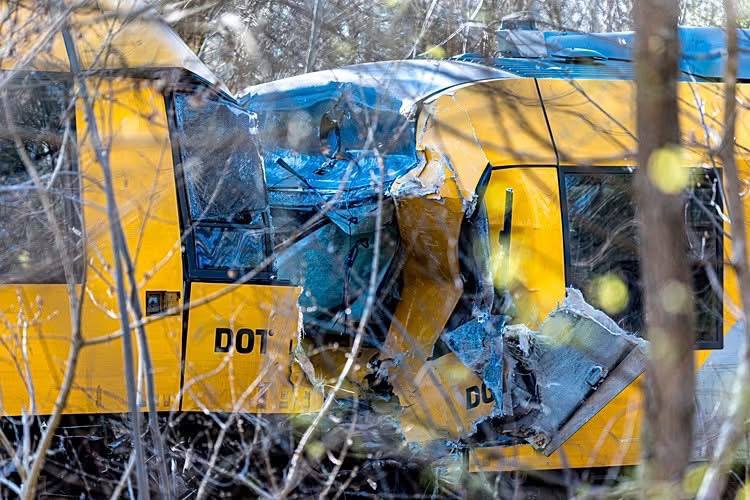
Images broadcast by Denmark’s public service network DR showed the aftermath of the collision. Two yellow and grey trains stood nose to nose on the tracks, both with significant damage to their front ends. The surrounding area, usually calm and lightly trafficked, quickly filled with emergency responders, flashing lights, and the noise of helicopters landing and taking off as crews worked to evacuate passengers and transport the injured.
“It is two local trains that have collided head on,” a spokesperson for the rescue services told Reuters in the immediate aftermath. “There are injuries among the passengers. Everyone is out of the trains, so no one is trapped. Large resources have been dispatched to the scene.”
A chaotic morning on a quiet line
The crash unfolded on a line not typically associated with major incidents, serving commuters and local travelers moving between smaller towns and the capital region. Early reports suggest that both trains were operating on the same track when the collision occurred, though authorities have not yet confirmed the exact sequence of events that led to the crash.
Witness accounts collected by Danish media described a sudden jolt followed by confusion inside the carriages. Passengers reported being thrown forward as the trains collided, with luggage and personal belongings scattering across aisles. Some described the eerie silence that followed before emergency responders arrived, while others said passengers quickly began helping one another out of the damaged cars.
Emergency services responded rapidly. Police, fire crews, and medical teams were dispatched in large numbers, reflecting the seriousness of the incident. The fire department later confirmed in a post on X that all injured individuals had been transported away from the scene, some by ambulance and others by helicopter due to the severity of their injuries.
Despite the scale of the crash, authorities emphasized that no passengers were trapped inside the trains, a factor that likely prevented an even higher casualty count. Rescue crews were able to access all carriages quickly, prioritizing those most seriously injured.
Rail safety in Denmark
Denmark has long been regarded as having one of Europe’s safer and more reliable rail networks, with a strong emphasis on modern signaling systems and operational oversight. Serious train accidents are relatively rare, making Thursday’s collision particularly notable.
Rail safety experts say that head on collisions, while uncommon, often point to failures in signaling, communication, or human error. Modern European rail systems typically rely on automated controls designed to prevent exactly this kind of incident. Investigators will likely examine whether those systems were functioning properly at the time of the crash.
Authorities have already begun a formal investigation, though officials cautioned that it is too early to determine the cause. Technical teams are expected to analyze data from the trains’ onboard systems, track signaling equipment, and communication logs between operators and control centers.
In recent years, European countries have invested heavily in rail infrastructure as part of broader efforts to reduce carbon emissions and encourage public transport use. Denmark, in particular, has promoted rail travel as a sustainable alternative to driving, making incidents like this one especially concerning for both officials and the public.
Emergency response and ongoing investigation
The scale of the emergency response underscored the seriousness of the situation. Helicopters were deployed to quickly transport critically injured passengers to specialized medical facilities, while ambulances handled those with less severe injuries. Hospitals in the Copenhagen region were placed on alert to receive incoming patients.
Officials have not reassistance for passengers who experienced the crash.
Transport authorities temporarily suspended service along the affected line, urging travelers to seek alternative routes while investigators examine the scene. Rail operators are working to assess the damage to both trains and the track infrastructure, which could take time to repair depending on the extent of the impact.

For now, the focus remains on the victims and their recovery. Emergency services have indicated that all injured passengers are receiving appropriate care, and authorities continue to monitor their conditions closely.
As investigators piece together what happened on that stretch of track north of Copenhagen, the collision serves as a stark reminder that even in countries with advanced infrastructure, transportation systems are not immune to failure.