International security is entering one of its most uncertain periods since the end of the Cold War. Longstanding assumptions about deterrence, strategic restraint, and nuclear stability are increasingly being tested by geopolitical rivalry, technological disruption, and the gradual erosion of arms control frameworks.
For decades, the global nuclear order rested on the belief that atomic weapons existed primarily as tools of deterrence rather than instruments of active coercion. That principle helped shape military doctrine, diplomatic negotiations, and public attitudes toward nuclear conflict. Yet by 2026, the stability once associated with that system appears increasingly fragile.
Major powers are modernizing arsenals, regional tensions are intensifying, and emerging technologies are shortening decision-making timelines in ways that could increase the risk of escalation during crises.
The Erosion of the Nuclear Taboo
Since the bombings of Hiroshima and Nagasaki, a broad international norm developed around the idea that nuclear weapons should never again be used in warfare. This unwritten understanding, often described as the nuclear taboo, became one of the most important psychological restraints in international politics.
The taboo was reinforced by decades of diplomacy, arms control agreements, and the fear of mutually assured destruction. Nuclear weapons remained symbols of ultimate power, but their practical use became politically and morally unthinkable for most governments.
Today, however, that restraint appears less secure than it once was.
Nuclear rhetoric has become more visible in geopolitical disputes, particularly during confrontations involving major military powers. Analysts increasingly warn that repeated references to nuclear capabilities in public political discourse risk normalizing the language of atomic confrontation.
This shift does not necessarily indicate imminent nuclear conflict. However, it reflects a broader weakening of the psychological barriers that historically discouraged leaders from invoking nuclear threats in conventional geopolitical disputes.
The Indo-Pacific and Strategic Competition
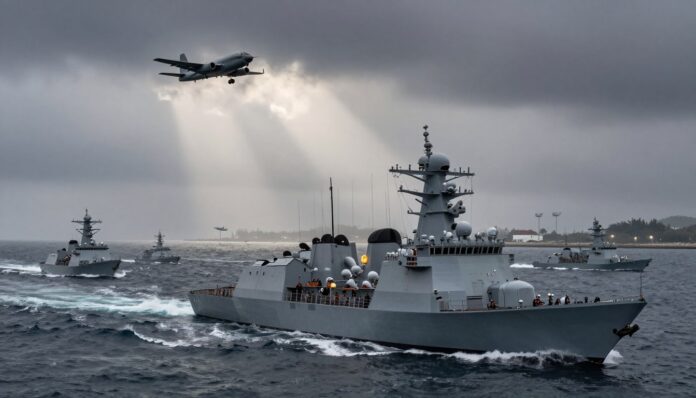
The Indo-Pacific has become the central arena of twenty-first century strategic competition. Military modernization, territorial disputes, and expanding naval deployments are reshaping the regional balance of power.
Countries throughout the region are investing heavily in missile systems, cyber capabilities, advanced naval assets, and integrated air defense networks. These developments are altering long-standing assumptions about deterrence and military escalation.
One of the greatest risks stems from the security dilemma, where defensive measures taken by one state are interpreted as offensive preparations by another. This dynamic increases the possibility of miscalculation, particularly during periods of heightened tension.
The rapid development of hypersonic weapons, autonomous systems, and advanced cyber operations further complicates the situation. These technologies compress response times and place extraordinary pressure on political and military leaders during crises.
As decision-making windows shrink, the danger of escalation caused by incomplete information or technical misinterpretation becomes more significant.
The Collapse of Arms Control Architecture
The deterioration of arms control agreements represents one of the clearest indicators of declining strategic stability.
Treaties that once established transparency and predictability between nuclear powers have weakened or expired, while efforts to negotiate replacements have largely stalled. The suspension of verification mechanisms and communication channels has increased uncertainty between rival states.
Without effective arms control frameworks, the risk of miscalculation rises substantially. Verification systems, inspections, and diplomatic dialogue historically reduced suspicion by allowing competitors to monitor each other’s capabilities and intentions.
Their decline leaves a growing vacuum in international security governance.
At the same time, concerns about nuclear proliferation continue to intensify. Some states increasingly view nuclear capability as the ultimate guarantee of sovereignty and regime survival, especially in a world where security guarantees appear less certain.
This creates the possibility of a broader and more fragmented nuclear landscape in the decades ahead.
Technological Disruption and Nuclear Risk
Technological change is transforming the foundations of deterrence.
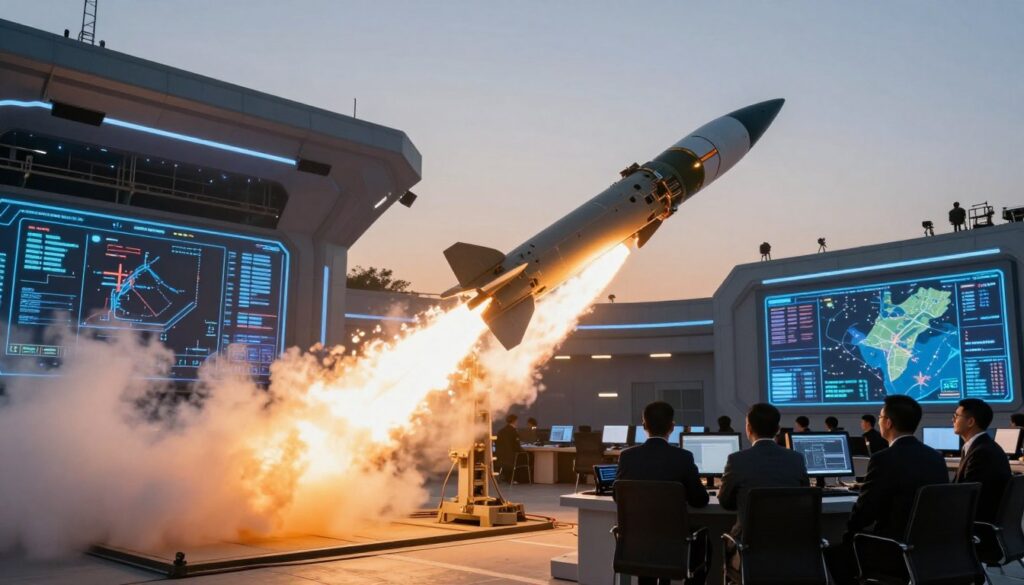
Hypersonic delivery systems are among the most destabilizing developments in modern warfare. Traveling at speeds exceeding Mach 5 and capable of maneuvering during flight, these weapons significantly reduce warning times and complicate missile defense systems.
For military planners, this creates intense pressure to respond rapidly during crises, potentially increasing the likelihood of accidental escalation.
Artificial intelligence is introducing additional complexity into command and control systems. AI-driven analysis can improve speed and efficiency, but it also raises concerns about automation, false signals, and unintended escalation pathways.
A growing debate now centers on how much decision-making authority should remain under direct human control.
Critics warn that excessive reliance on automated systems could increase risks during periods of confusion or cyber disruption, particularly if AI systems misinterpret incomplete or manipulated data.
Nuclear Signaling and Geopolitical Conflict
Nuclear deterrence increasingly overlaps with conventional geopolitical competition.
In several recent conflicts, nuclear powers have used strategic signaling to discourage external intervention while pursuing conventional military objectives. This blending of nuclear messaging with regional conflict marks a notable shift in international behavior.
Proxy wars and regional confrontations have become environments where major powers test the limits of escalation without engaging each other directly.
The danger lies in normalization. Frequent public discussion of nuclear readiness or retaliation risks weakening the broader taboo that has restrained nuclear behavior for decades.
Strategic ambiguity may strengthen deterrence in some circumstances, but persistent rhetorical escalation can also heighten instability by increasing uncertainty during crises.
The United States Posture in 2026
The United States continues to place nuclear modernization at the center of its long-term defense planning.
Modernization efforts include upgrades to the nuclear triad, improvements in command and control infrastructure, and the development of advanced delivery systems designed to maintain deterrence credibility against peer competitors.
American policymakers argue that modernization is necessary to preserve strategic balance amid growing competition from other major powers.
At the same time, Washington faces increasing pressure to reassure allies under extended deterrence arrangements. Maintaining confidence among NATO and Indo-Pacific partners remains a core objective of U.S. security strategy.
However, balancing deterrence, alliance commitments, and arms control diplomacy is becoming increasingly difficult in a more fragmented geopolitical environment.
Cyber Threats and Non-State Risks
The intersection of cyber warfare and nuclear infrastructure represents one of the most unpredictable dimensions of modern security.
Nuclear systems increasingly rely on digital communications, integrated software, and interconnected warning systems. While these technologies improve operational efficiency, they also create new vulnerabilities.
Cyberattacks targeting early warning systems, communications infrastructure, or military networks could create confusion during crises and increase the risk of misinterpretation.
Attribution remains a major challenge in cyber conflict. Determining responsibility for a digital intrusion can take time, complicating response decisions during moments of tension.
Non-state actors further complicate the landscape. Although terrorist groups are unlikely to acquire sophisticated nuclear arsenals, cyber sabotage or attacks on critical infrastructure remain significant concerns for governments worldwide.
Diplomatic Paralysis and Alternative Channels
Global diplomacy faces mounting strain amid rising geopolitical polarization.
The United Nations Security Council remains divided on many major security issues, limiting its ability to respond effectively to emerging crises. Rivalries between permanent members increasingly obstruct coordinated international action.
In response, informal diplomacy has gained greater importance.
Track II diplomacy, involving academics, retired officials, and policy experts, has become an increasingly important mechanism for maintaining communication during periods of official deadlock.
While these efforts cannot replace formal treaties, they can help preserve dialogue, reduce misunderstandings, and create opportunities for future negotiations.
Consequences of Renewed Nuclear Competition
Renewed strategic competition carries major economic implications.
Governments are allocating larger portions of national budgets toward defense modernization, missile systems, cybersecurity, and military infrastructure. This shift influences industrial priorities, investment flows, and supply chain dynamics.
Demand for advanced semiconductors, rare earth materials, and specialized defense technologies is growing rapidly, placing additional pressure on already strained global supply chains.
At the same time, persistent geopolitical instability increases uncertainty for global markets and international trade.
Some countries are responding by attempting to localize strategic industries and reduce dependence on foreign suppliers, though such transitions are expensive and time-consuming.
Public Opinion and the Return of Nuclear Anxiety
Public concern about nuclear conflict has increased noticeably in recent years.
Younger generations that grew up after the Cold War are now confronting renewed fears about strategic escalation, while older generations recognize echoes of earlier nuclear tensions.
Anti-nuclear movements are regaining visibility in parts of the United States and Europe, with activists calling for greater transparency, renewed arms control negotiations, and limits on modernization programs.
Social media has amplified public engagement with nuclear issues, though it has also contributed to misinformation and heightened anxiety during international crises.
The digital information environment now plays a major role in shaping how societies perceive nuclear risk.
An Uncertain Strategic Future
The international security environment of 2026 is defined by uncertainty, fragmentation, and rapid technological change.
The structures that once supported strategic stability are weakening, while new technologies and geopolitical rivalries introduce risks that existing institutions are struggling to manage.
Avoiding future catastrophe will require renewed diplomatic engagement, stronger communication mechanisms, and updated frameworks capable of addressing twenty-first century realities.
Deterrence alone cannot guarantee long-term stability without credible diplomacy and sustained international cooperation.
The coming years may determine whether the world adapts to this new era of strategic competition or enters a period of heightened and prolonged nuclear instability.