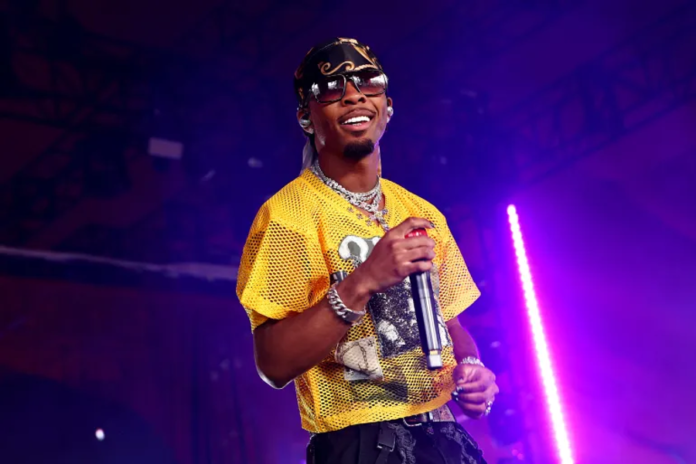
Singer David Burke, known professionally as D4vd, has been accused by prosecutors in California of killing a 14-year-old girl and attempting to cover up the crime, in a case that has quickly become one of the most closely watched criminal proceedings involving a rising music figure in recent years.
The allegations are contained in a preliminary hearing brief released on 29 April, outlining charges including murder, continuous sexual abuse of a minor, and unlawful mutilation of human remains.
Prosecutors say Celeste Rivas Hernandez was stabbed to death on 23 April 2025 at the singer’s Hollywood Hills residence following a dispute over his relationships with other women. The filing alleges the teenager had threatened to expose information that could damage his career just days before the release of his debut album.
The brief further claims D4vd arranged for the victim to be transported to his home before sending messages and making calls to her phone after her death in what prosecutors describe as a deliberate attempt to mislead investigators. He is also accused of driving to Santa Barbara to dispose of evidence before returning to Los Angeles.
The victim’s remains were later discovered in September 2025 in the trunk of the singer’s vehicle. Prosecutors allege attempts were made to destroy evidence, including dismemberment. D4vd has denied the allegations through his lawyers, who say they will vigorously defend him. He faces a possible life sentence without parole, with a decision on the death penalty yet to be made ahead of a preliminary hearing scheduled for May.
A Rapid Rise in Music Before a Sudden Collapse into Criminal Allegations
Before the allegations surfaced, D4vd had been widely known as part of a new generation of internet-born artists who built followings through streaming platforms and short-form video apps. His music, often blending indie, alternative, and emotional storytelling, had gained millions of plays globally and positioned him as one of the emerging names in contemporary pop.
Industry observers had previously described him as part of a wave of artists who bypassed traditional record label pathways, using platforms such as TikTok and Spotify to reach international audiences. His debut album, referenced in the prosecution filing, was expected to mark a major milestone in his career, with promotional material already circulating in the months leading up to the release.
That momentum, however, now stands in stark contrast to the criminal allegations, which prosecutors say unfolded in parallel with his rise in visibility.
Prosecutors Detail Alleged Timeline of Killing and Cover Up
According to the filing, the incident began with tensions linked to the singer’s relationships with other women. Prosecutors allege that Celeste Rivas Hernandez confronted him with threats to reveal damaging information shortly before her death.
They say she was brought to his Hollywood Hills residence on 23 April 2025, where she was later stabbed to death during a confrontation.
The document further alleges that after her death, D4vd continued to use her phone in an effort to create the impression she was still alive. This included sending messages and placing calls that prosecutors say were intended to mislead both acquaintances and investigators.
Authorities also allege that he later transported her body in an attempt to conceal the crime, driving toward Santa Barbara where he is accused of disposing of evidence before returning to Los Angeles.
The victim’s remains were not discovered until September 2025, when they were found inside the trunk of a vehicle linked to the singer. Prosecutors say the condition of the remains suggested attempts at concealment and possible dismemberment.
Law enforcement officials have not publicly released additional forensic details, but court documents indicate that the investigation involved multiple agencies and extended over several months before charges were formally advanced.
The charges against D4vd include murder, continuous sexual abuse of a minor, and unlawful mutilation of human remains, all of which carry severe penalties under California law.
If convicted, he faces a possible life sentence without parole. Prosecutors have also indicated that the death penalty remains under consideration, though no final decision has been announced ahead of the preliminary hearing scheduled for May.
Legal analysts note that cases involving high-profile defendants in California often involve extensive pretrial proceedings, including evidentiary hearings, motions to suppress evidence, and psychological evaluations before a case reaches trial.
The inclusion of charges related to concealment and alleged post-crime communication via the victim’s phone may play a significant role in establishing intent, according to legal experts familiar with similar cases.
In broader context, the case has drawn attention due to its intersection with the entertainment industry, social media culture, and the increasing scrutiny of young artists who rise rapidly to fame without traditional industry oversight.
D4vd has denied all allegations through his legal team, who say they intend to vigorously contest the charges in court. No public statement has been issued directly by the artist.
His representatives have also challenged aspects of the prosecution narrative, though they have not yet presented a detailed public counter-version of events.
As the case moves toward its preliminary hearing, public attention has intensified, particularly given the combination of the artist’s rising profile and the severity of the accusations.
Media coverage has also focused on the broader implications for the music industry, particularly how young, internet-based artists are managed and monitored as their public visibility expands rapidly.
Beyond the courtroom, the allegations have sparked wider discussion about the pressures of sudden fame and the lack of structured support systems for emerging artists operating outside traditional entertainment pipelines.
D4vd’s career trajectory, which reportedly moved from independent online releases to mainstream attention in a short period, reflects a growing pattern in the music industry where viral success can precede formal management structures or long-term industry guidance.
Observers note that while such rapid growth offers opportunities, it can also leave artists vulnerable to instability, isolation, and intense public scrutiny.
At the same time, the case remains firmly focused on the legal allegations outlined by prosecutors, who have presented a detailed timeline they say will be tested in court.
For now, D4vd remains presumed innocent until proven guilty, and the next major development will come at the scheduled preliminary hearing in May, where a judge will determine whether there is sufficient evidence for the case to proceed to trial.