Tensions between Iran and the United States have intensified sharply as Iranian officials accuse Washington of escalating military and economic pressure during fragile ceasefire negotiations being mediated through Pakistan. At the center of the latest dispute is Iran’s claim that a U.S. naval blockade targeting Iranian ports amounts to a violation of international law and an act of war.
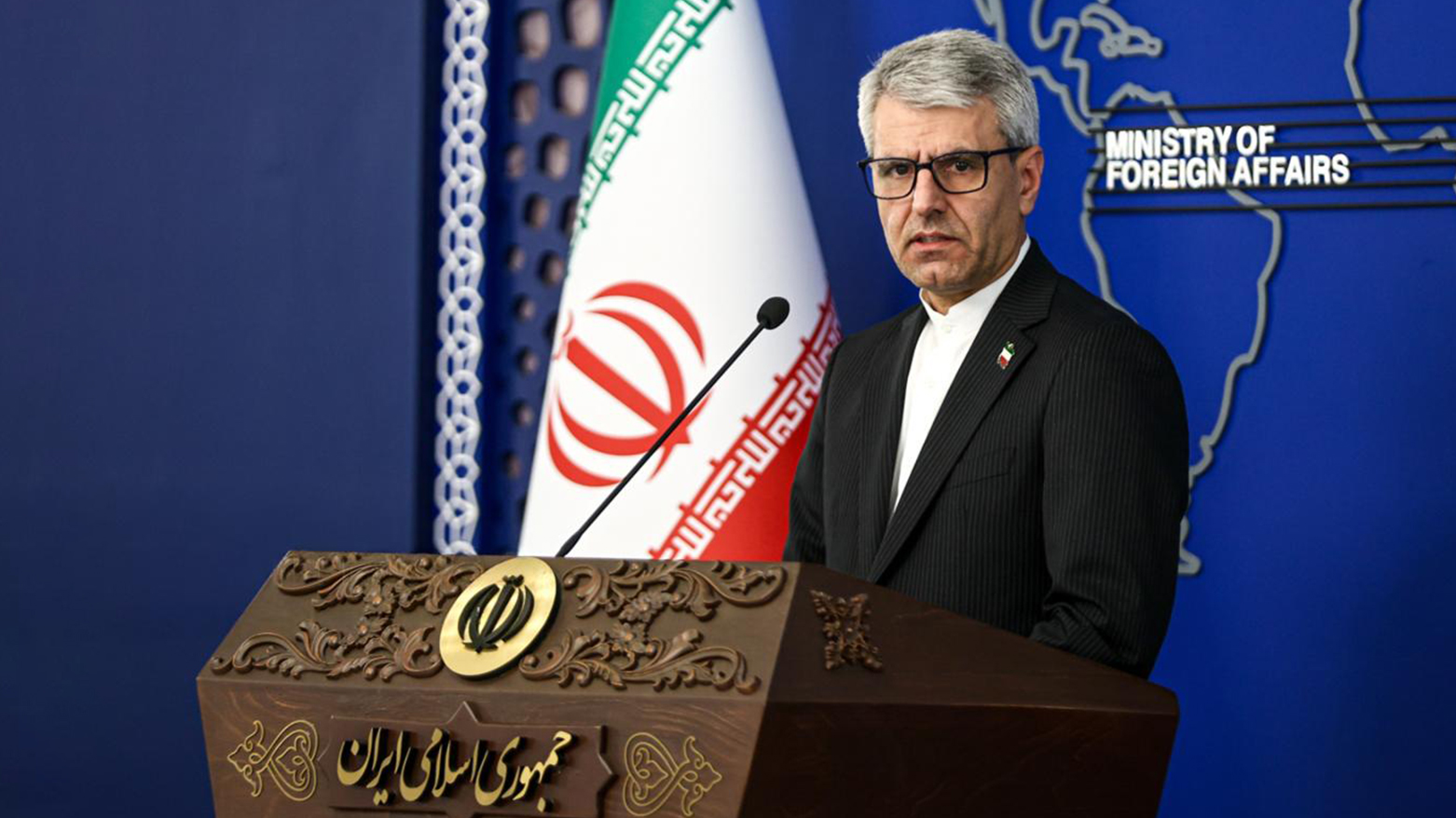
Iran’s Foreign Ministry spokesperson Esmaeil Baqaei issued a detailed statement on Sunday, describing the reported blockade as both “unlawful and criminal.” He argued that the measure violates the Pakistani-mediated ceasefire agreement and constitutes aggression under international law. According to Baqaei, the action breaches Article 2(4) of the United Nations Charter, which prohibits the use of force against the territorial integrity or political independence of any state.
He further cited UN General Assembly Resolution 3314 from 1974, saying it explicitly classifies blockades of ports or coastlines as acts of aggression. In his statement posted on X, Baqaei went further, accusing Washington of collective punishment against Iranian civilians. He said this amounted not only to a war crime but also to a crime against humanity.
His remarks reflected Tehran’s broader legal framing of the conflict, in which Iranian officials have increasingly attempted to present military and economic pressure from the United States as violations of international norms rather than bilateral disputes.
Diplomacy under pressure in Pakistan as military rhetoric rises
While the diplomatic process continues in Pakistan, the situation on the ground and in rhetoric has grown increasingly volatile. Pakistani sources speaking to Türkiye’s state-run Anadolu Agency reported that at least two American aircraft carrying advance delegates landed in Islamabad on Sunday. The delegation reportedly moved to a five-star hotel that had also hosted earlier rounds of negotiations in mid-April.
Security in the Pakistani capital was significantly tightened in response. Authorities closed off the Red Zone and Extended Red Zone, areas that house key government and diplomatic buildings, citing the arrival of foreign delegations. Police also suspended public and heavy transport in and out of Islamabad until further notice, while universities and colleges were shut down temporarily until April 26, forcing students to vacate dormitories. Thousands of police and paramilitary personnel were deployed across the city to ensure security.
The heightened security posture reflects both the sensitivity of the negotiations and fears of potential destabilization during high level talks involving multiple foreign delegations.
In Washington, U.S. President Donald Trump confirmed on Truth Social that his representatives were heading to Islamabad for negotiations, stating, “My Representatives are going to Islamabad, Pakistan. They will be there tomorrow evening, for Negotiations.”
At the same time, Trump told ABC News that Vice President JD Vance would not lead the delegation as previously speculated. He said the decision was made due to security concerns, adding, “It’s only because of security. JD’s great.”
Military threats, Strait of Hormuz tensions, and competing narratives
Alongside diplomatic maneuvering, rhetoric from Washington has escalated significantly. Trump posted a series of statements on Truth Social warning Iran of severe military consequences if negotiations fail or if hostilities continue.
In one post, he accused Iran of violating the ceasefire after alleged activity in the Strait of Hormuz, writing that firing bullets in the waterway was “a total violation of our ceasefire agreement.” He then issued one of his most explicit threats, stating, “We’re offering a very fair and reasonable deal, and I hope they take it because, if they don’t, the United States is going to knock out every single power plant and every single bridge in Iran. NO MORE MR. NICE GUY!”
He also suggested that Iran’s own actions in the Strait of Hormuz were inadvertently benefiting the United States by disrupting regional shipping patterns. According to Trump, American bound vessels were being redirected toward ports in Texas, Louisiana, and Alaska, while estimating that the disruption was costing Iran roughly 500 million dollars per day.
The Strait of Hormuz remains one of the world’s most strategically important maritime chokepoints, through which a significant share of global oil shipments pass. Any disruption in the region has historically triggered global market volatility and heightened military alert levels among regional and international powers.
Iranian officials have not independently confirmed the alleged firing incident described by Trump, but the exchange has added to already heightened tensions surrounding maritime security and regional trade routes.
Negotiations, partial progress, and uncertain pathways forward
Despite the public escalation, diplomatic channels remain active. Iranian sources familiar with the negotiations told CNN that Tehran’s delegation is expected to arrive in Pakistan on Tuesday. The delegation is reportedly unchanged from earlier rounds and includes Foreign Minister Abbas Araghchi and parliament speaker Mohammad Bagher Ghalibaf.
According to these sources, negotiators are considering a symbolic joint announcement of a ceasefire extension scheduled for Wednesday. The idea, if realized, would be framed as a confidence building measure designed to stabilize the situation while broader negotiations continue.
In a further scenario outlined by Iranian sources, if discussions proceed successfully and if Trump were to travel to Islamabad, a high level summit could potentially take place involving Iranian President Masoud Pezeshkian. This would include a possible joint “Islamabad Declaration” aimed at formalizing de escalation commitments. However, there has been no official confirmation from either side regarding such a meeting.

Iranian President Pezeshkian also addressed the situation during a visit to the Ministry of Science, Research and Technology. He emphasized that Iran does not seek further escalation. “The Islamic Republic of Iran does not want the war to expand. The continuation of conflicts is not in the interest of any party,” he said. He added that the solution lies in “rationality, dialogue and avoiding further destruction.”


A fragile balance between war rhetoric and diplomacy
Taken together, the developments highlight a rapidly shifting and highly unstable situation in which diplomatic engagement and military threats are occurring simultaneously. On one hand, negotiations in Pakistan continue with possible extensions and high level meetings still under discussion. On the other, public statements from both Washington and Tehran have escalated sharply, with accusations of aggression, warnings of large scale military strikes, and competing legal interpretations of actions in the region.
International observers have noted that such overlapping tracks of diplomacy and confrontation are not unusual in high stakes geopolitical disputes, but the intensity of current rhetoric raises the risk of miscalculation.
For now, both sides appear to be maintaining channels of communication through intermediaries, particularly Pakistan, while simultaneously signaling readiness for escalation if talks collapse. The coming days, particularly the planned discussions in Islamabad, are expected to be critical in determining whether the situation moves toward further confrontation or a fragile extension of the ceasefire framework.
This article first appeared on The Times of Israel