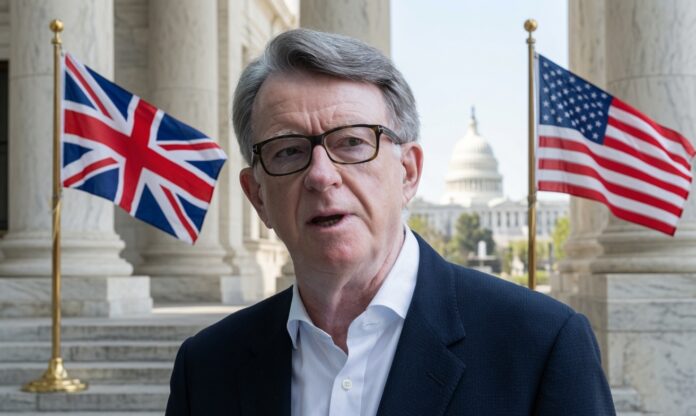
Peter Mandelson has been formally confirmed as Britain’s new ambassador to the United States, with Prime Minister Keir Starmer praising the veteran Labour figure’s “unrivalled experience” as the government prepares for a potentially challenging second Donald Trump presidency.
The appointment, announced by Downing Street, places one of the most influential figures of the New Labour era at the centre of one of Britain’s most important diplomatic relationships. Mandelson succeeds Karen Pierce, who had served as ambassador in Washington since 2020 and was widely respected across both Democratic and Republican circles.
Starmer said Mandelson’s extensive experience in government, international trade and diplomacy made him uniquely qualified for the role. Foreign Secretary David Lammy also welcomed the appointment, describing the former cabinet minister as a figure with deep expertise in trade, economic policy and international affairs.
Mandelson said he was “deeply honoured” by the appointment and pledged to strengthen the UK’s historic alliance with the United States at a time of significant geopolitical and economic uncertainty.
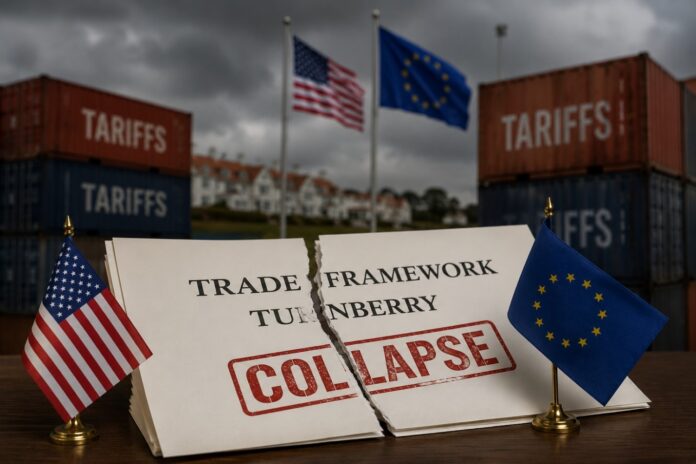
The decision comes as Britain prepares for Donald Trump’s return to the White House following his victory in the 2024 U.S. presidential election. Trump’s incoming administration has signalled plans for sweeping tariffs on imported goods and a more transactional approach to international alliances, raising concerns among policymakers and business leaders about the future of transatlantic trade relations. Reports suggest one of Mandelson’s primary tasks will be protecting British economic interests and maintaining close ties with the new administration.
A political appointment to Washington had long been expected. Government officials viewed the post as requiring a figure with substantial political experience and negotiating skills rather than a traditional career diplomat, given the unpredictable nature of a second Trump administration.
Supporters argue Mandelson’s political instincts and extensive international network make him well suited to the role. As a former cabinet minister under both Tony Blair and Gordon Brown, and later European Union Trade Commissioner, he built a reputation as one of Labour’s most effective strategists and negotiators.
Several Labour figures privately welcomed the appointment, arguing that Mandelson’s experience in trade negotiations and his ability to build relationships across political divides could prove valuable in Washington. Some MPs described him as a skilled dealmaker capable of navigating Trump’s highly personal and transactional style of politics.
However, the appointment has also generated unease within Labour ranks.
Some MPs questioned why Starmer would entrust such a high-profile role to a figure who has previously criticised both Labour policy and the party leadership. Concerns have also been raised about Mandelson’s reputation for political independence and willingness to speak publicly on sensitive issues.
One concern among Labour MPs is that Mandelson’s tendency to operate independently could create difficulties for a government that has sought to maintain strict message discipline since entering office. Some fear that his influence and political stature could complicate Downing Street’s efforts to control the party’s wider political narrative.
The appointment also drew criticism from Labour’s left wing. Former shadow chancellor John McDonnell described the decision as a serious error of judgment, arguing that Mandelson’s long and controversial political history made him an unsuitable choice for such a prominent diplomatic role.
Questions have also been raised about Mandelson’s previous support for closer economic engagement with China and his business interests after leaving frontline politics. Critics argue those connections could attract scrutiny as tensions between Western governments and Beijing continue to shape international diplomacy.
The announcement also prompted criticism from figures aligned with Trump’s political movement. Chris LaCivita, a senior adviser to Trump’s presidential campaign, publicly attacked Mandelson after previous comments resurfaced in which the Labour peer had described Trump as “little short of a white nationalist and racist.”
Despite those remarks, British officials believe Mandelson’s extensive experience and pragmatic approach could help establish a productive working relationship with the incoming administration. Supporters note that his background in trade and international negotiations aligns closely with the key challenges likely to dominate UK-U.S. relations in the coming years.
For Starmer, the appointment represents both an opportunity and a political gamble. Mandelson remains one of Labour’s most recognisable political figures and a strategist with decades of experience at the highest levels of government. Yet he also carries significant political baggage and remains a divisive figure within parts of the party.
As Washington prepares for a new Trump presidency, Mandelson will now face the task of translating his political experience into diplomatic influence while managing one of Britain’s most strategically important international relationships.