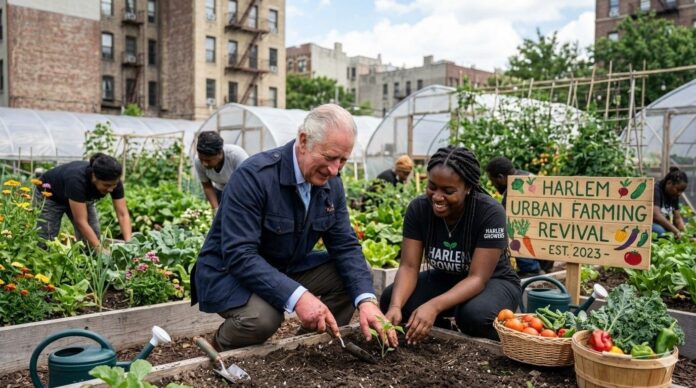
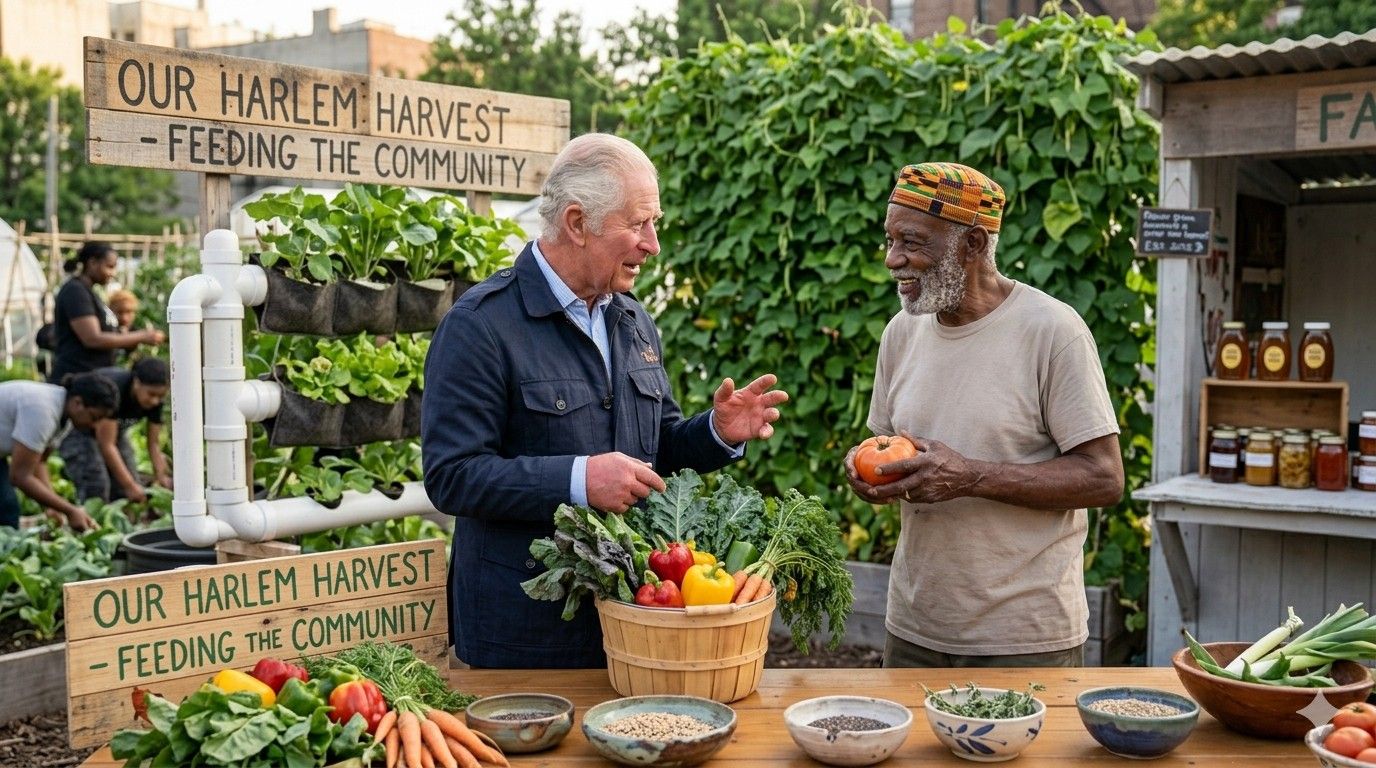
King Charles III made a notable community stop in Harlem on April 29, 2026, during his first state visit to the United States as monarch. The 77-year-old king spent nearly an hour at Harlem Grown, an innovative urban farm on West 134th Street that turns vacant lots into productive gardens and educational spaces for local youth.
The visit offered a rare glimpse of the monarch engaging directly with children, feeding chickens, planting seeds, and discussing sustainable food production in one of New York City’s most historic neighborhoods.
This hands-on appearance stood out amid formal diplomatic events. It aligned with King Charles’s long-standing advocacy for environmental causes, organic gardening, and community resilience. As global attention focuses on food security and urban sustainability, the Harlem visit provided a powerful example of local solutions with broader resonance.
Harlem Grown: From Vacant Lots to Community Hub
Harlem Grown began in 2010 as a modest effort to address food insecurity and limited green space in Upper Manhattan. Founder Tony Hillery, a former Wall Street professional, transformed an abandoned lot into a thriving farm. Today the organization operates across 14 sites, producing thousands of pounds of fresh produce annually while running after-school programs for hundreds of children.
The nonprofit emphasizes education, health, and economic opportunity. Students learn planting, harvesting, cooking, and composting. Many come from families facing food insecurity. The program supplies free vegetables to the community and partners with local schools, including Thurgood Marshall Academy Lower School.
During the king’s visit, second-grade students demonstrated their skills. They planted lavender and mustard greens alongside the monarch and prepared mango salsa from garden ingredients. King Charles fed chickens in the coop and showed genuine curiosity about composting methods and mushroom cultivation.
“I’m very impressed. I really am,” the king told reporters after touring the site. He engaged warmly with children and staff, asking detailed questions about their work and sharing insights from his own gardens at Highgrove.
The visit lasted about 40 minutes but left a lasting impression on participants. Security was tight yet unobtrusive, allowing natural interactions that contrasted with more scripted royal events.
Royal U.S. Visit
King Charles and Queen Camilla arrived in the United States on April 27, 2026, for a four-day state visit marking America’s 250th anniversary preparations. The itinerary included White House meetings with President Donald Trump, an address to Congress, and stops in New York and Virginia.
In New York, the couple visited the 9/11 Memorial. While Queen Camilla attended an event at the New York Public Library, King Charles headed uptown to Harlem. The choice reflected his personal priorities: environmental stewardship, youth development, and bridging divides through shared interests like gardening.
Harlem residents welcomed the monarch with excitement. Crowds gathered near the farm, and local leaders praised the attention it brought to community-led initiatives.
“The King showed real interest in what these young people are achieving. This isn’t just a photo opportunity. It highlights how urban agriculture can change lives,” said Tony Hillery, Harlem Grown’s founder and CEO.
Urban farms like Harlem Grown address multiple challenges. They improve access to nutritious food, reduce reliance on distant supply chains, create educational opportunities, and build community cohesion. In New York, such projects combat “food deserts” where fresh produce is scarce or expensive.
Nationwide, urban agriculture has grown steadily. Estimates suggest community gardens and farms produce billions of dollars in value while supporting biodiversity and mental health. King Charles has championed similar efforts in Britain through the Prince’s Foundation and his Duchy Originals brand, promoting organic methods and sustainability.
The Harlem visit drew attention to these benefits at a time of global concerns over climate change, supply disruptions, and rising food costs. Experts note that small-scale urban projects cannot replace large agriculture but serve as vital supplements and teaching tools.
King Charles’s Legacy
The monarch has advocated for environmental issues for over 50 years. As Prince of Wales, he warned about climate change, soil health, and sustainable farming. His Highgrove estate serves as a model for organic practices. As king, he continues these efforts through patronage and public statements.
The Harlem stop reinforced this commitment. Observers noted how the king connected his royal platform with grassroots action. It humanized him for American audiences, particularly in a diverse urban setting far from traditional diplomatic venues.
Local reactions mixed pride with practical hope. Some residents saw it as validation of Harlem’s resilience. Others hoped it would attract funding or policy support for similar projects.
Challenges remain. Urban farms face issues like soil contamination, funding shortages, water access, and scaling impact. Harlem Grown relies on donations, volunteers, and partnerships. Sustained success depends on continued community involvement and external support.
U.S.-UK Ties
The visit occurred amid strong transatlantic relations. King Charles’s engagements, including the Harlem farm, complemented formal diplomacy with people-to-people connections. They highlighted shared values around innovation, education, and environmental care.
 For Harlem, the royal spotlight brought positive media coverage and potential long-term benefits. Harlem Grown reported increased interest and inquiries following the event. It also sparked conversations about food equity in New York and beyond.
“Seeing the King plant seeds with our kids was powerful. It shows that caring for the earth and each other transcends borders and titles,” one participating teacher remarked.