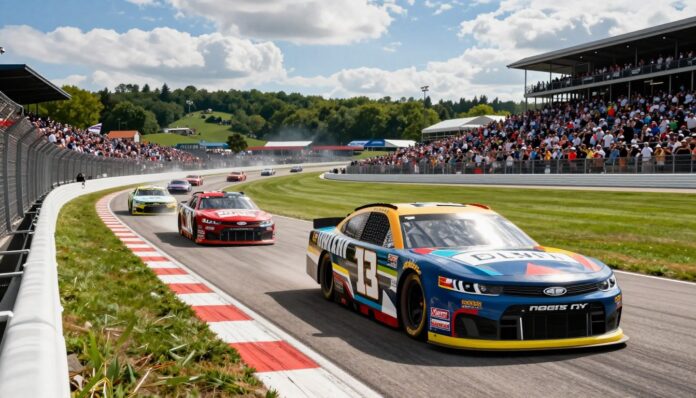
Motorsport fans look forward to Watkins International every year. This famous road course has tricky turns and fast straights. NASCAR at The Glen is a top event, pushing drivers and cars to their limits.
The Go Bowling at The Glen is a key race in the season. It requires teams to change their plans for the special track. Fans love the excitement, with each lap full of surprises and tough racing. This event is a big draw, attracting huge crowds who love the thrill of top-notch road racing.
Setting the Stage for NASCAR at The Glen
Watkins Glen International is a legendary road course in upstate New York. The excitement is always high as teams get ready for the track’s unique challenges.
Significance of Watkins Glen International
Founded in 1957, Watkins Glen International is a sacred place for racing fans. It has seen many epic races that shaped the sport’s history.
Drivers face intense pressure on this track. It’s a key event that pushes even the most experienced drivers to their limits.
Pre-Race Expectations and Championship Narratives
The 12th race of the 2026 NASCAR Cup Series season was a big deal. Fans and experts saw it as a chance for a major shift in the championship race.
Everyone wondered how the top drivers would handle the road course. It’s a race that demands perfect balance between speed and accuracy, testing the drivers’ skills.
Race Dynamics and Strategy Shifts
Watkins Glen is a true test of mechanical precision and driver skill. Unlike oval tracks, road course racing needs a balance between aggressive cornering and keeping the car in good shape. Teams must always update their race strategy for this high-speed circuit.
Adapting to the Road Course Layout
The Watkins Glen circuit has long straights and tight corners. These challenge even the most experienced drivers. Drivers who master these transitions often get a significant competitive advantage over others.
Fuel Mileage and Tire Management Tactics
Managing fuel and tire wear is key in the race’s final stages. Many experts in NASCAR betting watch how teams handle these to predict winners. Conserving fuel while keeping a fast pace can lead to a win or a mid-pack finish.
The Impact of Stage Breaks on Strategy
Stage breaks let teams reset their race strategy based on car performance. These pauses allow for adjustments to tire pressures and chassis balance. By analyzing data from the first two stages, teams can make calculated decisions for the final sprint.
Standout Performances and Driver Highlights
The weekend at Watkins Glen was filled with both veteran skill and new talent. Looking at driver performance shows how top drivers handle the road course’s challenges. Some favorites kept their pace, while others found it hard to get into a rhythm.
Dominant Runs from Front-Runners
Top teams showed why they’re the best by perfecting their race plans. They used precise braking and smart acceleration to stay ahead. Their skill in consistently hitting marks kept them leading during key parts of the race.
Surprise Contenders and Underdog Success Stories
Some drivers went against the NASCAR odds to get impressive finishes. These underdogs used late-race restarts and smart tire use to move up. It was truly remarkable to see mid-pack teams challenge the top teams with bold moves.
Rookie Performances on Technical Terrain
The young talent showed they’re ready for the big stage by handling the corners well. Shane van Gisbergen was a standout, impressing with his road course skills. These rookies showed exceptional car control, making a strong case for the sport’s future.
Technical Challenges of the Watkins Glen International Circuit
The legendary layout of Watkins Glen demands absolute precision from both the machine and the driver. Success in road course racing requires a deep understanding of how mechanical grip interacts with the asphalt. Teams must constantly adapt to the specific demands of this high-speed venue to remain competitive.
Braking Zones and Corner Entry Precision
Drivers face intense pressure when approaching the heavy braking zones scattered throughout the circuit. Timing is everything, as locking up the tires can ruin a lap and compromise the entire race strategy. Maintaining perfect corner entry precision allows the driver to rotate the car effectively and maximize exit speed.
Managing Elevation Changes and Track Surface
The track features significant vertical shifts that alter the balance of the car mid-corner. These elevation changes force drivers to adjust their throttle inputs to maintain traction on the varying NASCAR track conditions. The surface texture also evolves throughout the weekend, requiring constant feedback from the driver to the crew.
Vehicle Setup Requirements for Road Racing
Engineers must prioritize a balanced setup that handles both high-speed straights and tight, technical sections. Adjusting the suspension geometry is critical for stability during heavy braking and rapid directional changes. Selecting the right gear ratios ensures the engine stays in the power band during complex sequences.
Teams often experiment with alignment settings to find the perfect compromise for long-run performance. A well-tuned car in road course racing provides the driver with the confidence needed to push the limits. Ultimately, the ability to fine-tune these mechanical variables often determines who stands on the podium.
Playoff Implications and Standings Impact
Watkins Glen International is a high-stakes arena where playoff dreams are made or broken. The NASCAR Cup Series landscape changes a lot after this event. The playoff implications become clear for every team.
Shifting Momentum in the Cup Series Standings
The leaderboard often changes a lot after a road course race. Drivers who do well in technical environments can jump forward. Others might see their championship momentum slow down unexpectedly.
Top teams aim for consistency. But a strong finish at the Glen can give them the necessary boost. This helps them secure a good spot before the postseason starts.
Bubble Drivers and Their Path to Advancement
Drivers near the cut line face huge pressure. They must balance bold moves with avoiding mistakes that could end their season early.
The NASCAR odds change fast as these drivers fight for every point. Their chance to advance depends on a perfect strategy and beating rivals who also want to make the playoffs.
How the Results Alter Playoff Projections
After the checkered flag, models and fan projections often change. A surprise winner or a late-race incident can redefine the field of contenders.
These results make teams rethink their plans for the final stretch of the year. The NASCAR Cup Series keeps the road to the championship unpredictable until the last race.
Notable Incidents and Caution Periods
Unpredictable incidents often change the Watkins Glen race results from wins to losses. These moments of chaos make teams change their plans quickly. When a caution flag waves, the race’s balance is instantly disrupted.
Key Collisions and Their Consequences
Collisions at this high-speed road course often happen in tight braking zones. A small mistake can cause a big pileup, changing the race’s order. These accidents have big playoff implications for drivers trying to stay in the race.
When a top driver gets caught in a mid-pack fight, their chances can disappear fast. The damage to their car might force them to leave early or spend a lot of time in the garage. This shows how quickly driver performance can be affected by others.

Managing Restarts in Tight Traffic
Restarts at Watkins Glen are tough because of the narrow track. Drivers must go through dense traffic while keeping their speed. A small error can cause a big crash.
Success in these restarts needs a lot of focus and precise car control. Experienced drivers try to get ahead, while others struggle to stay in control. This is when true driver performance is really tested.
The Role of Race Control in Maintaining Flow
Race control is key in keeping the race going despite the challenges. Officials must decide fast when to use the pace car. This ensures safety without stopping the race too much. Their decisions affect the final Watkins Glen race results.
Good communication between officials and teams helps keep things orderly during chaotic times. By watching the track closely, they reduce the chance of more crashes. This is critical for keeping the playoff implications safe as the season ends.
Crew Chief Decisions and Pit Road Strategy
Success at Watkins Glen often depends on the crew chief’s smart decisions. While drivers focus on driving, the crew chief is the strategic mastermind. Fans who bet on NASCAR know these choices often decide the winner.
Timing the Final Pit Stop
The final pit stop is a high-risk, high-reward move. Crew chiefs must guess the right time to pit, considering fuel and cautions. A good race strategy is to pit just before others, gaining an edge on fresh tires.
Adjusting Car Balance During Mid-Race Stops
Mid-race stops are key to fine-tuning the car’s handling. Teams tweak the car’s setup to fix steering issues. Precision adjustments keep the car competitive as the track heats up.
Communication Challenges Under Pressure
Running a pit strategy under pressure is tough. The noise and chaos of the pits make clear communication absolutely essential. In these moments, the crew chief must stay calm to guide the team through complex changes.
Fan Experience and Atmosphere at the Track
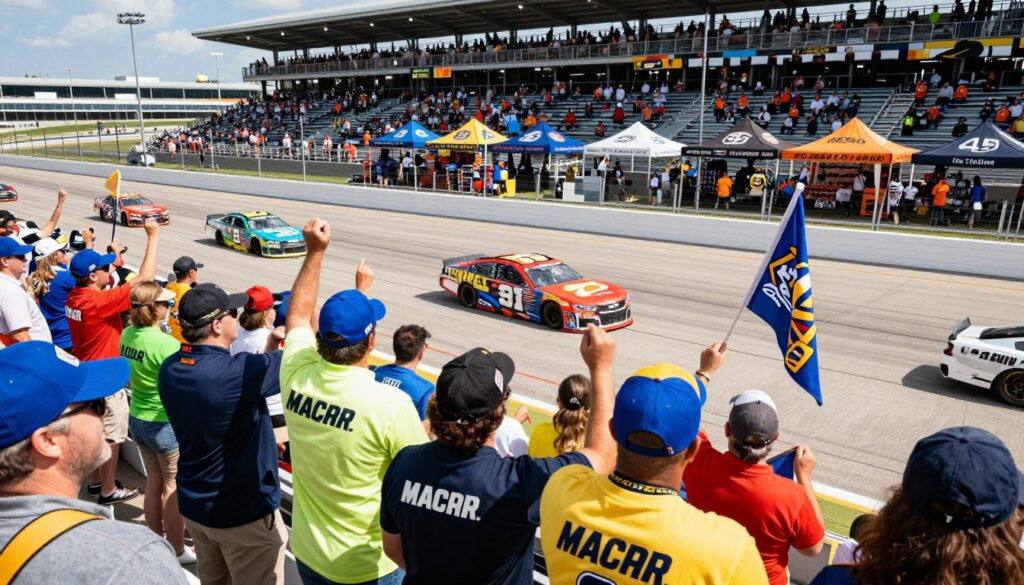
Watkins Glen International is more than just a racing spot. It’s a place where fans feel the thrill of the race up close. The NASCAR fan experience here is unique because of the close connection between fans and the track.
Attendance Trends and Crowd Engagement
Every year, more fans come to see the races. They don’t just watch; they get involved with fan zones and meet drivers. This makes the whole weekend feel alive with energy.
The Unique Culture of Watkins Glen Spectators
The track has a special culture of camping and community. Fans come to camp and make friends. It turns the track into a racing city for the weekend.
Media Coverage and Broadcast Highlights
While fans are at the track, others watch on TV. Broadcasters show the NASCAR track conditions and pit road strategy. They make the race exciting for viewers everywhere.
Final Reflections on the Weekend Results
The Go Bowling at The Glen was intense. Drivers were under a lot of pressure on the technical road course. The results changed the game for many playoff contenders.
Shane van Gisbergen showed his top-notch skills by leading 38 of 90 laps. His control of the track highlighted the talent needed in stock car racing today.
The Watkins Glen race results show how fast things can change in the playoffs. Every point matters for those trying to stay in the championship race.
The NASCAR fan experience at this historic venue is unforgettable. Fans saw a mix of strategy and speed that made the weekend special.
This event is a key part of the season story. We want to hear your thoughts on the results. Who do you think will keep the momentum going in the next playoff round?