France’s first confirmed Ebola patient has recovered and been discharged from the hospital, Health Minister Stephanie Rist announced Saturday, closing out a two-week medical scare that put French health authorities on high alert.
The patient, a humanitarian doctor, tested positive for Ebola shortly after arriving in Franc e on 23 June aboard an Air France flight from the Democratic Republic of Congo, where a major outbreak of the virus has been raging for months. The case marked the first time Ebola had ever been detected on French soil, according to health officials.
Rist said the patient underwent two consecutive negative PCR tests before being cleared to leave the hospital and return home. The patient is now recovered and has been able to return home safely, the minister said in a statement confirming the news.
Throughout the ordeal, the doctor reportedly remained largely asymptomatic, experiencing only headaches, a mild presentation that health officials in France said reflected the intensive monitoring and rapid isolation protocols put in place. As soon as the diagnosis was confirmed, the patient was placed under strict medical supervision in full compliance with health protocols, Rist noted.
Because the doctor had travelled internationally while carrying the virus, French authorities moved quickly to trace other people who might have been exposed. Five fellow passengers on the same flight into France were identified as potential contacts and placed in isolation as a precaution, though no additional Ebola cases connected to the flight have been reported.
Ebola is one of the deadliest viral diseases known, causing hemorrhagic fever that is fatal in a large share of untreated cases. Unlike respiratory illnesses, however, Ebola does not spread easily between people; transmission generally requires direct contact with the bodily fluids of someone who is already symptomatic, which is why health officials say the risk to the wider French public remains low even after the case was confirmed.
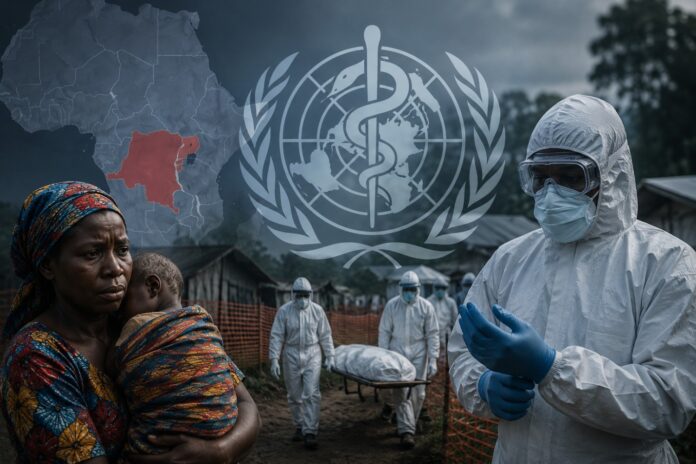
The outbreak that produced France’s Ebola patient originates in the Democratic Republic of Congo, which has been battling a severe resurgence of the virus for months. Congolese health authorities have recorded at least 452 deaths tied to the outbreak as of 3 July, and the virus has continued to spread geographically, with a case recently confirmed in Kisangani, a major city roughly 600 kilometers from the epicenter of the crisis. The expanding reach of the outbreak has raised international alarm, with global health officials previously warning of a significant risk that Ebola could spill over into neighboring South Sudan.
The recovery of France’s first Ebola patient will likely be viewed as a reassuring sign that the country’s health system is equipped to detect, isolate, and treat imported cases of the virus without wider transmission. French authorities have faced increasing pressure to prepare for the possibility of more imported Ebola cases as international travel and humanitarian work connect France to the outbreak zone in central Africa.
Health officials have not said whether the recovered patient will resume humanitarian work in the DR Congo, nor have they detailed the exact treatment regimen used during hospitalization. For now, French officials are treating the successful recovery as validation of the surveillance and containment measures triggered the moment Ebola was suspected, even as the broader outbreak in central Africa continues to claim lives and test the limits of the region’s health infrastructure.
The episode has also reignited debate in France over how prepared the country’s hospitals and airports are for future imported Ebola cases, given the frequency of flights connecting Paris to parts of Africa where the virus remains active.

Public health specialists affirmed that the swift identification of the infected doctor, followed by immediate isolation and contact tracing, is precisely the kind of response that limits Ebola from ever gaining a foothold outside the regions where outbreaks originate. Rist’s announcement was welcomed by medical staff who treated the patient, and by officials who had spent the past two weeks closely tracking the case for any sign that the virus had spread beyond the single traveler.