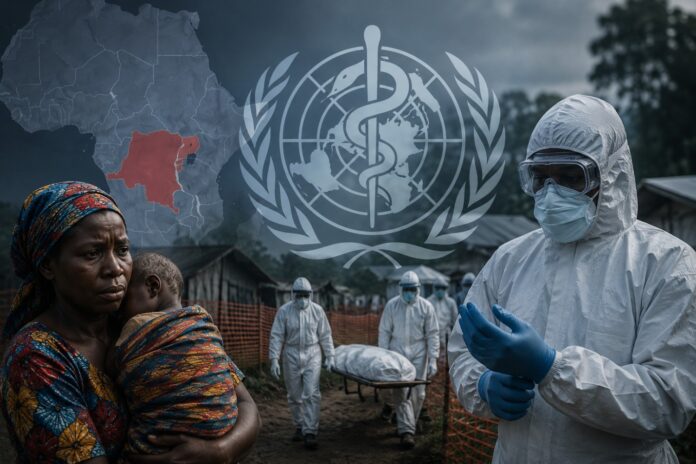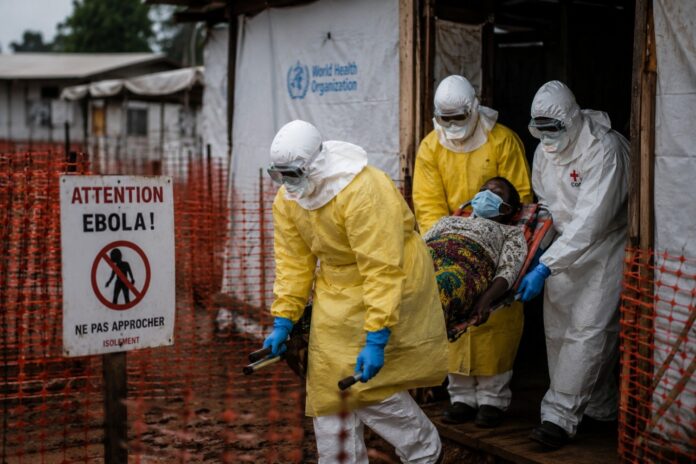
The Democratic Republic of Congo’s Ministry of Health confirmed this week that the country’s Ebola outbreak has surpassed 5,000 cases, a grim milestone that health officials say underscores how badly the response is being outrun by the virus. Recent Government figures showed 5,021 confirmed cases and 2,378 deaths, even as international teams scramble to contain transmission across some of eastern Congo’s most remote and unstable territory.
The scale of the crisis has already made this the deadliest Ebola event Congo has ever recorded, eclipsing the 2018-2020 epidemic that killed more than 2,200 people in North Kivu and Ituri provinces. Worldwide, only the catastrophic 2014-2016 West African Ebola epidemic, which killed more than 11,000 people, has claimed more lives. Health experts now warn that the current outbreak could eventually surpass even that toll, given the pace at which Ebola is spreading through the region.
What alarms responders most is not just the case count but the speed of transmission. According to the World Health Organization, this outbreak crossed the 1,000-case threshold roughly three times faster than any previous Ebola outbreak on record. Congo’s 2018 epidemic took about 235 days to reach 1,000 infections; this one did it in roughly 40. WHO Director-General Tedros Adhanom Ghebreyesus told a meeting of health officials this week that the epidemic is spreading rapidly and that the risk of it crossing borders remains high, adding bluntly that the outbreak is far from being under control.
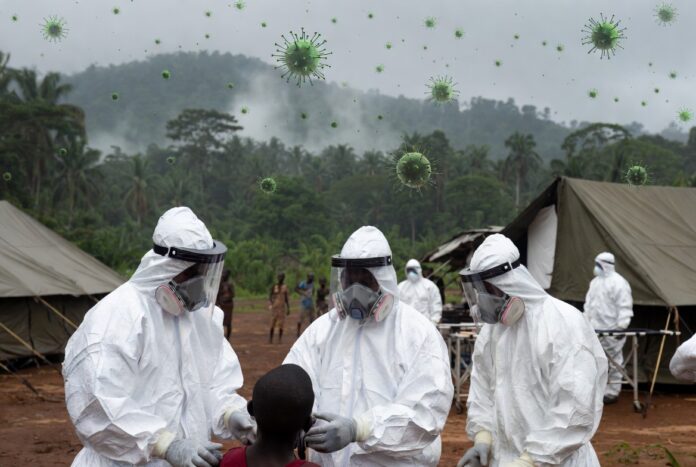
The outbreak is being driven by the Bundibugyo species of the Ebola virus, a rarer strain for which no approved vaccine or treatment currently exists, unlike the Zaire strain that fueled earlier Congolese outbreaks and for which effective vaccines were developed. That gap has left health workers largely reliant on supportive care, contact tracing and safe burial practices to slow the disease, tools that are proving difficult to deploy fast enough in Ituri province, which alone accounts for roughly 85 percent of the country’s confirmed cases.
Compounding the challenge is the environment in which the virus is spreading. Ituri has been wracked by insecurity, armed group violence and mass displacement for years, conditions that make contact tracing dangerous and unreliable and that push infected people to keep moving rather than seek care. Health officials say most new Ebola cases are now being detected outside the pool of people already under monitoring, a sign that the outbreak has outrun surveillance efforts entirely.
Distrust has also boiled over into violence. In the territory of Aru, residents attacked a health team on Monday after a suspected Ebola case was reported, setting fire to an ambulance and damaging two other vehicles, according to a local community leader. Such incidents echo the mistrust that hampered the response during Congo’s earlier Ebola epidemics and threaten to further slow burial teams and case investigators already stretched thin.
On the ground in Bunia, the strain on health workers is mounting. Thérèse Anyiya, a nurse in Ituri’s provincial capital, described exhaustion from relentless shifts and poor working conditions, and said some colleagues have gone on strike after not being paid. She warned that if managers do not take the situation seriously, more health workers could walk away from an Ebola response that is already struggling to keep pace.
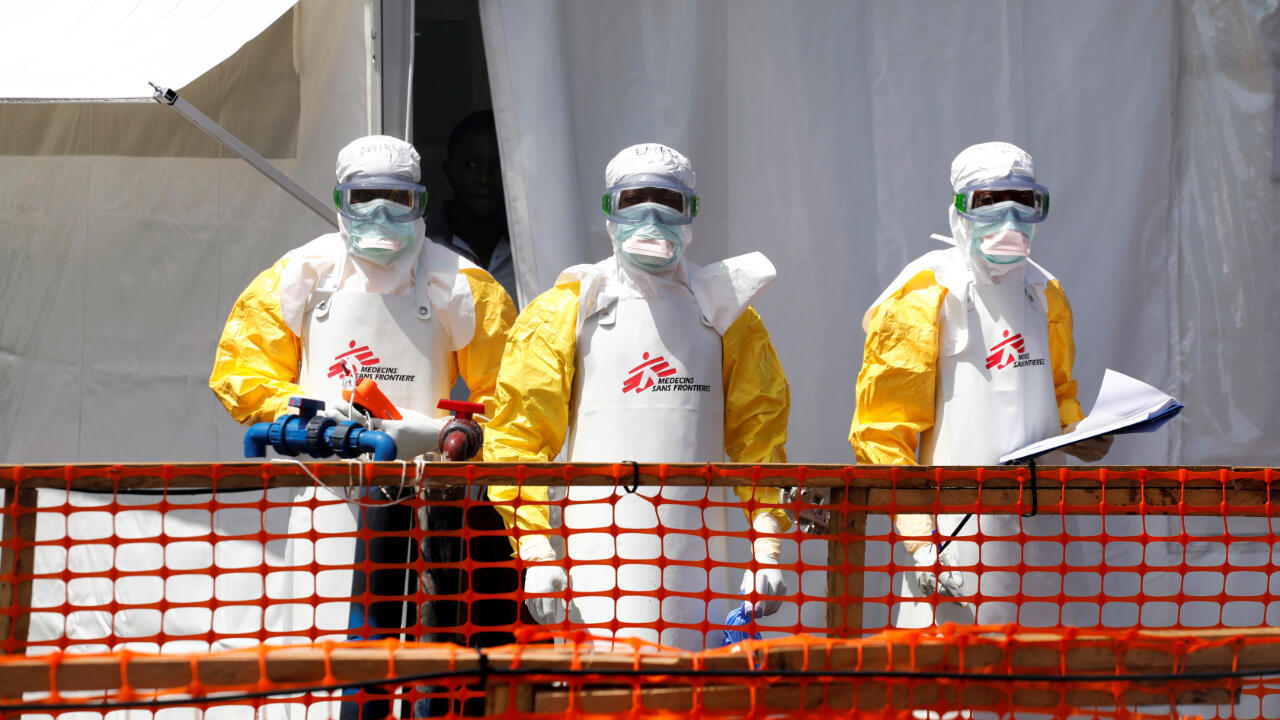
Burial teams in protective suits have become a familiar sight in Bunia in recent days, including for the funerals of two young children, ages 3 and 6, who died of Ebola this week. Confirmed cases and infections tied to the outbreak have also been detected outside Congo’s borders, in Uganda and France, though the WHO’s most recent update recorded new transmission only within Congo itself.

This marks Congo’s 17th recorded Ebola epidemic since the virus was first identified in the country in 1976, but health officials say none has combined this degree of geographic spread, insecurity and lack of medical countermeasures. With cases now confirmed across roughly 55 health zones spanning six provinces, the coming weeks are expected to test whether an intensified international response can finally slow an outbreak that, so far, has outpaced nearly every measure used to fight it.
Related: MSF urges Ebola response scale-up as DR Congo outbreak nears 2,000 cases
This article was produced by the Maple Epoch Editorial Team. See our editorial standards and AI-use disclosure and editorial policy.