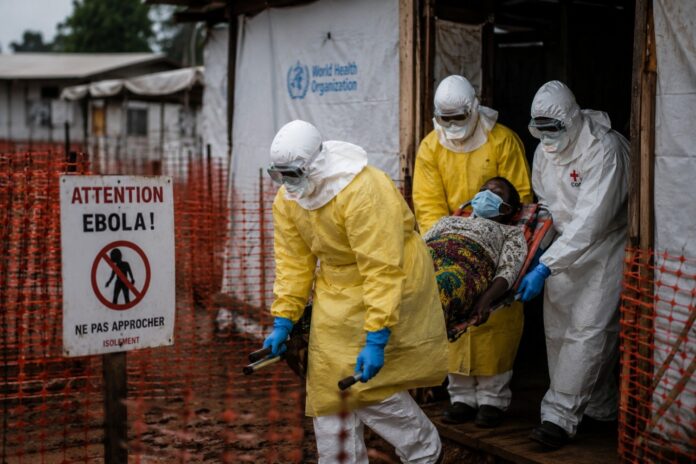
An international effort is underway to contain an Ebola outbreak in the Democratic Republic of Congo and Uganda that has already claimed more than 100 lives, according to health authorities. The Africa Centres for Disease Control and Prevention (Africa CDC) has mobilized resources across the continent while the United States has activated public health restrictions to limit potential entry from the affected regions.
The outbreak has raised fears among global health officials because of its spread across multiple health zones, the involvement of health workers, and the emergence of cases in Uganda’s capital, Kampala. The World Health Organization warn that conflict, displacement and weakened healthcare systems in eastern Congo are creating conditions that could allow the virus to spread further if containment efforts fail.
An American working in the Democratic Republic of Congo tested positive for Ebola, the US Centers for Disease Control and Prevention confirmed on Monday. Though the CDC did not identify the person by name, the international charity Serge reported that a Christian missionary physician, Dr. Peter Stafford, had tested positive after presenting symptoms consistent with the virus.
His wife, Dr. Rebekah Stafford, and another physician, both of whom were treating patients when the outbreak began, are being monitored for signs of the virus but are currently asymptomatic, the charity said. The couple’s four children are also being monitored.
Dr. Stafford, a board-certified general surgeon who has served with Serge since 2023 at Nyankunde Hospital in Bunia, was exposed while caring for patients. He is being evacuated for specialized treatment in Germany along with a small number of other high-risk individuals. US officials are coordinating the medical relocation of seven people from the region, including the infected American.
This development has brought renewed attention to the risks faced by frontline health workers and missionaries operating in unstable areas. Serge and other organizations have emphasized the dedication of their teams while calling for stronger international support to protect both local communities and expatriate staff.
Outbreak Declared Continental and International Emergency
On Sunday, the World Health Organization declared the Ebola epidemic a public health emergency of international concern. The outbreak does not yet meet the criteria of a pandemic emergency, but WHO warned that the high positivity rate and increasing number of cases and deaths across health zones point toward a potentially much larger outbreak.
“Currently, we have already more than 100 deaths due to this outbreak, and this is not acceptable,” the director-general of the Africa Centres for Disease Control and Prevention, Dr. Jean Kaseya, told reporters. The Africa CDC declared the outbreak a Public Health Emergency of Continental Security, enabling coordinated responses across borders.
As of recent tallies, authorities have reported around 395 suspected cases and 106 associated deaths in the DRC and Uganda. Figures continue to evolve quickly, with new suspected and confirmed cases emerging in multiple health zones. In Uganda, two laboratory-confirmed cases, including one death, have been reported in the capital Kampala. These cases appear linked to travel from the DRC, raising alarms about undetected community transmission.
The latest outbreak is being driven by the Bundibugyo strain, one of several viruses that can cause Ebola disease. The organization has called the outbreak extraordinary as there are currently no approved treatments or vaccines specific to the Bundibugyo virus. Previous outbreaks of this strain have been limited, leaving health systems with less experience and fewer tools compared to more common variants like Zaire Ebola.
Challenges in a Region Plagued by Conflict and Instability
Relief officials warned that years of war and aid cuts have deepened a humanitarian crisis of staggering scale in the DRC, where thousands of people have been killed and many more displaced since January. Mounting hostilities have slashed access to key surveillance systems that should have detected this outbreak weeks earlier, according to the country director for the international NGO Oxfam.
The outbreak is affecting the country’s remote northeastern Ituri province, an area marked by mining activity, population mobility, and proximity to borders with Uganda and South Sudan. Bunia, the provincial capital, and other zones like Rwampara and Mongbwalu have seen significant activity. Health facilities are strained, and reports indicate community deaths that suggest many cases remain undetected.
Ebola symptoms include fever, muscle pain, rash and sometimes bleeding. The virus is transmitted through direct contact with bodily fluids, including the handling of contaminated materials or someone who has died from the disease. The fatality rate involving the Bundibugyo strain is estimated to be between 25 percent and 40 percent, according to Médecins Sans Frontières.
Aid workers and health professionals in the region called on the international community to strengthen response efforts. One doctor described it as a major battle against the infection. “We are also appealing to all people and organizations capable of supporting this battle against the infection,” Dr. Patient Mazirane, the medical director at the Universelle Clinic in Bunia, said. Another resident warned that the outbreak seems even more deadly than previous strains and urged swift action.
US Implements Travel Restrictions and Enhanced Screening
That same day, the CDC invoked Title 42, a public health law that restricts entry into the US during outbreaks of communicable diseases, for at least 30 days. Title 42 has been on the books since 1944 but has been used only twice in the modern era. The first time was from March 2020 to May 2023 during the Covid-19 pandemic. This marks the second use.
Starting immediately, US health officials will enforce enhanced public health screenings for people arriving from affected regions and place restrictions on non-US passport holders who have traveled to Uganda, the DRC or South Sudan in the past three weeks. The measures do not apply to US citizens or service members.
Dr. Jeanne Marrazzo, chief executive officer of the Infectious Diseases Society of America, noted that restricting immigration can help stem spread but must be paired with exit screening and respect for human rights. “Pathogens don’t recognize passports,” she said. The CDC assessed the immediate risk to the US public as low but pledged to monitor the situation closely.
The State Department issued new travel advisories warning against nonessential trips to the affected areas. The US embassy in Kampala temporarily paused visa services. Meanwhile, the CDC is deploying additional personnel for surveillance, contact tracing, and laboratory support, building on teams already in the region.
International Aid and Coordination Efforts Accelerate
About seven metric tons of emergency medical supplies, including protective equipment, tents and beds, arrived in Bunia to help scale up frontline response efforts. The DRC’s health minister announced the opening of three new treatment centers. WHO and partners are working to bolster infection prevention in health facilities, where several workers have been affected.
Experts like Professor Adrian Esterman from Adelaide University pointed to the disconnected cases in Kampala as a warning sign that the outbreak in the DRC may be larger than currently visible. Dr. Matt Mason from the University of the Sunshine Coast highlighted concerns over infection control gaps that could amplify spread within hospitals and into communities.
This marks the 17th Ebola outbreak in the DRC since the virus was first identified in 1976. The country’s forested regions are home to fruit bats, considered the natural reservoir, and local communities’ close interaction with these environments increases exposure risks, according to public health experts.
Africa CDC has convened high-level meetings with neighboring countries and global partners, including pharmaceutical companies, to accelerate preparedness. Calls are growing for rapid development or adaptation of countermeasures specific to the Bundibugyo strain, alongside sustained investment in regional health systems.
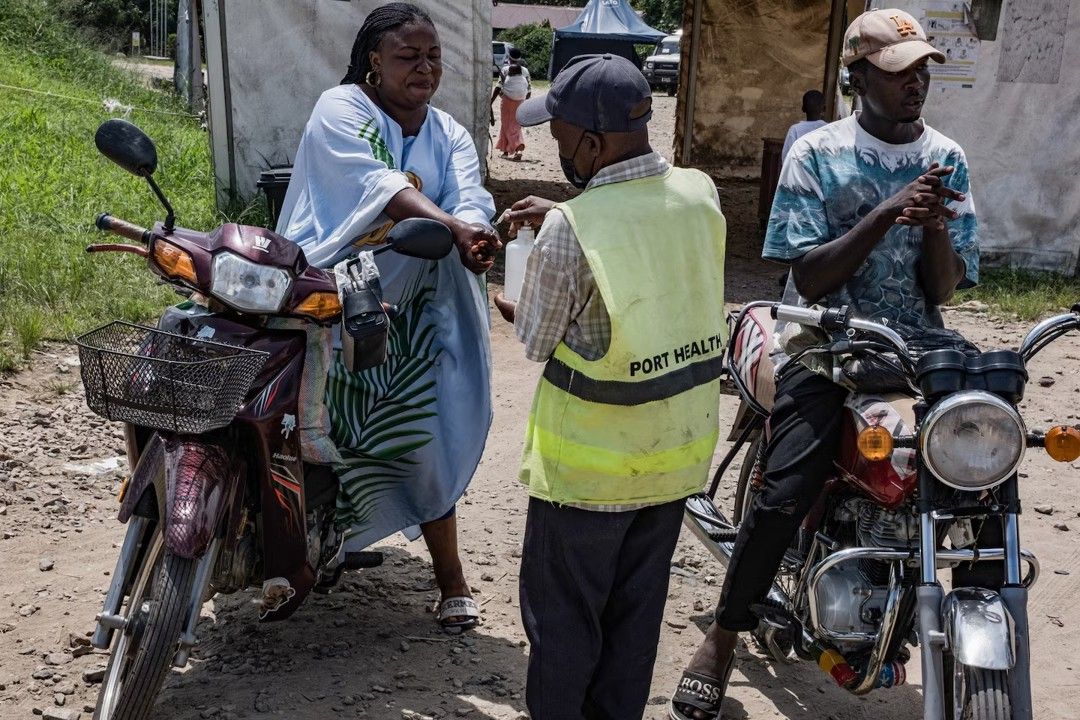 Health leaders emphasize that a combination of strong surveillance, community engagement, safe burial practices, and international solidarity will be essential to bring this outbreak under control before it claims more lives or spreads further. As Dr. Kaseya and others have warned, the window for effective containment is narrowing amid complex regional challenges.
This article was first published on CNN