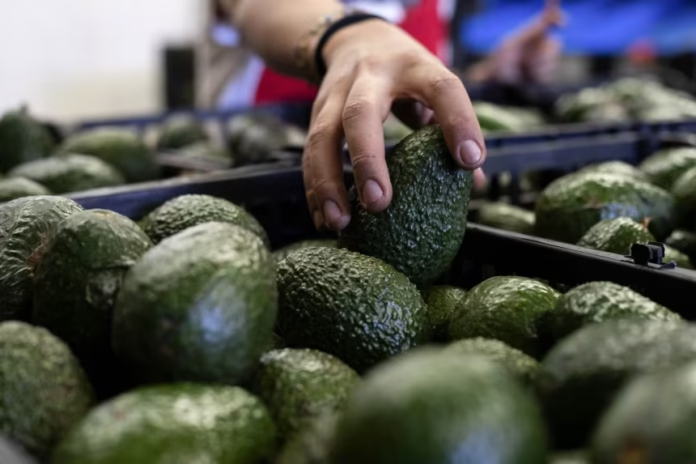
Mexico’s avocado industry is facing fresh uncertainty after the US suspends avocado inspections in the state of Michoacan following reported security concerns involving American personnel. The decision has temporarily halted inspection activities that are required before avocados can enter the US market, creating concerns over possible export delays from Mexico’s largest avocado producing region.
The suspension affects officials from the US Department of Agriculture who oversee inspection procedures for avocado shipments destined for the United States. Without the required on site approval, newly processed shipments cannot move across the border until inspections resume.
Authorities clarified that avocado shipments which had already completed the inspection process before the suspension remain eligible for export. However, produce awaiting approval will remain on hold until inspection operations restart.
Security Concerns Trigger Inspection Suspension
According to officials in Michoacan, the temporary suspension follows a reported threat against American interests in the region. Although details surrounding the incident have not been publicly disclosed, state authorities have acknowledged the seriousness of the situation and are working closely with federal agencies to restore normal operations.
The Association of Avocado Exporting Producers and Packers of Mexico advised packing facilities that fruit intended for export cannot currently be processed unless it had already received USDA inspection before the suspension took effect. As a result, many producers are reviewing harvesting schedules and adjusting daily operations while awaiting further guidance.
The state government also confirmed that security forces are carrying out operations targeting criminal groups involved in extortion activities. Organized crime has long posed challenges for agricultural producers in parts of Michoacan, with many businesses reporting pressure from criminal organizations demanding illegal payments.
To strengthen protection, Michoacan’s Public Security Secretariat met with USDA representatives to discuss additional security measures for American inspection personnel. State officials also announced an increased security presence in key avocado producing areas.
Avocado Industry Faces Economic Impact
Michoacan remains the heart of Mexico’s avocado industry, supplying the vast majority of avocados exported to the United States. The sector supports more than 200,000 jobs across farming, packing, transportation, and related industries, making uninterrupted exports vital to the region’s economy.
Industry representatives are also engaging with Mexican federal authorities in Mexico City to seek a swift resolution that will allow inspection activities to resume while ensuring the safety of all personnel involved.
This is not the first time security issues have disrupted avocado exports from Michoacan. In 2024, the United States temporarily halted avocado imports after two American inspectors were reportedly assaulted and briefly detained at a police checkpoint. That suspension lasted more than a week, costing Mexican producers millions of dollars in lost revenue while contributing to a sharp increase in avocado prices for US consumers.
Although the current suspension only affects inspection operations rather than all imports, industry observers warn that prolonged delays could once again disrupt supply chains and place additional pressure on prices if exports slow significantly.
Both Mexican authorities and industry leaders say they are committed to resolving the security concerns as quickly as possible. Their immediate priority is restoring inspection activities while maintaining safe working conditions for international personnel and protecting one of Mexico’s most valuable agricultural exports.
The latest suspension highlights the close connection between public security and international trade. Until inspection operations resume, growers, exporters, and buyers on both sides of the border will be closely monitoring developments, hoping the disruption remains short lived and that the steady flow of Mexican avocados to the United States can quickly return to normal.