The platform isn’t banning AI content outright, but videos made entirely by AI tools will no longer reach new audiences through its recommendation system
Snapchat announced on July 31 that it’s changing how its recommendation algorithm treats AI-generated content on Spotlight, the app’s short-form video discovery feed. Going forward, videos created wholly by AI tools will no longer be surfaced to new audiences through Spotlight’s recommendation system, even when the AI origin of the video is properly disclosed. The change took effect immediately.
This isn’t a ban on AI-generated content itself. Users can still upload fully AI-generated videos to Snapchat, and those videos will remain visible to people who already follow the account that posted them. What’s changing is discovery. Spotlight’s entire growth mechanism depends on the recommendation algorithm surfacing content to viewers who don’t already follow the creator, and that channel is now closed for videos built entirely by AI. Snapchat’s Spotlight guidelines put it directly: the platform’s content ranking system rewards authentic, human-made content over material that’s wholly AI-generated outside the app, regardless of whether that content carries a transparency disclosure.
What still counts as human-made
The distinction Snapchat is drawing matters most for the wide range of creators who use AI as one tool among several rather than as the entire production process. If someone uses Snapchat’s own built-in AI features to color grade a clip, clean up audio, add visual effects, or otherwise enhance footage they shot themselves, that content remains fully eligible for recommendation, and it will continue to carry a label indicating AI involvement. The line Snapchat is drawing separates AI-assisted human creativity from content generated wholesale by feeding a prompt into a tool and uploading whatever comes out.
In its announcement, Snapchat framed the goal as protecting Spotlight’s identity as a place built around real people and original storytelling. The company said it wants viewers to keep discovering authentic creativity from actual creators, arguing there’s lasting value in rewarding original perspectives and the specific moments people choose to capture and share themselves.
Snapchat also noted this wasn’t a sudden reversal. The company said it first signaled back in April that users would start seeing less AI-generated material in Spotlight, and Friday’s update builds directly on that earlier warning rather than introducing the idea from scratch.
Part of a wider backlash against AI slop
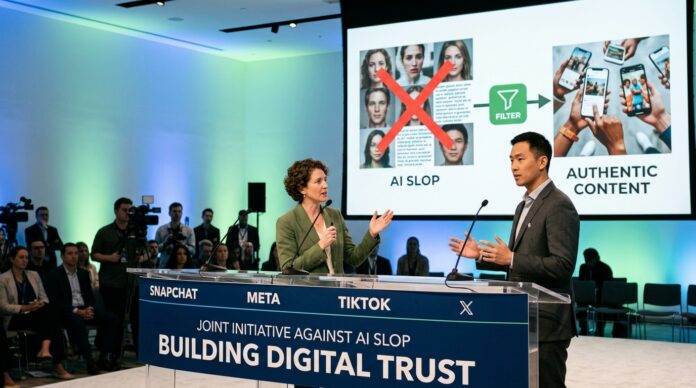
Snapchat’s move lands amid a broader shift across the tech industry, as companies respond to mounting frustration with low quality, repetitive AI content, a category increasingly referred to online simply as AI slop. LinkedIn recently added a feature letting users flag posts that look AI-written. Substack built a tool to help readers identify AI-generated newsletters. YouTube tightened its monetization rules to block payouts on unoriginal, templated AI videos and on content featuring AI-generated characters discussing sensitive subjects like healthcare or personal finance.
Meta has faced some of the sharpest criticism in this category. Earlier this year the company pulled an Instagram feature that let users apply AI edits to photos pulled from public accounts, after a wave of backlash over how the tool was being used without the consent of the people in those photos. That controversy is separate from, though closely related to, the debate playing out over Meta’s short-form video app Vibes, which launched in February built around an entire feed of AI-generated video content. Meta has described Vibes as an early bet that fully synthetic video could become a genuine vehicle for creative expression and a new source of platform engagement.
Snapchat’s new policy positions the company almost directly opposite that bet. Where Vibes leans into AI generated content as its core product, Snapchat is now actively suppressing the reach of the same category of material inside its own app. Industry commentary following the announcement has been quick to draw that contrast, framing Snapchat’s move as a deliberate rejection of the content strategy Meta is pursuing with Vibes.
Growth numbers behind the decision
Snapchat tied the policy shift to data about how Spotlight has been growing. The company said the number of unique creators actively contributing to Spotlight has climbed 120% over the past year, a jump the company points to as evidence that real people are increasingly choosing the platform to share original work. That growth appears to be part of the underlying rationale for protecting the feed from being crowded out by high volume, low effort AI content, which can be produced and uploaded far faster than any individual creator can film and edit genuine footage.
The timing also lines up with other changes Snapchat has made recently around Spotlight, separate from the AI policy itself. Last month the company introduced new sharing restrictions for younger teenagers, limiting users between the ages of 13 and 15 so that their Spotlight posts can only be shared with people who follow them back, a change aimed at reducing the risk of doxxing for that age group.
What this means for creators
The practical impact of the change depends heavily on how a given creator actually uses AI. For accounts built around fully synthetic video, where a prompt goes in and a finished video comes out with no filming involved, Spotlight’s recommendation system is now effectively closed off as a growth channel. Existing followers will still see that content, but the app will no longer push it toward new viewers, which cuts off the primary way accounts have historically built an audience on the platform.
For the much larger group of creators who film real footage and then lean on AI tools for editing, whether that’s through Snapchat’s own creative suite or general enhancement work, very little changes. That content remains eligible for the same recommendation boosts as before, carrying a disclosure label but facing no penalty in reach.
Snapchat was careful to frame the update as a recommendation change rather than outright rejection of AI technology in the app. The company continues to build and promote its own AI-powered creative tools for editing and enhancement, and those tools remain central to how it expects many creators to keep using AI going forward. The distinction the company is drawing isn’t AI versus no AI, it’s between AI as a tool that supports a person’s creative work and AI as the entire source of a video’s content.
Whether other major platforms follow with similarly specific recommendation penalties, rather than broader labeling or reporting tools, remains to be seen. For now, Snapchat’s approach sets it apart from Meta’s more permissive stance toward AI generated video with Vibes, even as both companies continue investing heavily in generative AI tools elsewhere across their products.
This article was produced by the Maple Epoch Editorial Team. See our editorial standards and AI-use disclosure and editorial policy.