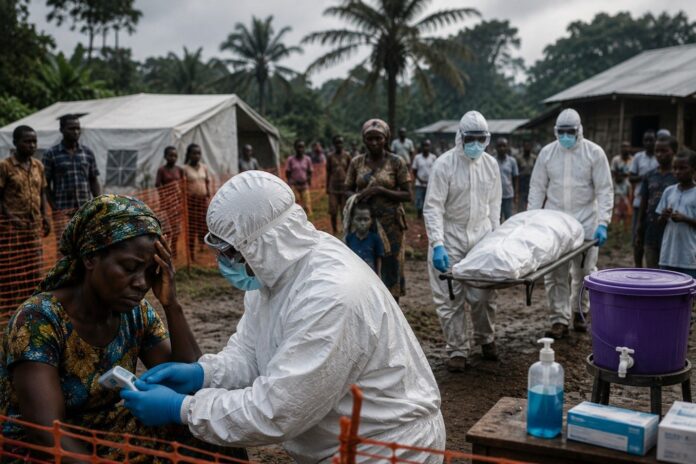
At least 131 deaths have now been reported in the growing Ebola outbreak in the Democratic Republic of Congo, with more than 513 suspected cases identified across several provinces, according to local officials, as international health agencies intensify efforts to contain the spread of the deadly virus.
A spokesman for the Congolese government said infections are now being reported across a wider geographical area, heightening fears that the outbreak could become far larger than currently detected. New suspected and confirmed cases have emerged in Nyakunde in Ituri Province, Butembo in North Kivu and the eastern city of Goma, one of the region’s largest urban centers and a major transport hub bordering Rwanda.
The outbreak has also spread beyond DR Congo’s borders. The US Centers for Disease Control and Prevention said Uganda has confirmed two Ebola cases, including one death, prompting concerns over regional transmission in East Africa.
The World Health Organization has declared the outbreak a “public health emergency of international concern,” its highest level of global alert short of a pandemic declaration. WHO officials warned that the outbreak, caused by the Bundibugyo strain of Ebola virus, could already be significantly larger than current figures suggest.
The Bundibugyo strain is one of the rarer forms of Ebola and currently has no approved vaccine or targeted treatment, making the outbreak especially difficult to control. WHO said there is a “significant risk” of both local and regional spread as health workers struggle to trace infections in conflict affected areas.
American doctor infected as US steps up response
An American doctor working in DR Congo is among those infected, according to both the CDC and the Christian medical missionary organization Serge.
While the CDC did not publicly identify the infected American, Serge confirmed that one of its physicians, Dr. Peter Stafford, tested positive after developing symptoms consistent with Ebola.
The organization said two additional doctors who were exposed while treating patients, including Dr. Stafford’s wife, Dr. Rebekah Stafford, remain asymptomatic and are following quarantine procedures. The couple’s four children are also being monitored.
CBS News, the BBC’s US partner, reported that Stafford will be transferred to Germany for treatment. Multiple US media outlets have also reported that at least six Americans may have been exposed to the virus during the outbreak.
The CDC confirmed it was helping coordinate the “safe withdrawal of a small number of Americans who are directly affected,” though officials declined to specify how many US citizens were involved.
Health news outlet STAT, citing unnamed sources, reported that the US government is considering transporting exposed Americans to a US military facility in Germany for quarantine, though officials have not confirmed the plan publicly.
During a press briefing Sunday, CDC officials avoided direct questions about the Americans potentially affected but emphasized that preparations are underway to prevent the virus from spreading internationally.
In an update Monday, the CDC described the immediate risk to the US public as relatively low but announced a range of new preventive measures.
The agency said it would increase monitoring of travelers arriving from affected regions and impose entry restrictions on non US passport holders who have traveled to Uganda, DR Congo or South Sudan within the previous 21 days.
US authorities also said airlines and international partners would assist with contact tracing, passenger monitoring, expanded laboratory testing and hospital preparedness.
The State Department separately issued a Level Four travel advisory, its most severe warning level, urging Americans not to travel to DR Congo.
Regional fears grow as officials urge caution
The Congolese government has sought to reassure the public that response teams are actively tracing suspected cases and investigating chains of transmission, insisting there is “no need for panic.”
Still, the expansion of cases into new locations has alarmed regional governments and health experts, particularly because eastern Congo’s healthcare infrastructure has been weakened by years of armed conflict and displacement.
WHO officials warned that insecurity in the affected areas could severely complicate surveillance and containment efforts, increasing the likelihood of undetected community transmission.
Jean Kaseya, head of the Africa Centres for Disease Control and Prevention, told the BBC that the number of suspected infections had already approached 400 earlier this week and stressed the importance of strict public health measures.
“We don’t want people infected because of funerals,” Kaseya said during an interview with the BBC World Service’s Newsday programme.
Unsafe burial practices were one of the major drivers of transmission during West Africa’s devastating Ebola epidemic between 2014 and 2016, when more than 28,600 people were infected and over 11,000 died across Guinea, Sierra Leone and Liberia. The virus also spread internationally, with cases reported in the United States, United Kingdom and Italy.
Community funerals involving the washing and handling of bodies contributed heavily to infections during that outbreak, prompting health agencies to urge strict controls on burial procedures in the current crisis.
WHO has advised both DR Congo and Uganda to strengthen cross border screenings to reduce the risk of further spread. The organization also urged neighboring countries to increase surveillance at hospitals and within communities.
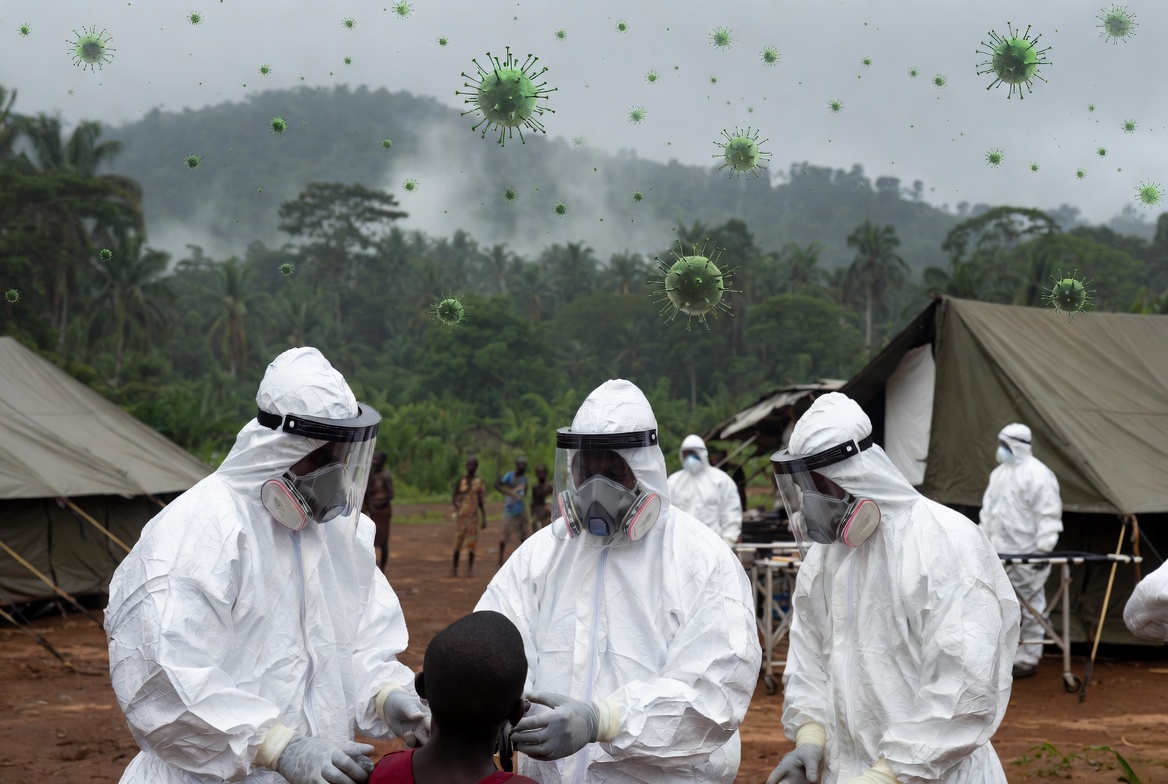 Rwanda announced it would tighten screening measures along its border with DR Congo as a “precautionary measure,” while Nigerian authorities said they were “closely monitoring the situation.”
Public health experts warn that without stronger international support, the outbreak risks escalating rapidly in a region already facing humanitarian instability, population displacement and limited access to healthcare.