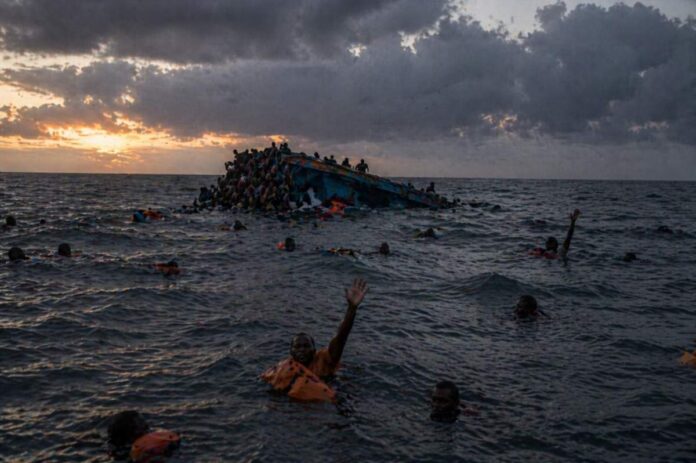
About 250 Rohingya refugees and Bangladeshi nationals, including children, are missing after a crowded boat capsized in the Andaman Sea last week, according to the United Nations High Commissioner for Refugees and the International Organization for Migration.
The vessel, described as a trawler that had departed from Bangladesh and was headed for Malaysia, reportedly sank during severe weather. The two agencies said the boat went down because of heavy winds, rough seas, and overcrowding, underscoring the dangers faced by desperate migrants attempting risky sea crossings in search of safety and work.
It remains unclear exactly when the boat capsized. However, on April 9, a Bangladesh flagged ship rescued nine survivors who had been drifting in open water while clinging to plastic drums and broken wooden debris, according to coast guard officials.
Survivors found after days at sea
The survivors’ ordeal has provided a glimpse into the scale of the tragedy. A coast guard member, speaking anonymously to the BBC, said the group had left Bangladesh for Malaysia on April 4 hoping for a better future.
According to the official, the boat was caught in a storm on either April 7 or April 8.
“They were left floating at sea for nearly two days, holding onto drums and pieces of wood,” the officer said.
The survivors were discovered around 2 a.m. on April 11 by the crew of the Bangladesh flagged tanker Meghna Pride, which was sailing from Bangladesh to Indonesia. The crew pulled them aboard and later learned they included both Bangladeshi nationals and Rohingya refugees from the camps in Cox’s Bazar.
The tanker later entered Bangladeshi waters, where the survivors were transferred to a coast guard vessel named Mansoor Ali.
Officials said the rescued group reported seeing nearly 100 people during the disaster, but the exact number of passengers remains uncertain. There has so far been no sign of the missing passengers or of the wrecked boat itself.
Rohingya crisis driving dangerous journeys
The Rohingya are a persecuted Muslim minority from Myanmar who have faced decades of discrimination. They are denied citizenship by Myanmar’s government, leaving many stateless and without basic protections.
Hundreds of thousands fled into Bangladesh in 2017 after a brutal military crackdown in Myanmar’s Rakhine State that prompted widespread international condemnation.
Most now live in overcrowded refugee settlements in Cox’s Bazar, where conditions remain harsh. Limited job opportunities, movement restrictions, shrinking aid, and uncertain futures have pushed many to consider smuggling routes across the sea.
Malaysia is often seen as a destination because it is a Muslim majority country with existing Rohingya communities and the possibility of informal employment.
The UN agencies said ongoing violence in Myanmar’s Rakhine State has crushed hopes of any safe return in the near future. Combined with worsening conditions in Bangladesh’s refugee camps, that has driven many to undertake life threatening journeys.
“This tragic incident reflects the dire consequences of protracted displacement and the absence of durable solutions for the Rohingya,” the UNHCR said in a joint statement with the migration agency.
Survivors recount fear and injury
One of the survivors, Rafiqul Islam, told Agence France-Presse that he floated for nearly 36 hours before rescue crews reached him.
The 40-year-old said leaking fuel or oil from the vessel burned his skin while he drifted helplessly in the water. He added that the promise of employment in Malaysia had persuaded him to board the boat.
His story mirrors that of many migrants who risk everything after being offered jobs abroad by smugglers or informal recruiters.
Repeated tragedies in regional waters
Such maritime disasters have become tragically familiar in the Bay of Bengal and Andaman Sea. Boats used by smugglers are often small, poorly maintained, and dangerously overcrowded. Many lack enough food, fresh water, life jackets, or sanitation.
Some never reach their destination. Others are intercepted, detained, or pushed back at sea.
In January 2025, Malaysian authorities turned away two boats carrying roughly 300 refugees after providing food and water to passengers.
Indonesia and Malaysia have both periodically accepted stranded Rohingya arrivals, but local opposition and political pressures have also led to resistance in some coastal communities.
Human rights groups say regional governments need a more coordinated rescue and protection system to prevent repeated loss of life.
The UN agencies urged the international community to maintain humanitarian funding for Rohingya refugees and the Bangladeshi communities hosting them.
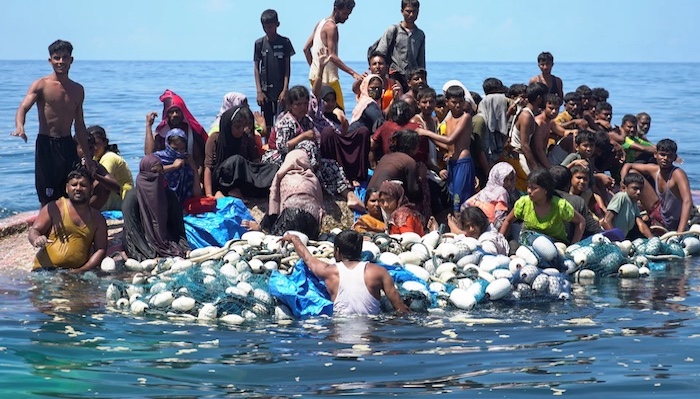

In their statement, the agencies said the latest tragedy should serve as a warning that deeper political solutions are urgently needed.
“As Bangladesh marks its new year, this tragedy is a reminder of the efforts urgently needed to address the root causes of displacement in Myanmar and create conditions that would allow Rohingya refugees return home voluntarily, safely and with dignity.”
For now, hopes of finding more survivors are fading, while families across refugee camps and coastal communities wait for news of loved ones lost at sea.
This article was first published on BBC