A Palestinian man working with the World Health Organization was killed by Israeli gunfire in Gaza on Monday, according to his relatives and medical officials, in an incident that has drawn sharply differing accounts from those involved.
Majdi Aslan, 54, was driving along Salah al-Din Road, the main north south artery in the Gaza Strip, when his vehicle came under fire, said Dr. Fathi Al Loulou, who received his body. Aslan’s cousin, Raed Aslan, told CNN that the vehicle bore the World Health Organization logo and was on its way to evacuate patients when it was struck. CNN said it could not independently verify the markings on the car.
The Israel Defense Forces provided a different version of events and did not initially acknowledge the fatality. In a statement, it said troops identified an unmarked vehicle approaching their position near what it referred to as the Yellow Line, a boundary between Israeli controlled areas of Gaza and the rest of the territory.
According to the military, soldiers fired warning shots after determining the vehicle posed an immediate threat. When the vehicle continued moving toward them, troops opened additional fire, striking it. The military said a preliminary assessment indicated that two local Gazan employees of the WHO were inside and had been injured.
WHO confirms death as investigation begins
Tedros Adhanom Ghebreyesus said the organization was “devastated” to confirm Aslan’s death in what he described as a security incident. He noted that two WHO staff members were present in the vehicle but said they were not injured.
Tedros did not directly attribute responsibility in his statement, adding that the incident is under investigation by the relevant authorities.
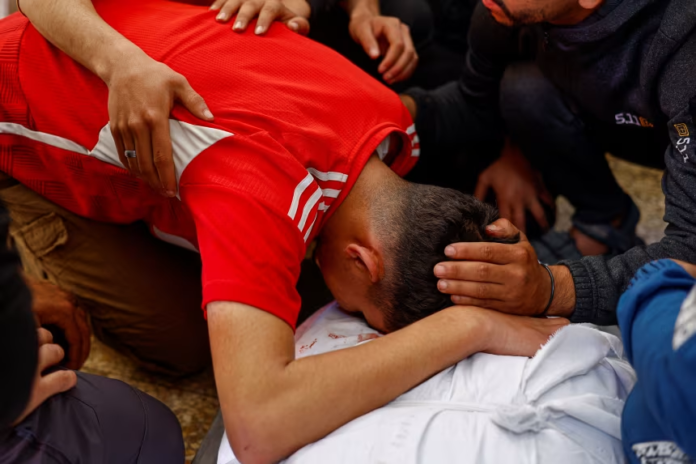
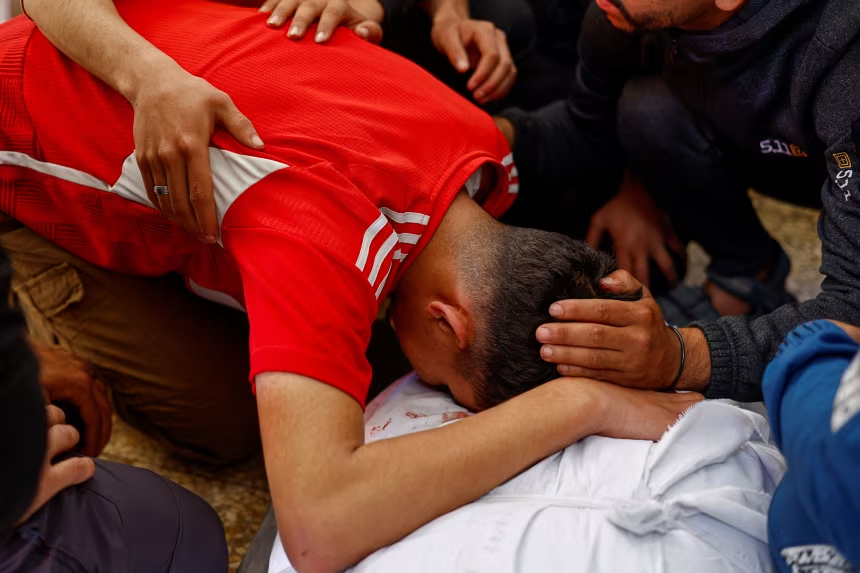
Aslan’s body was transferred to Al Aqsa Martyrs Hospital in central Gaza, where scenes of grief unfolded. Footage showed relatives and mourners gathered around his body, some calling out to him in disbelief.
Dr. Al Loulou described the killing as a targeted attack, emphasizing that Aslan was working for an international organization under humanitarian protection. He said the incident should be considered a war crime, reflecting growing anger among local medical workers over the risks they face.
Humanitarian strain despite ceasefire
The shooting comes at a time when conditions in Gaza remain extremely fragile despite a ceasefire that has technically been in place for six months. Aid organizations have repeatedly warned that the pause in large scale fighting has not translated into safety for civilians or humanitarian workers.
According to the Palestinian Ministry of Health, more than 700 Palestinians have been killed since the ceasefire began, including at least 100 children. The continued casualties underscore the volatility of the situation on the ground.
Humanitarian groups such as Medical Aid for Palestinians have also reported a sharp decline in aid deliveries entering Gaza. The reduction in aid trucks has contributed to worsening shortages of food, medicine and essential supplies across the territory.
The World Health Organization has warned that the medical situation is particularly severe. More than 18,500 critically ill patients still require evacuation from Gaza for treatment, including around 4,000 children. Limited access routes and ongoing insecurity have made such evacuations extremely difficult.
Rising risks for aid workers
The death of Majdi Aslan highlights the growing dangers faced by humanitarian personnel operating in conflict zones. Even during periods labeled as ceasefires, aid workers continue to navigate unpredictable and often hazardous conditions.
Incidents involving clearly marked humanitarian vehicles have been a recurring concern in conflicts worldwide, raising questions about coordination, communication and adherence to international humanitarian law. In this case, whether the vehicle was clearly marked remains disputed, a detail that could prove central to any investigation.

As investigations proceed, the killing is likely to intensify scrutiny over the protection of aid workers and the broader conduct of operations in Gaza, particularly at a time when the international community continues to call for sustained access to humanitarian assistance and greater safeguards for civilians.
This article was first published on CNN