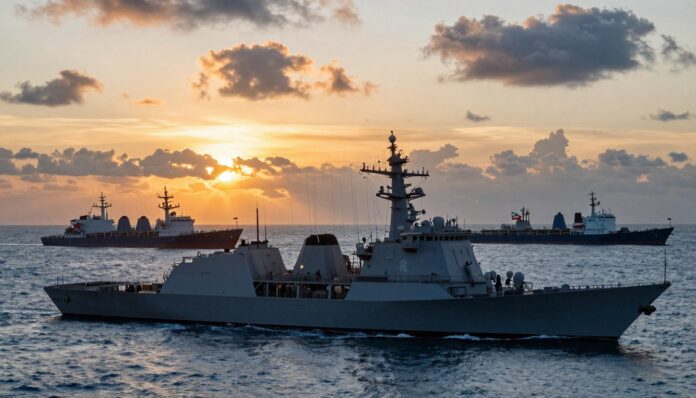
The Persian Gulf is seeing a big change as the US military acts against Iranian ships. This strategic intervention is a big deal for the area’s sea safety. We look into how these moves affect world peace during a very tense time.
These events happen when talks for a ceasefire are underway. It’s important to see how these actions affect talks in a key shipping route.
It’s key to understand the military and diplomatic sides of this story. By looking at the The Strait of Hormuz Blockade, we help our readers get the big picture. We aim to give a fair view of this changing situation.
Key Takeaways
- US military forces have engaged Iranian vessels in the Persian Gulf.
- These actions occur simultaneously with ongoing diplomatic efforts.
- The region remains a critical artery for global energy supplies.
- Military maneuvers create new challenges for international peace talks.
- We analyze the intersection of maritime security and foreign policy.
The Escalation in the Strait of Hormuz
We are seeing a big change in the Persian Gulf security scene. Recent military actions are changing how we think about naval battles. The Strait of Hormuz is now a key area for high-risk operations.
These events show the dangers of doing complex military actions in crowded waters. Keeping peace needs a careful balance between showing strength and avoiding war.
Tactical Overview of the Maritime Intervention
The recent US naval intervention used smart tactics to stop and disable tankers without starting a big war. Our analysis shows these actions need quick use of special ships that can go through the Strait’s narrow, shallow channels.
Doing this near commercial ships is very hard for naval leaders. The chance of causing damage is high. Even small mistakes can lead to big problems for diplomacy and the environment.
“Maritime security is not just about having warships. It’s about keeping global trade flowing while stopping aggression in key places.”
The Strategic Importance of the Chokepoint
The Strait of Hormuz is key for global energy, carrying almost 20% of the world’s oil. Any problem here quickly affects global markets, hurting the economy of many countries.
We need to understand that keeping the Strait open is crucial for Persian Gulf security. The table below shows why this waterway is so important compared to other key places.
| Chokepoint | Daily Oil Transit (Millions of Barrels) | Global Significance |
|---|---|---|
| Strait of Hormuz | 21.0 | Critical |
| Malacca Strait | 16.0 | High |
| Suez Canal | 6.0 | Moderate |
| Bab el-Mandeb | 6.2 | Moderate |
The numbers show why the US naval intervention is seen as a necessary, but risky, step to protect global interests. As we watch the situation, our main goal is to stop this key waterway from being closed.
The Strait of Hormuz Blockade: A Shift in Naval Strategy
Strategic changes in the region have changed how we defend the seas. The The Strait of Hormuz Blockade is more than just a response. It’s a new way to show power with precision, not broad attacks.
This new strategy focuses on key targets to keep shipping lanes open. It lowers the chance of big conflicts. Our goal is to keep global trade flowing smoothly, even with tensions high.

US Naval Assets Deployed in the Region
We’ve set up a range of advanced tools for quick action. Our main ships are Arleigh Burke-class destroyers. They have the power and radar to watch the Strait closely.
We also use drones for constant watch. These drones track ships without risking human lives. The mix of ships and drones is key to our naval deterrence strategy.
“True security in the maritime domain requires the ability to act with both strength and restraint, ensuring that trade flows remain uninterrupted even in the face of provocation.”
— Naval Strategic Command
Technical Capabilities Used to Disable Tankers
The Iranian tanker seizure shows our advanced skills. We use special methods to stop ships without harming them. This way, we avoid big environmental problems and keep crew members safe.
Here’s a list of our main technical advantages:
| Capability | Primary Function | Strategic Benefit |
|---|---|---|
| Electronic Jamming | Disrupts navigation | Prevents unauthorized transit |
| Precision Boarding | Secures the vessel | Minimizes physical damage |
| Remote Propulsion Cut | Stops movement | Ensures vessel compliance |
These tools help us enforce the sea laws without being too harsh. We handle Iranian tanker seizure cases carefully. The The Strait of Hormuz Blockade shows our dedication to keeping the sea lanes open and safe.
The Timing of the Intervention During Ceasefire Negotiations
Military actions in the Strait of Hormuz have added a lot of tension to the ceasefire negotiations. The choice to disable tankers while talks are still going on is a big puzzle for everyone involved. It makes us wonder if fighting can happen at the same time as trying to find peace.
The Fragile State of Ongoing Diplomatic Talks
The talks between Washington and Tehran are very delicate. Any sudden change in the sea could ruin all the hard work done so far. Regional geopolitical tension is high, making every move at sea a risk for trust to break down.
Keeping things calm is key for diplomacy to work. But when ships are stopped, the mood in talks changes fast. This makes it hard for both sides to agree on anything long-term, with the risk of things getting worse always there.
How Military Action Impacts Negotiating Leverage
The action taken sends a clear message, but it also messes with the balance of power. The U.S. wants to show it’s serious, but this might make Iran even more firm. Negotiating leverage is all about how things look, and these moves can either show strength or cause more trouble.
In the end, mixing naval power with diplomacy is a tricky situation. Trying to push the other side might make things worse. Finding a way through these ceasefire negotiations is hard, especially with naval actions going on.
Iranian Response and Regional Tensions
The recent naval operation has highlighted the unstable nature of maritime security in the region. The Iranian leadership’s response to the Iranian tanker seizure has changed the diplomatic scene in the Middle East.

Official Statements from Tehran
Tehran sees the intervention as a clear act of aggression at sea. They have issued strong warnings, saying such actions break international rules and risk the safety of shipping lanes. The tone from the Iranian government remains defiant, calling the disabling of their vessels an unprovoked escalation.
These statements aim to show strength to both their people and the world. Tehran frames the event as a breach of sovereignty. This is to gain support and question the legitimacy of the naval operation. Such words hint at possible changes in their stance in the region.
Potential for Retaliatory Measures in the Persian Gulf
The security of the Persian Gulf has worsened after these events. Experts are watching for signs of asymmetric warfare, like fast-attack craft or naval mines. These tactics can disrupt shipping and pressure rivals.
There’s a chance of more attacks on commercial ships as a form of retaliation. The table below shows possible strategic moves that could affect the region:
| Response Type | Strategic Goal | Risk Level |
|---|---|---|
| Asymmetric Harassment | Disrupting trade flow | High |
| Naval Exercises | Demonstrating military reach | Moderate |
| Diplomatic Withdrawal | Reducing negotiation leverage | Moderate |
| Cyber Operations | Targeting maritime infrastructure | High |
The situation is still changing and hard to predict. We’re watching how possible retaliations might affect the region’s stability. Keeping up with these developments is key to understanding the future of sea operations there.
International Maritime Security and Global Trade
Global stability depends on the free flow of energy through key chokepoints. When these maritime trade routes are blocked, the effects are felt worldwide. The situation in the Persian Gulf shows how fragile our economy is.
Impact on Global Oil Prices and Supply Chains
The blockade has led to a sharp rise in volatility in energy markets. Tankers are delayed or rerouted, causing uncertainty in global oil prices. This affects the United States, where fuel costs are sensitive to Middle East disruptions.
Supply chains are under pressure as companies try to find new paths. The table below shows how these disruptions affect key economic areas:
| Region | Energy Dependency | Economic Risk Level |
|---|---|---|
| North America | Moderate | High |
| European Union | High | Critical |
| East Asia | Very High | Critical |
Reactions from European and Asian Trade Partners
Our international partners are worried about the security of their energy imports. European and Asian nations depend on these maritime trade routes for their industries. They are urging for urgent diplomatic action to avoid further problems.
“The security of global shipping lanes is not merely a regional issue; it is a fundamental requirement for the continued prosperity of the global community.”
— International Maritime Policy Analyst
There’s a growing focus on civilian maritime safety. The presence of naval assets in the area makes it risky for commercial vessels. Protecting civilian crew lives is crucial, as global oil prices depend on safe tanker passage.
The Role of the US Fifth Fleet
The US Fifth Fleet is key in handling the current maritime crisis. It is based in Bahrain and oversees US Fifth Fleet operations in the Persian Gulf. Their role is crucial for keeping the region stable when tensions rise.

Operational Directives and Rules of Engagement
Naval commanders follow strict rules to keep everyone safe without causing more trouble. These rules tell them how to act when they see perceived threats from Iranian ships. Clear communication is the first step to make sure everyone knows what’s happening.
If things get worse, the rules say to act carefully. Commanders can use force only if a ship is a real danger to ships or allies. This careful approach makes sure the US naval intervention follows the law.
Coordination with Regional Allies
Working together is key for good maritime security. The US and its regional partners, like Saudi Arabia and the United Arab Emirates, work together. They watch the traffic through the Strait of Hormuz together. This teamwork helps stop aggressive actions and quickly responds to any problems.
They share goals and work together to keep patrols in sync. By sharing information and resources, they get a comprehensive view of the Strait of Hormuz. This partnership is essential for keeping global trade routes safe and energy flowing, even with diplomatic tensions.
Diplomatic Fallout in Washington
Washington is facing big diplomatic fallout after the move to disable Iranian tankers. This action has raised many questions about who has the power to make such decisions. It also makes people wonder about our future in the Middle East.
Congressional Perspectives on the Escalation
Lawmakers in Washington are split on the recent action at sea. Many want to make sure the administration followed the rules before taking action. They think it’s important to check if the rules were followed.
Some lawmakers worry that this action could lead to a bigger conflict. They say it’s risky, especially when there are talks about a ceasefire. On the other hand, some believe it was necessary to stop more trouble in the region. This shows the tension between the government and Congress.
White House Justification for the Operation
The White House says the action was to protect shipping lanes. They claim it was a defensive measure to keep global trade flowing. They say it’s crucial for the world’s economy.
They also say the goal was not to start a big war. Instead, they see it as a way to stop others from causing trouble. We’re watching how this explanation holds up as Congress looks closer and the world reacts.
The Humanitarian and Environmental Risks
The mix of military plans and civilian sea work raises big questions. When navies attack big ships, it hurts innocent workers and our oceans. We must think hard about these significant risks and any possible gains.
Concerns Over Potential Oil Spills
The Persian Gulf is key for global energy but also very delicate. Hitting a full tanker is a big environmental maritime risk. It could harm marine life for years.
A big spill would ruin coral reefs and homes near the sea. It would also hurt many people who depend on the sea for their jobs.
Thinking about the long-term harm is key. Cleaning up in busy areas is hard and often fails. Stopping big pollution is very important for any country in these areas.
Safety of Civilian Crews on Targeted Vessels
We worry a lot about the civilian maritime safety of tanker workers. They get caught in big political fights and face a lot of danger. Their right to a safe job is often ignored when military and ships meet.
Stopping these routes makes life very hard for sailors. We ask leaders to remember that attacking a ship risks lives. Keeping sailors safe is a must for any naval plan in the area.
Historical Context of US-Iran Maritime Standoffs
We need to look back at the naval standoffs in the Strait of Hormuz. These events have shaped our modern security landscape. By studying these past events, we understand the patterns of escalation in this volatile region.
This historical view helps us see how current actions fit into a long-standing narrative. It shows us the maritime friction that has been ongoing for decades.
Previous Incidents in the Strait of Hormuz
The history of the Strait of Hormuz is marked by significant confrontations. The “Tanker War” of the 1980s is a prime example. During this time, both sides engaged in direct naval skirmishes that tested international maritime law.
These early encounters set the stage for the high-stakes maneuvering we see today. They established a precedent for the challenges we face now.
In recent years, vessel seizures and harassment incidents have kept tensions high. The US Fifth Fleet operations play a key role in maintaining freedom of navigation. Each incident adds complexity to the diplomatic and military challenges faced by the international community.
Evolution of Naval Deterrence Strategies
Our approach to maintaining stability has changed over the years. We’ve moved from passive monitoring to an active naval deterrence strategy. This change reflects our growing need to protect global trade routes in an unpredictable world.
The shift in tactics goes beyond just hardware. It’s a fundamental change in how we project power. Strategic agility is now the cornerstone of our presence in the Persian Gulf. We aim to discourage aggressive behavior without starting a full-scale conflict.
These operational shifts are closely watched by Congressional oversight. We ensure they align with national security goals. The balance between deterrence and diplomacy is delicate. Keeping this balance is our top priority as we navigate the current maritime standoff.
Future Outlook for Regional Stability
The future of regional stability is uncertain. Diplomatic and military tensions keep crossing paths. The current regional geopolitical tension makes the situation volatile for everyone involved. Understanding how our actions today affect tomorrow is key.
Scenarios for De-escalation or Further Conflict
There are two main paths ahead. A successful de-escalation would mean better diplomacy and less talk of war. This would help keep global oil prices stable and ease shipping worries.
If talks fail, we might see more instability. War threats could raise insurance costs for tankers, affecting global oil prices. We should be ready for the possibility of ongoing tension at sea.
The Long-term Impact on Middle Eastern Security Architecture
The crisis might change how nations handle Middle East stability. Countries might look to form new security alliances to avoid relying on one power. This could lead to a more diverse, yet possibly more independent, security setup.
The United States will likely stay a key player, but its role might change. Building strong alliances with regional partners will be crucial for keeping trade flowing. Below is a table showing possible paths for the region based on current trends.
| Scenario | Diplomatic Status | Market Impact | Security Risk |
|---|---|---|---|
| De-escalation | High Engagement | Price Stabilization | Low |
| Stagnation | Limited Dialogue | Moderate Volatility | Medium |
| Escalation | Total Breakdown | Sharp Price Spikes | High |
The region’s future depends on focusing on long-term security over quick wins. Achieving Middle East stability for good will need clear communication and less regional geopolitical tension. We’re watching closely to see how things will play out in the years to come.
Conclusion
The recent naval actions in the Strait of Hormuz are a key moment for world relations. The mix of military actions and ceasefire talks makes things complicated for leaders worldwide.
Handling the Diplomatic fallout is a big challenge for the U.S. and its allies. Keeping communication lines open is crucial to avoid more trouble in this important waterway.
The environmental risks from these naval activities are also a big worry. We must protect the Persian Gulf’s ecosystem for the safety of ships and the health of the waters.
For lasting peace in the Middle East, we need to focus on both security and working together. We’re committed to following these events closely. They will impact global trade and security. Your interest in these issues helps us all understand our global challenges better.
FAQ
Why is the Strait of Hormuz considered a critical maritime chokepoint?
The Strait of Hormuz is key for the world’s energy because it carries nearly 20% of global oil. Any military action here can quickly affect global security and the economy.
What specific US naval assets are currently deployed in the Persian Gulf?
The US has sent destroyers and unmanned aerial systems to the Persian Gulf. These tools help the US Fifth Fleet target Iranian vessels with precision.
How does the maritime intervention impact the ceasefire negotiations between Washington and Tehran?
Military actions at this time could harm ceasefire talks. The White House might see these actions as a way to negotiate, but they also risk damaging trust.
What are the primary environmental and humanitarian risks associated with disabling tankers?
Disabling tankers could lead to oil spills, harming the Persian Gulf’s ecosystem. Crews on these ships face great danger during these operations.
How has Iran responded to the actions taken by the US military?
Iran sees the US actions as aggression. We’re watching for possible retaliation, like attacks on commercial ships, which could raise tensions.
What role do regional allies like Saudi Arabia and the UAE play in this operation?
The US Fifth Fleet works closely with Saudi Arabia and the UAE. This cooperation is crucial for managing the crisis and following Middle Eastern security rules.
How is the blockade affecting global oil prices and trade partners?
The blockade has made oil prices more volatile. European and Asian countries, which rely on the Strait, are worried. This shows how global trade is connected and vulnerable.
What is the historical context of these naval standoffs?
For decades, the Strait of Hormuz has been a source of tension. By looking at past incidents, we can understand the current tensions between the US and Iran.