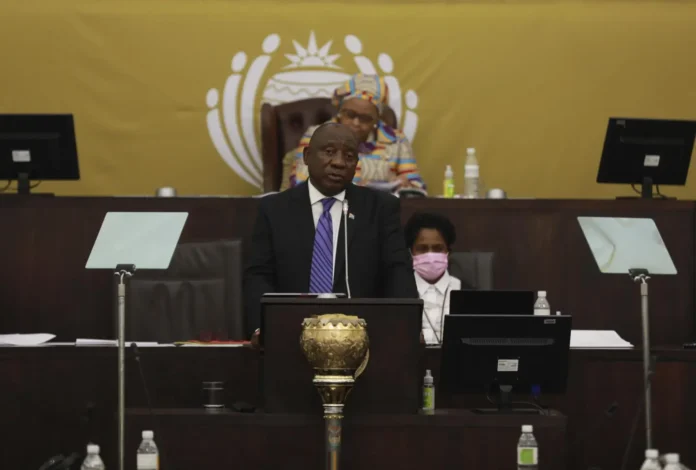
Cyril Ramaphosa has moved to suspend his police minister and establish a commission of inquiry, after allegations that senior figures within South Africa’s policing system protected members of a criminal network in one of the most serious governance crises to confront his coalition government.
The decision comes amid mounting pressure following explosive claims made by KwaZulu-Natal’s top police commander, Lieutenant General Nhlanhla Mkhwanazi, who accused Police Minister Senzo Mchunu of dismantling a specialist investigative unit focused on political killings. According to Mkhwanazi, the unit’s closure helped shield politicians, prosecutors, senior police officials, and even members of the judiciary who were allegedly linked to a broader criminal syndicate responsible for several high-profile assassinations.
Mchunu, a close political ally of Ramaphosa, has denied all allegations. However, the claims triggered immediate political fallout, forcing the president to respond as tensions escalated within the governing coalition and raised broader concerns about the integrity of the country’s law enforcement institutions.
Coalition Tensions And Political Pressure
Ramaphosa’s announcement follows weeks of growing instability inside the coalition government formed after the African National Congress lost its outright parliamentary majority for the first time since the end of apartheid. The governing arrangement brought together the ANC and opposition parties in an uneasy power-sharing agreement that has increasingly shown signs of strain.
The allegations against Mchunu intensified existing friction with the Democratic Alliance, the coalition’s second-largest partner. The party has repeatedly accused the ANC of shielding senior officials facing corruption allegations while taking a harder stance on infractions involving opposition-aligned ministers.
Those tensions escalated further last month when Democratic Alliance leaders threatened to oppose key budget measures, warning that continued political conflict could undermine the government’s ability to function effectively.
Some coalition members have warned that the instability could push the government toward a fiscal impasse, raising concerns that delays in passing spending legislation could disrupt public services and government operations.
Commission To Probe Alleged Syndicate Infiltration
Ramaphosa said the newly established commission will investigate whether criminal syndicates have infiltrated law enforcement, intelligence services, and other parts of the criminal justice system.
The inquiry will also examine whether senior officials within these institutions assisted criminal groups or benefited from their activities. The president framed the move as part of a broader effort to restore public confidence in the justice system.
“We are affirming our commitment to the rule of law, to transparency and to accountability,” Ramaphosa said, adding that the government is working to strengthen public safety institutions amid rising concern over organized crime.
Allegations Of Deep Institutional Capture
At the center of the controversy are claims that a politically sensitive investigative unit focused on killings linked to political rivalries was deliberately shut down to protect individuals tied to organized crime.
According to General Mkhwanazi, the dismantling of the unit removed a key mechanism for investigating politically motivated assassinations that have long plagued parts of the country, particularly in KwaZulu-Natal, where violence linked to local political competition has been widely documented.
The allegations have added to long-standing concerns among analysts and civil society groups about the extent to which criminal networks may have embedded themselves within segments of South Africa’s policing structures.
Strains Within The Governing Alliance
The crisis has further exposed divisions within the fragile governing arrangement between the ANC and the Democratic Alliance, which have frequently clashed despite sharing power at national level.
Democratic Alliance leaders have argued that the ANC has not acted decisively enough against officials facing allegations of corruption or misconduct, while ANC leaders accuse their coalition partners of using political pressure tactics that risk destabilizing government operations.
One coalition member, Songezo Zibi of Rise Mzansi, described the situation as increasingly unstable, warning that political actors were failing to act with the coordination required to sustain effective governance.
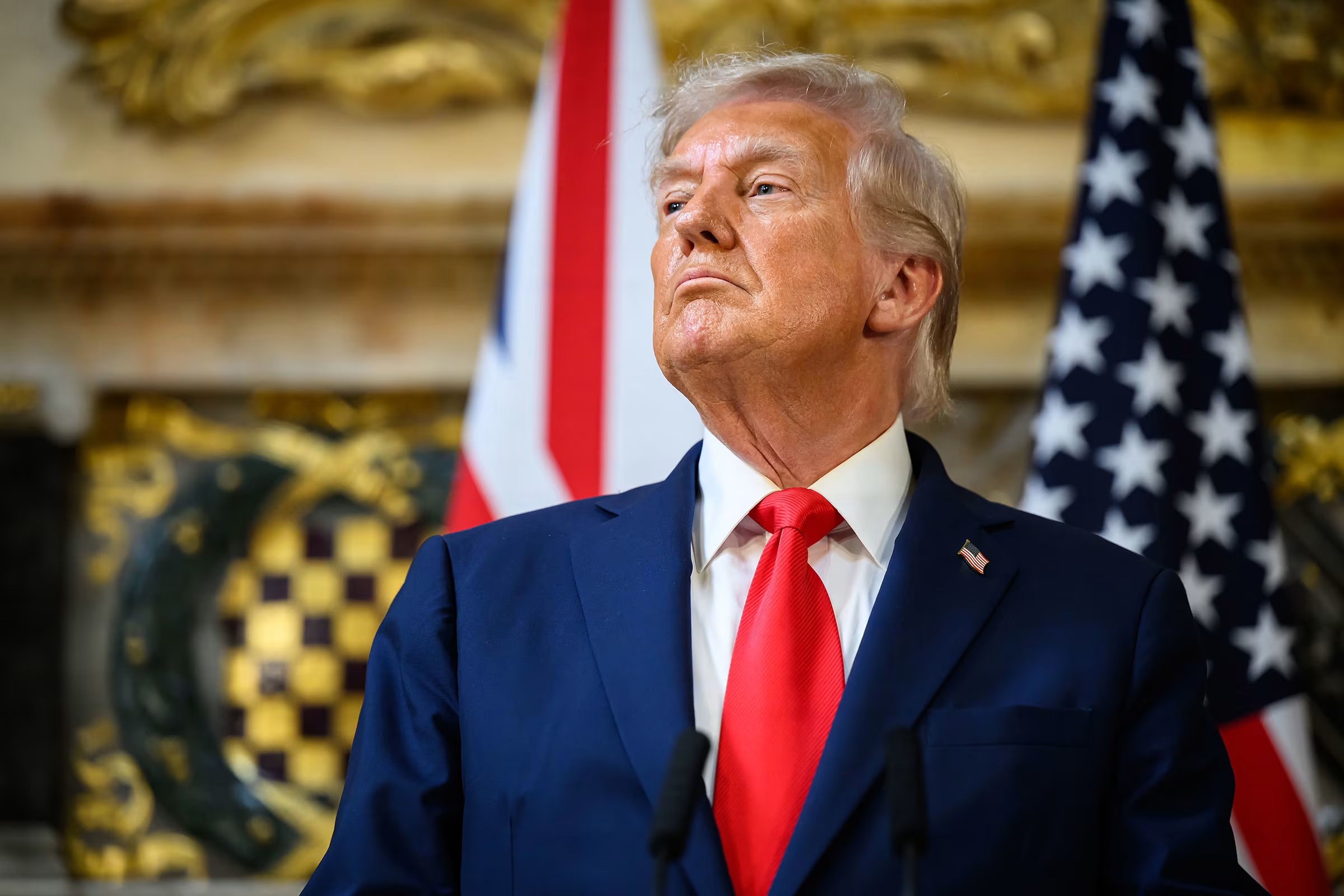
The political uncertainty comes at a time when South Africa is also grappling with external economic pressures, including newly announced trade tariffs by U.S. President Donald Trump on South African imports. Ramaphosa’s administration has been seeking to stabilize trade relations while maintaining investor confidence.
Analysts say the allegations of deep institutional infiltration, combined with political instability, risk undermining efforts to attract foreign investment and strengthen economic growth, particularly in a country already facing high unemployment and infrastructure challenges.
 Growing Test For Ramaphosa’s Leadership
The unfolding crisis represents one of the most significant tests of Ramaphosa’s presidency since he took office, placing pressure on his administration to demonstrate both political control and institutional accountability.
While the inquiry is intended to restore confidence in law enforcement, it also underscores the fragility of the coalition government and the growing complexity of managing competing political interests within it.
For now, the commission’s findings are expected to shape the next phase of South Africa’s political landscape, with potential consequences for both the stability of the government and the credibility of its criminal justice system.