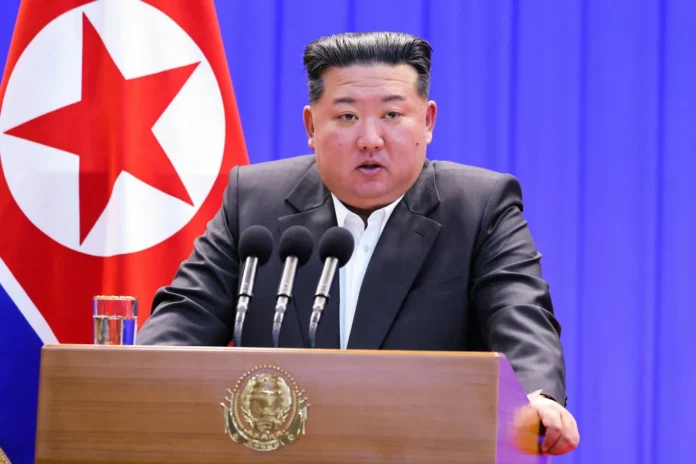
North Korea has revised its constitution to formally define its territory as bordering South Korea and remove longstanding references to Korean reunification, according to a draft of the amended text reviewed by Reuters. The move further entrenches leader Kim Jong Un’s policy of treating the two Koreas as separate and hostile states.
The constitutional revision, believed to have been adopted during a March session of the Supreme People’s Assembly, North Korea’s rubber stamp legislature, represents a major symbolic and political shift in Pyongyang’s approach toward Seoul. Analysts say it reflects Kim’s effort to institutionalize a harder line policy that has steadily intensified in recent years amid worsening inter Korean relations.
According to the revised text, a new Article 2 states that North Korea’s territory includes land “bordering the People’s Republic of China and the Russian Federation to the north and the Republic of Korea to the south,” along with related territorial waters and airspace. Experts noted that this is the first time North Korea has inserted a territorial clause directly into its constitution.
Lee Jung chul, a professor at Seoul National University, said the amendment effectively codifies Kim’s “two hostile states” doctrine into the country’s highest legal framework. He made the remarks during a briefing at South Korea’s Unification Ministry on Wednesday.
Reunification references removed
For decades, both Koreas maintained constitutional language that at least symbolically supported eventual reunification of the peninsula, despite long periods of political and military tension. North Korea’s latest amendment removes those references, marking a significant break from previous policy positions that framed reunification as a long term national objective.
Kim Jong Un had already signaled this shift in January 2024, when he called for constitutional changes defining South Korea as the North’s “primary foe and invariable principal enemy.” At the time, he also argued that North Korean territory should be explicitly recognized as separate from the South.
The new constitutional language appears to align closely with those earlier directives. However, analysts noted that while the revised text identifies South Korea as lying to the south of North Korean territory, it stops short of specifying an exact border line between the two states.
The omission is particularly notable because of longstanding disputes over maritime boundaries, especially the Northern Limit Line in the Yellow Sea. That maritime boundary has been a recurring source of military confrontations between the two Koreas over the years.
According to South Korean media reports, Lee Jung chul suggested Pyongyang may have deliberately avoided defining the exact border in order to prevent immediately escalating tensions or creating another flashpoint in inter Korean relations.
Nuclear authority formally embedded
The constitutional revision also further strengthens Kim Jong Un’s formal authority over the state and its military capabilities. The updated text designates Kim, in his role as chairman of the State Affairs Commission, as North Korea’s head of state.
Previous constitutional wording had described the chairman as the country’s supreme leader who represents the state, but the revised language appears intended to clarify and consolidate Kim’s constitutional position.
In another major development, the amended constitution explicitly states that command over North Korea’s nuclear forces rests with the chairman of the State Affairs Commission, formally placing authority over the country’s nuclear arsenal in Kim’s hands.
A separate defense clause describes North Korea as a “responsible nuclear weapons state” and states that the country will continue advancing its nuclear weapons programme to safeguard national survival and development rights, deter war and protect regional and global peace and stability.
Security analysts say the revisions reinforce North Korea’s determination to maintain and expand its nuclear programme despite international sanctions and repeated calls from the United States and its allies for denuclearisation.
Relations with Seoul remain strained
The constitutional changes come as relations between Pyongyang and Seoul remain deeply strained. North Korea has adopted an increasingly confrontational posture toward South Korea in recent years, conducting missile tests, military drills and sharp rhetorical attacks.
At the same time, Pyongyang has rejected repeated overtures for dialogue from South Korean President Lee Jae Myung, further dimming prospects for renewed diplomacy.

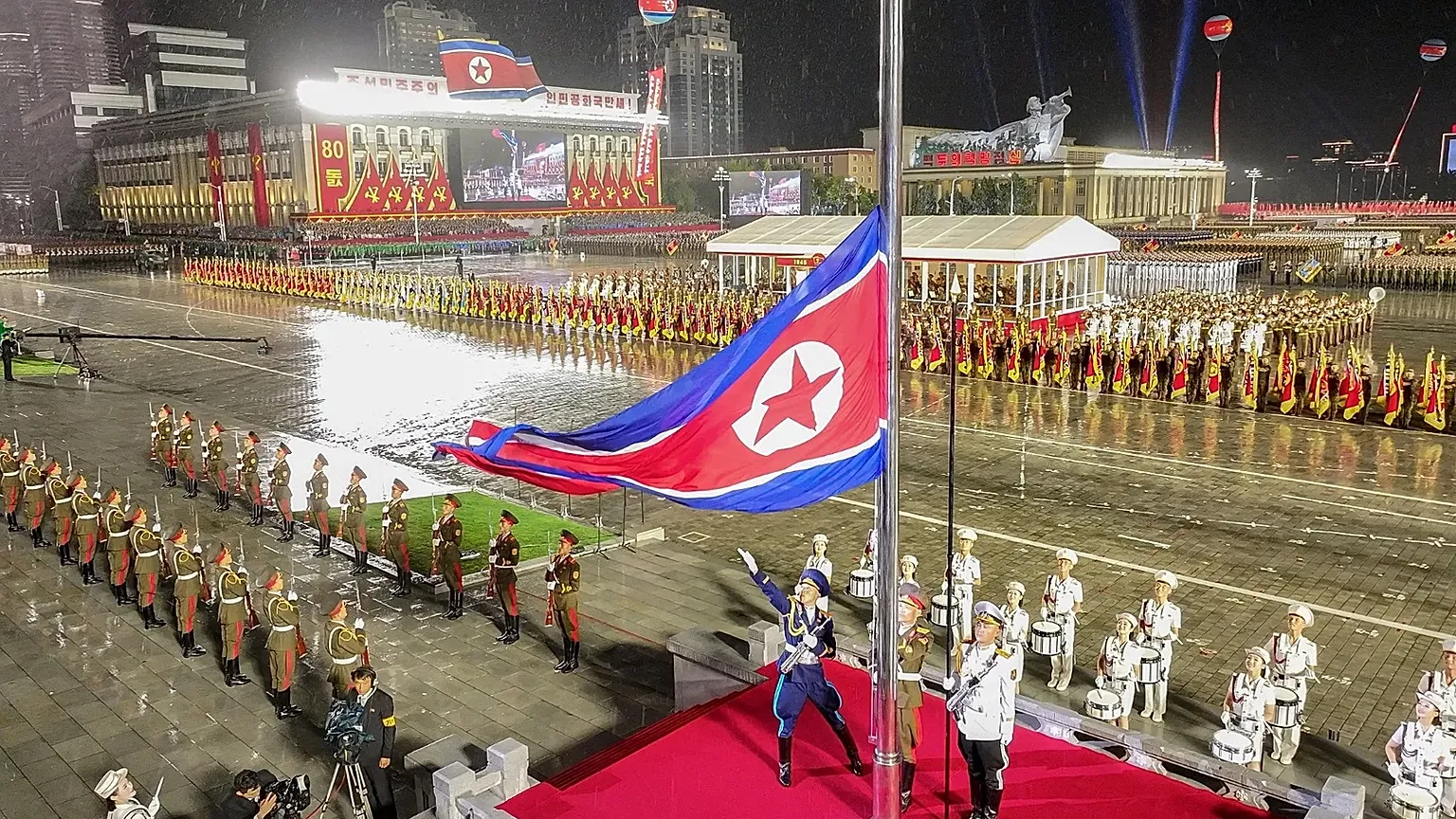
Observers say the latest constitutional amendments suggest North Korea is moving away from even symbolic commitments to reunification and instead attempting to redefine the Korean Peninsula as permanently divided between two rival sovereign states.
North Korea’s permanent mission to the United Nations did not immediately respond to requests for comment regarding the constitutional revisions.