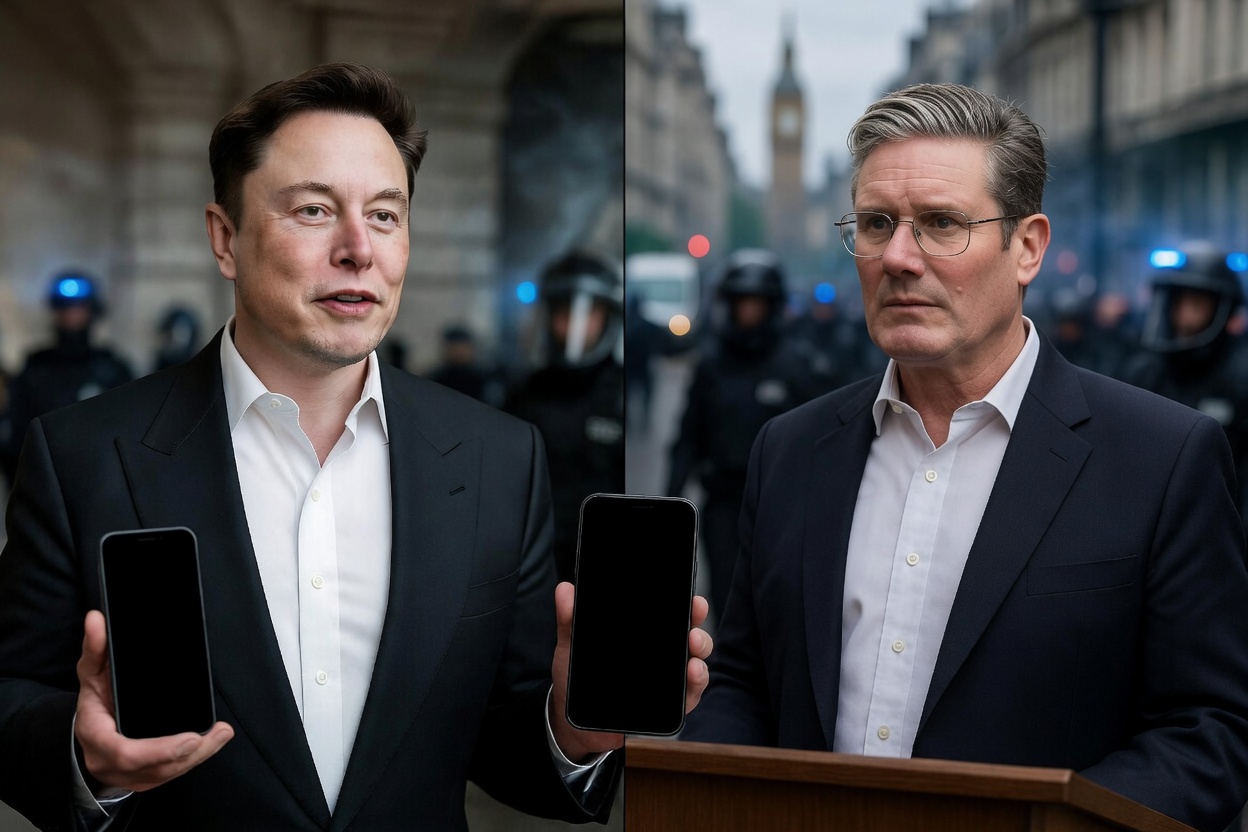
Tech billionaire Elon Musk has publicly challenged Prime Minister Sir Keir Starmer after the Tesla and X owner suggested that “civil war is inevitable” in response to scenes of violent disorder in the United Kingdom.
Musk made the remark on X after a video circulated showing individuals launching fireworks at police officers during unrest that followed the fatal stabbing of three girls in Southport. The violence spread to several towns and cities across England and parts of Northern Ireland, with authorities blaming misinformation online, far-right agitators and anti-immigration sentiment for fueling the disorder.
Downing Street swiftly rejected Musk’s comment, saying there was “no justification” for suggesting civil war and arguing that social media platforms have a responsibility to prevent the spread of harmful content and incitement.
The dispute escalated when Musk responded directly to a post by Starmer condemning attacks on mosques and Muslim communities. Musk wrote: “Shouldn’t you be concerned about attacks on all communities?” He later shared another video purporting to show someone being arrested over online comments, asking: “Is this Britain or the Soviet Union?”
Musk also appeared to endorse criticism of British policing, stating that the police response “does seem one-sided.”
Speaking during a visit after emergency meetings on the unrest, Starmer declined to engage directly with Musk’s criticism, saying his priority was restoring public order.
“My focus is on ensuring our communities are safe. That is my sole focus. It’s very important for us all to support the police in what they’re doing,” the prime minister said.
Starmer also warned that those involved in the riots, whether participating in the violence or encouraging it online would face swift justice, saying substantial sentences could be handed down within days.
Justice Minister Heidi Alexander described Musk’s comments as “totally unjustifiable” and “pretty deplorable,” rejecting claims that police were applying the law unevenly. She said allegations of “two-tier policing” were baseless and unfair to officers working to restore order.
The government has also intensified pressure on major technology companies. Officials say social media platforms have a moral and legal responsibility to curb the spread of false information and content that incites violence. Ministers have indicated that online activity originating outside the UK is also being monitored as part of investigations into the unrest.
Technology Secretary Peter Kyle said he had met representatives from X, Meta, Google and TikTok to emphasize their responsibility to help prevent the spread of hateful misinformation and content encouraging criminal activity.
Separately, the Chartered Institute for IT (BCS) called on communications regulator Ofcom to use its powers under the Online Safety Act to investigate platforms that fail to tackle harmful misinformation.
The organization argued that when online falsehoods contribute to public disorder, regulators should consider significant financial penalties where appropriate.