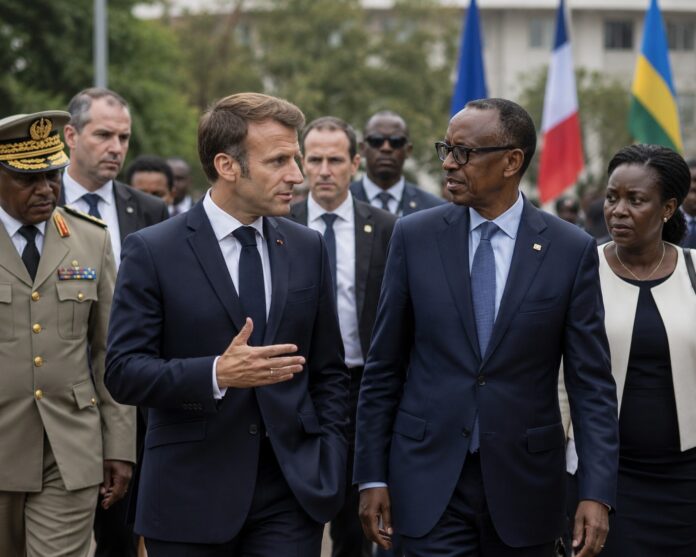
French President Emmanuel Macron has completed a high-profile tour of East Africa aimed at strengthening economic and diplomatic ties as Paris seeks to redefine its relationship with the continent following a series of setbacks in its traditional sphere of influence.
The trip took Macron to Egypt, Kenya and Ethiopia, culminating in talks with African leaders, business executives and officials from the African Union.
The centerpiece of the visit was the two-day Africa Forward Summit in Nairobi, co-hosted by Macron and Kenyan President William Ruto. More than 30 African delegations attended the gathering, which focused on investment, financial reform, innovation and economic cooperation.
The summit marked a significant departure from France’s traditional Africa policy. It was the first major France-Africa summit held in a predominantly English-speaking African country, reflecting Paris’s efforts to expand its engagement beyond its former colonies in West and Central Africa.
During the meeting, Macron announced €23 billion ($27 billion) in planned investments across Africa, including €14 billion from French public and private entities and €9 billion from African partners. The funding is expected to target sectors such as renewable energy, agriculture, digital infrastructure and artificial intelligence.
Speaking in Nairobi, Macron described the relationship France seeks with Africa as a “partnership of equals” and argued that future cooperation should be based on investment and economic opportunity rather than aid dependency. African leaders attending the summit also called for reforms to global financial systems, arguing that African countries continue to face unfair borrowing costs due to outdated perceptions of risk.
The tour comes at a challenging moment for French diplomacy on the continent. Relations between Paris and several West African nations have deteriorated sharply in recent years following military coups in countries including Mali, Burkina Faso and Niger. French military forces have been expelled from several countries in the Sahel region, ending security partnerships that had formed a central pillar of France’s Africa policy for decades.
At the same time, other global powers have expanded their presence across Africa. Russia has deepened security cooperation with several military-led governments in the Sahel, while China has continued to strengthen its economic influence through infrastructure investment, trade and financing initiatives.
Analysts view Macron’s decision to focus on East Africa as a recognition of the continent’s shifting political and economic landscape. Kenya has emerged as one of Africa’s leading diplomatic and commercial hubs, while Ethiopia hosts the African Union headquarters and remains central to continental diplomacy.

Macron concluded the trip in Addis Ababa, where he met Ethiopian officials, African Union leaders and United Nations Secretary-General António Guterres. Discussions focused on regional security, conflict resolution and calls for greater African representation in international institutions, including reform of the UN Security Council.
While French officials describe the tour as evidence of a new approach built on economic partnership and mutual interests, questions remain over whether Paris can reverse years of declining influence in parts of Africa. The visit nevertheless underscored France’s determination to remain a significant player on the continent as African nations increasingly diversify their diplomatic and economic relationships.