The U.S. Justice Department has subpoenaed four New York Times journalists who reported on security concerns surrounding a Qatari-donated aircraft intended to serve as the new Air Force One, escalating tensions between the Trump administration and the news media over national security leaks.
The subpoenas require the reporters to appear before a federal grand jury in Manhattan, prompting strong criticism from press freedom advocates and The New York Times, which says it intends to challenge the legal order in court.
The development has reignited debate over government efforts to identify confidential sources and the balance between protecting national security and safeguarding press freedom.
The four journalists subpoenaed are Julian E. Barnes, Eric Lipton, Tyler Pager and Eric Schmitt, all of whom contributed to reporting on security concerns involving the presidential aircraft donated by Qatar.
According to The New York Times, federal agents delivered some of the subpoenas directly to the reporters’ homes. The newspaper described the action as highly unusual and warned that compelling journalists to testify could undermine the ability of the press to gather information in the public interest.
The Justice Department later clarified that the reporters themselves are not the targets of the investigation. Instead, authorities are seeking to identify the individuals responsible for leaking classified or sensitive information to the media.
A Justice Department spokesperson said every administration has investigated unauthorized disclosures of national security information and emphasized that the focus remains on those responsible for leaking protected information rather than members of the press.
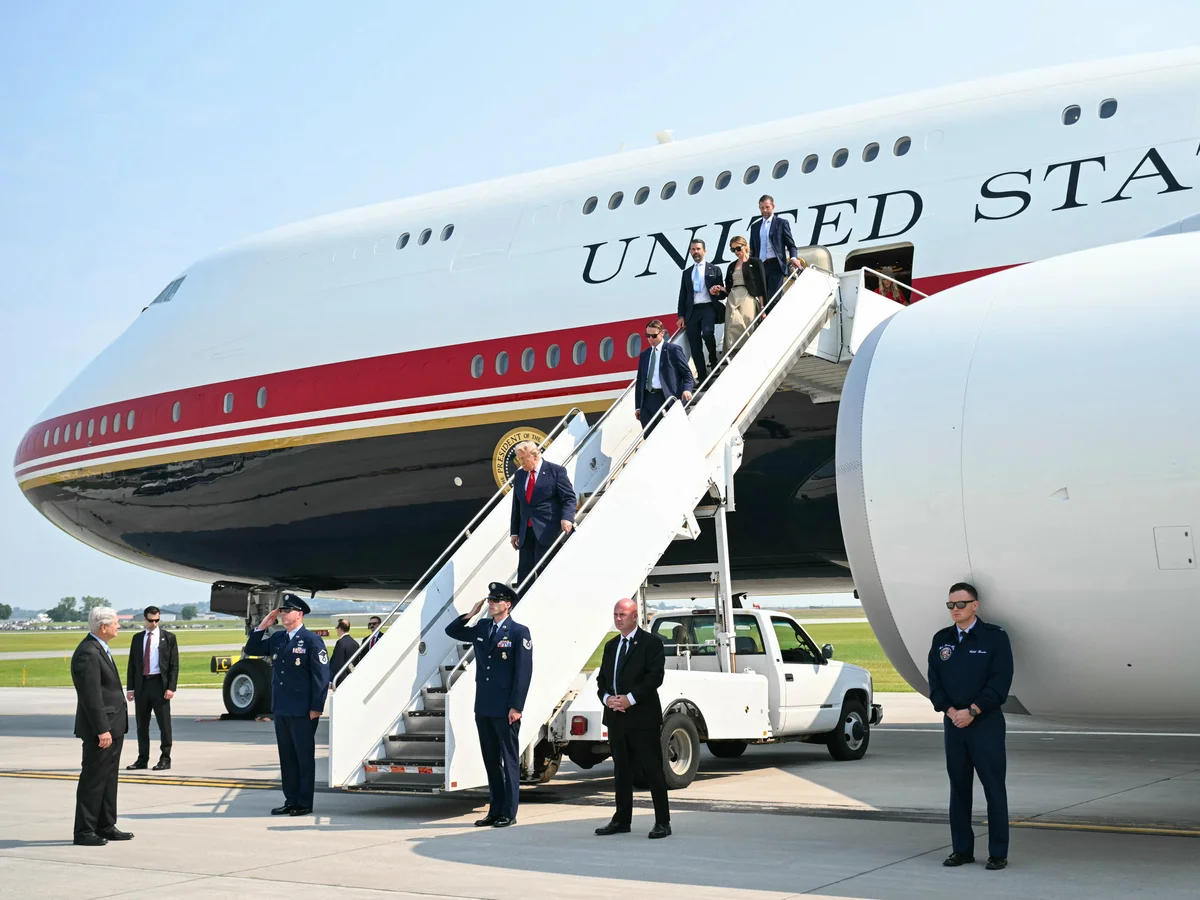
The investigation follows reports that President Donald Trump returned from a NATO summit aboard the older Air Force One after security officials expressed concerns about the recently acquired aircraft.
Reports indicated that the retrofitted plane donated by Qatar lacked some of the security features found on the traditional presidential aircraft, leading officials to recommend that Trump continue flying on the older Air Force One during his return journey.

The disclosure reportedly angered the president, who was said to be frustrated that details about the aircraft’s security limitations became public.
Sources familiar with the matter said FBI Director Kash Patel met with White House officials to discuss the leak investigation before the subpoenas were issued. Patel also reportedly spoke with President Trump regarding the ongoing inquiry.
The latest subpoenas reflect the Trump administration’s continued effort to identify government officials responsible for leaking sensitive information.
President Trump has repeatedly criticized unauthorized disclosures to the media, arguing that leaks compromise national security and government operations.
Earlier this year, several major American newspapers were involved in legal disputes after federal authorities sought information from journalists as part of separate national security investigations.
The current case involving The New York Times represents another significant confrontation between the administration and the news media over confidential government reporting.
The New York Times has vowed to fight the subpoenas, describing them as a serious threat to press freedom.
David McCraw, the newspaper’s senior newsroom attorney, condemned the move, arguing that federal agents serving subpoenas at journalists’ homes sends a troubling message about government efforts to discourage investigative reporting.
He said attempts to compel reporters to reveal information threaten the constitutional protections that allow journalists to report on matters of public importance without fear of intimidation.
The newspaper also disclosed that before publishing its report, a senior FBI official requested that the story not be released because of unspecified national security concerns. However, the official reportedly declined to explain the exact nature of those concerns.
Several organizations that advocate for press freedom criticized the subpoenas, warning that they could discourage whistleblowers from exposing matters of public interest.
Stephen J. Adler, chairman of the Reporters Committee for Freedom of the Press, said independent journalism enables citizens to understand how their government operates and make informed decisions.
He warned that efforts to force journalists into criminal investigations could weaken public access to important information and damage constitutional protections for a free press.
The Freedom of the Press Foundation also criticized the subpoenas. Its chief of advocacy, Seth Stern, argued that investigations targeting journalists often focus more on protecting the government’s reputation than safeguarding national security.
The subpoenas were issued by Jay Clayton, the U.S. Attorney for the Southern District of New York, who was recently nominated by President Donald Trump to serve as the next Director of National Intelligence.
The case is expected to attract significant legal and political attention as it raises important questions about government transparency, national security investigations and the constitutional protections afforded to journalists reporting on matters of public concern.