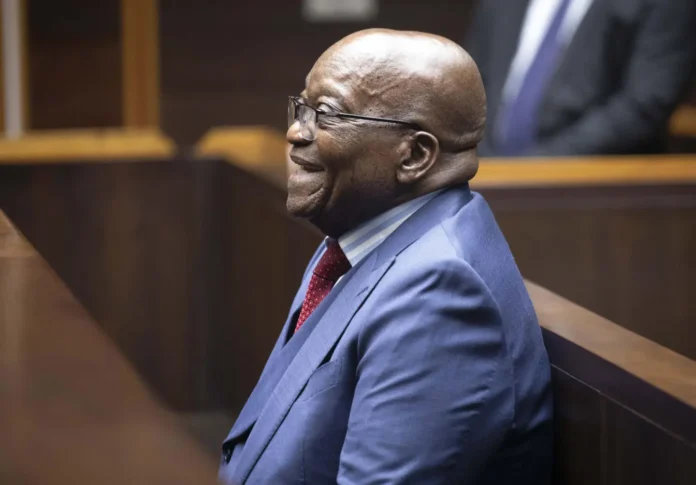
The judge presiding over former South African President Jacob Zuma’s corruption trial has recused himself, citing concerns that continuing in the case could raise questions about judicial impartiality toward the former leader.
The decision marks another delay in a long-running legal saga that has already seen multiple judges and repeated postponements. Zuma, who resigned as president in 2018 amid corruption allegations, remains a central figure in South African politics.
Arms Deal Corruption Allegations
Zuma was formally charged in 2021 with multiple counts of corruption, racketeering, fraud, tax evasion, and money laundering linked to a multibillion-dollar arms deal signed in 1999 between South Africa and French defense company Thales, formerly known as Thomson-CSF.
Prosecutors allege that Zuma accepted bribes to provide political protection for the deal while he was a rising political figure and later deputy president, before taking office as president in 2009.
He has pleaded not guilty to all charges.
Delays and Legal Challenges
Although the trial officially began in 2021, no evidence has yet been heard due to repeated legal challenges from Zuma’s defense team. These include efforts to have the lead prosecutor removed on grounds of alleged bias.
The case has now been reassigned after the previous judge stepped aside, adding further delay to proceedings that have already stretched across decades since Zuma was first implicated.
Separate Legal Proceedings
Zuma is also pursuing separate legal action against the prosecutor and a journalist over the alleged leak of his medical records.
In addition, he is appealing a 2021 contempt of court conviction for refusing to testify before a state corruption inquiry, for which he received a 15-month prison sentence. His imprisonment in that case triggered nationwide unrest that left more than 300 people dead in South Africa’s worst violence since apartheid.
He was later released on medical parole, though that decision has itself been challenged in court.
Political Fallout
Zuma’s legal troubles continue to have major political implications. Despite his conviction, he retains significant support in parts of the country and influence within South African political structures.
His case is widely seen as part of a broader political struggle with current President Cyril Ramaphosa, whose administration has also faced scrutiny over a separate scandal involving undeclared foreign currency stolen from his farm in 2020.