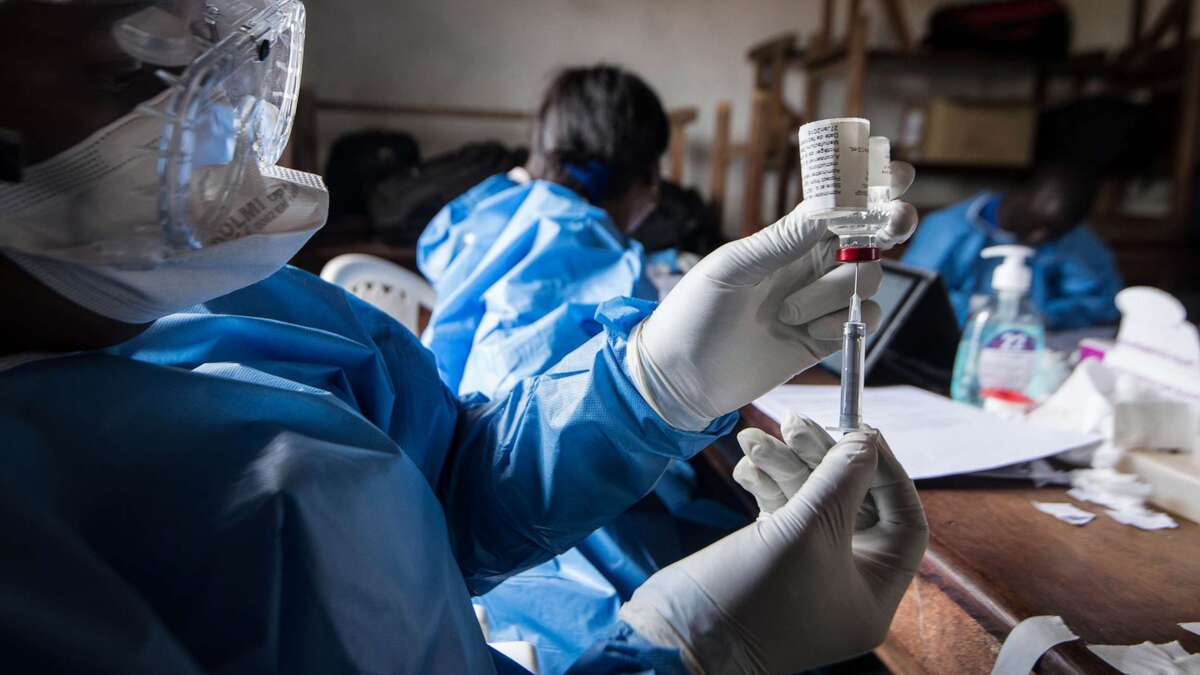
Researchers in the Democratic Republic of Congo said on Tuesday that they have begun enrolling participants in a clinical trial testing Gilead Sciences’ experimental antiviral obeldesivir as a post-exposure treatment for the ongoing outbreak of the Bundibugyo strain of Ebola in Congo and neighboring Uganda.
The trial, known as EBO-PEP, is being led by Congo’s National Institute for Biomedical Research alongside France’s ANRS Emerging Infectious Diseases agency, with support from humanitarian aid groups the Alliance for International Medical Action and Medecins Sans Frontieres. Enrollment is taking place in Ituri province, the epicenter of the current Ebola outbreak, according to a joint statement from the partner agencies.
It is the first trial of its kind targeting the Bundibugyo strain of Ebola, one of several known variants of the virus that causes severe hemorrhagic fever and has repeatedly devastated communities in Central Africa. Health authorities have lacked a proven post-exposure option specifically evaluated against this strain, making the trial a significant step for outbreak response in the region.
The study is designed to determine whether giving the antiviral drug to people soon after exposure can prevent them from developing Ebola altogether. Researchers aim to enroll roughly 1,000 people aged 12 and older who have had high-risk contact with a confirmed Ebola case within the previous five days but have not yet developed symptoms. Those enrolled will be monitored daily for 21 days, with a final follow-up check at day 42.
Obeldesivir, an oral antiviral, has shown activity against filoviruses, the family of viruses that includes Ebola, in earlier pre-clinical studies, according to the agencies overseeing the trial. If effective, it could give health workers and family members of Ebola patients a new tool to blunt the virus’s spread in future outbreaks, easing reliance on containment measures such as quarantine and contact tracing alone.
Alongside the main trial, researchers have established a separate compassionate-use protocol under which Gilead’s injectable antiviral remdesivir will be offered to children under 12 and to pregnant or breastfeeding women exposed to the virus, groups excluded from the main study.
The project has secured initial funding of 3.4 million euros, or roughly $3.87 million, from the Global Health EDCTP3 partnership, backed by the European Commission, along with $1 million from the Africa Centres for Disease Control and Prevention. Africa CDC also said it helped secure an additional $5 million in funding commitments from South Africa and Congo.
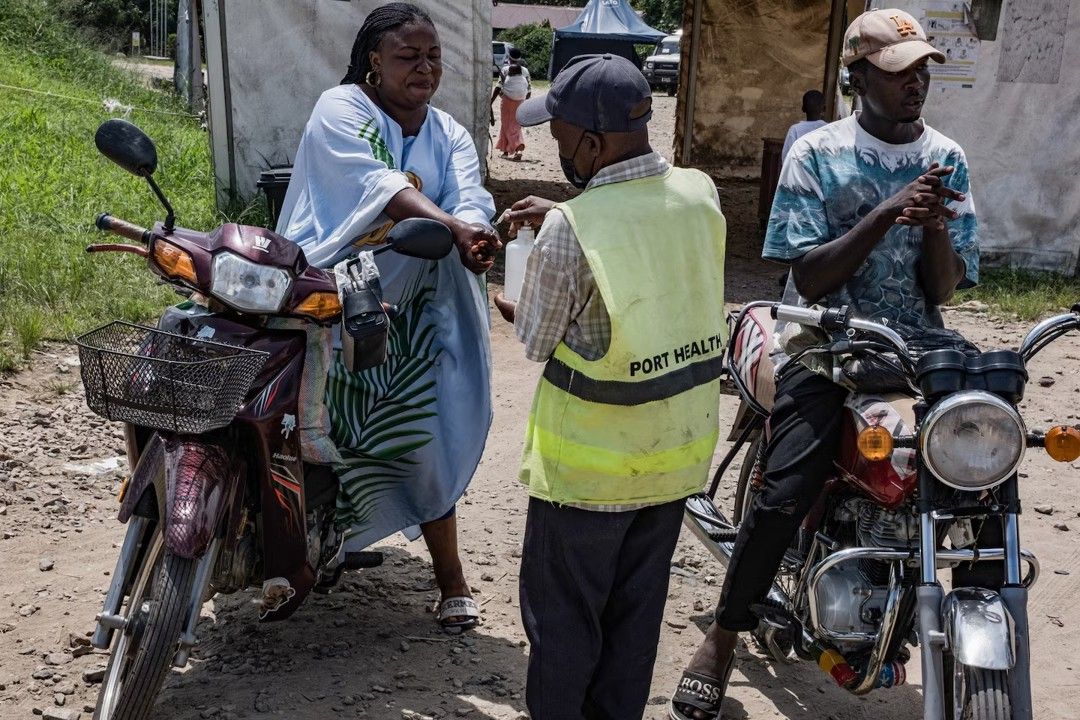
The Bundibugyo outbreak has continued to spread in eastern Congo for months, straining an already fragile health system in a region also grappling with conflict and displacement. According to government data, it has led to 1,963 confirmed Ebola cases in Congo, including 719 deaths. The virus has also crossed into neighboring Uganda, prompting authorities there to tighten border controls, including at the Mpondwe crossing in Kasese district, where officials have set up temperature checkpoints to screen travelers.
Health workers in the region have faced enormous strain, treating patients in isolation units while tracing and monitoring thousands of contacts who may have been exposed. Researchers say a proven preventive treatment could ease that burden by lowering the number of new Ebola cases stemming from known exposures, potentially slowing transmission chains before they widen further.
Officials involved say results will be closely watched not only in Congo and Uganda but across the wider region, where Ebola outbreaks have periodically emerged for two decades.

A successful outcome could eventually support wider approval of obeldesivir as a standard post-exposure treatment, giving responders another option beyond the vaccines and treatments already used against other Ebola strains. Researchers say enrollment will continue in the coming weeks as they work toward the target of 1,000 participants across affected communities in Ituri province.