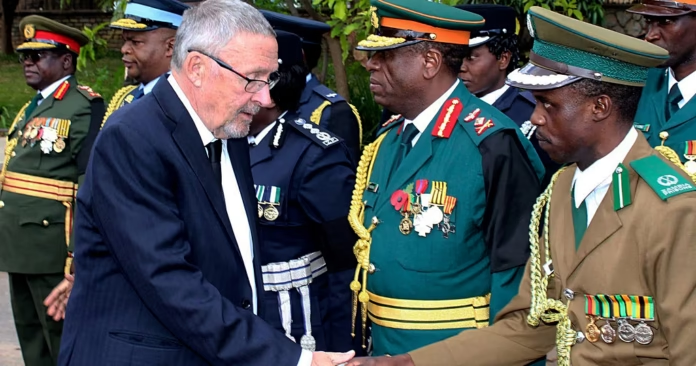
Iran’s political leadership is facing growing internal divisions as hardline factions openly challenge senior government officials following the death of Supreme Leader Ayatollah Ali Khamenei.
What initially appeared to be a period of national mourning has instead revealed deep disagreements over the country’s leadership, foreign policy and future direction. While President Masoud Pezeshkian and other senior officials continue to manage state affairs, influential conservative groups accuse them of abandoning revolutionary principles and weakening the authority of the country’s new leadership.
The unfolding Iran Power Struggle has become one of the country’s most significant political challenges in recent years.
Iran Power Struggle Intensifies After Funeral Ceremony
Public tensions became increasingly visible during funeral ceremonies held for the late supreme leader in Tehran.
Instead of expressing only grief, some mourners directed angry chants toward senior government officials, accusing them of compromising with foreign powers rather than defending Iran’s interests.
Foreign Minister Abbas Araghchi reportedly faced hostility from sections of the crowd and was forced to leave one gathering after protesters shouted accusations against him over his role in negotiations with the United States.
The incidents highlighted the growing frustration among hardline supporters who believe Iran’s leadership has made unacceptable concessions after years of confrontation with Washington.
A major source of political uncertainty stems from the limited public appearances of Mojtaba Khamenei, who succeeded his father as supreme leader.
His absence from public life has fueled widespread speculation inside Iran, with critics questioning who is truly directing the country’s affairs.
In the meantime, President Pezeshkian, Parliament Speaker Mohammad Bagher Ghalibaf and Foreign Minister Abbas Araghchi have emerged as the most visible figures managing government decisions, diplomacy and national security.
Some conservative lawmakers argue that these officials are assuming powers that should remain under the authority of the supreme leader and parliament.
Several influential hardliners have publicly claimed that government leaders are attempting to reshape Iran’s political system while the country’s highest authority remains largely out of public view.
Disagreements Over the United States Agreement
The Iran Power Struggle has been fueled further by disagreements over the agreement reached with the United States following months of military tensions.
Moderate officials defended the negotiations as necessary to reduce conflict and ease economic pressure through sanctions relief.
However, hardline groups argue that accepting any compromise with Washington represents a betrayal of the ideals established during the 1979 Islamic Revolution.
Many conservatives believe Iran should have responded more aggressively to the killing of the former supreme leader rather than pursuing diplomatic engagement.
Their criticism has increasingly targeted the officials responsible for negotiating the agreement.
Political Pressure Mounts on Government Officials
The political divide has expanded beyond public criticism.
Several influential conservative figures have accused senior officials of ignoring guidance from the country’s leadership and concentrating too much authority within the Supreme National Security Council.
Some hardline lawmakers who opposed the negotiations have recently lost influential parliamentary positions, a move political analysts view as an effort to reduce opposition within government institutions.
Observers say the internal reshuffle reflects an ongoing struggle between competing conservative factions rather than a conflict between government and opposition groups.
Security analysts believe Iran’s Revolutionary Guards have assumed a more prominent role since the recent conflict with Israel and the United States.
As regional tensions continue, military and security institutions appear to be exercising greater influence over national decision making.
While civilian leaders remain responsible for diplomacy and government administration, security agencies are playing an increasingly central role in shaping strategic policy.
This shift has strengthened some political figures while weakening others, contributing to the broader Iran Power Struggle.
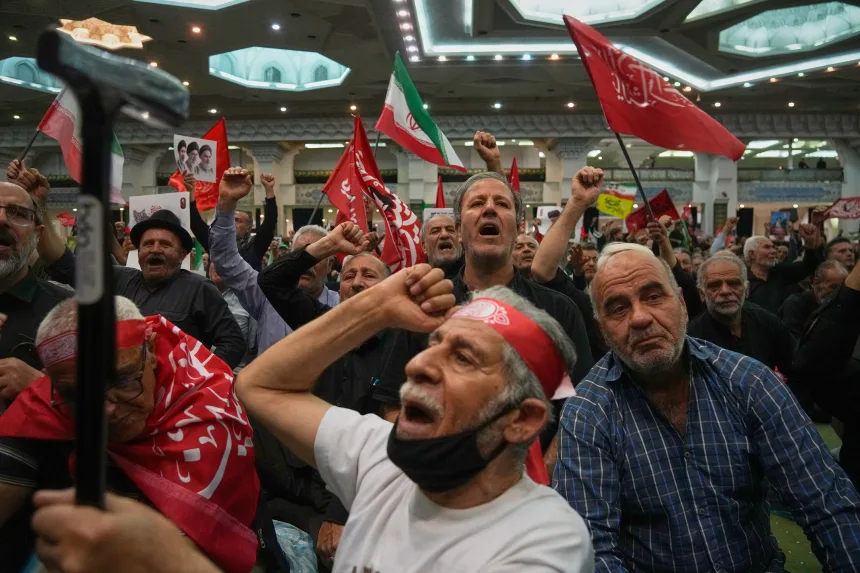
Hardline Groups Push for Tougher Action
Many conservative activists continue to reject any easing of tensions with the United States.
Some have called for stronger military action against American interests in the region and insist Iran should abandon efforts to preserve diplomatic agreements.
Others have criticized officials they believe are placing economic stability ahead of revolutionary ideology.
Political analysts note that although these factions may not represent the majority of Iranian society, they continue to hold considerable influence within parliament, state institutions and sections of the country’s media.
What the Political Divisions Mean for Iran
Despite the growing public disagreements, many analysts believe Iran’s leadership remains united on several key national priorities.
These include:
- Preserving the country’s political system.
- Seeking relief from international sanctions.
- Maintaining strategic influence across the Middle East.
- Protecting Iran’s control over critical regional waterways.
However, disagreements over how to achieve these objectives continue to expose significant divisions among senior political figures.
The coming months are expected to determine whether the country’s leadership can maintain internal unity while managing mounting domestic and international pressure.
The Iran Power Struggle reflects more than a disagreement over foreign policy. It has exposed competing visions for the country’s future following one of the most significant leadership transitions in decades.
As hardliners intensify pressure on senior officials and questions remain about the new supreme leader’s public role, Iran enters a period of political uncertainty that could shape both its domestic governance and international relations for years to come.