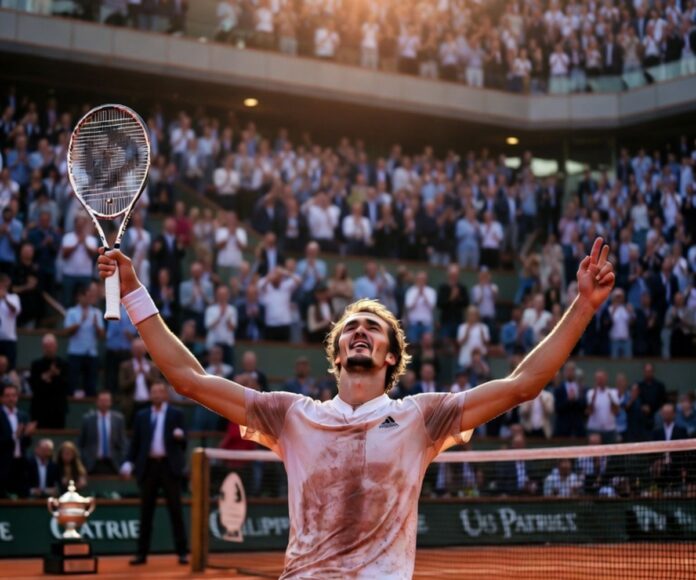
Alexander Zverev’s long and often painful wait for Grand Slam glory is finally over. The German world No. 3 claimed his first major title on Sunday at Roland Garros, defeating Italian No. 10 seed Flavio Cobolli in a grueling five-set final that ended 6-1, 4-6, 6-4, 6-7, 6-1. This came in a moment when many sport fans are anticipating for upcoming FIFA World Cup tournament.
The victory was met with tears and relief from Zverev, who collapsed to the clay of Court Philippe-Chatrier the moment Cobolli’s last shot sailed long, a release of years of pent-up expectation and heartbreak.
At 29 years old, Zverev becomes the seventh-oldest man in tennis history to win a first major, and the first German man to lift a Grand Slam trophy since 1996. The triumph came after a string of devastating near-misses that had begun to define his career as much as his talent.
He blew a two-set lead over Dominic Thiem in the 2020 US Open final, fell in five sets to Carlos Alcaraz at Roland Garros in 2024 after leading by two sets to one, and was swept aside by Jannik Sinner in the 2025 Australian Open final. Sunday’s victory finally closed the chapter on that painful narrative.
His opponent, Cobolli, was a far less decorated rival than the three men who had previously denied Zverev on the biggest stage, but the 24-year-old Italian possessed enough mobility and clean ball-striking to make life uncomfortable.
The pair entered the final with a noticeable difference in preparation time. Zverev had dispatched Jakub Mensik in four sets on Saturday, while Cobolli received a walkover after compatriot Matteo Arnaldi withdrew through illness. That freshness did not translate into an early advantage for the Italian, however, as Zverev breezed through the opening set without conceding a single break point to his opponent.
The middle three sets proved far more contentious. Cobolli levelled the match with a commanding second set before Zverev stole the third with a crucial late break. A back-and-forth fourth set, in which Zverev briefly required attention for cramping, eventually reached a tiebreak.
Cobolli, despite squandering his first set point with a wild error, composed himself to take it and level the match at two sets apiece. In that moment, momentum appeared to have swung decisively toward the Italian.
Zverev, so often accused of folding when it matters most, refused to crumble. Cobolli, seemingly drained of energy and confidence, could not win a game as the German raced to a double break in the fifth set and never looked back.
The statistics told the story of a match Zverev controlled more than the score suggested. He won 50 winners to Cobolli’s 42, dominated nine-shot-plus rallies by 39 wins to 12, and landed 76 percent of first serves while winning 73 percent of those points.
His celebrated backhand was a consistent weapon throughout, and an improved forehand denied Cobolli the refuge in extended exchanges that he had been hoping to exploit. The tournament itself will be remembered as much for its absentees as its champion. Two-time defending champion Carlos Alcaraz withdrew before a ball was struck due to a wrist injury.
World No. 1 Jannik Sinner, the prohibitive favourite, cramped his way to an extraordinary second-round exit amid controversy over a medical timeout. Three-time Roland Garros champion Novak Djokovic fell to rising star Joao Fonseca in the third round. By the fourth round, Zverev was the only top-ten player left standing, navigating a path to the final that included no seeded opponent ranked inside the top 25 until the quarterfinals.
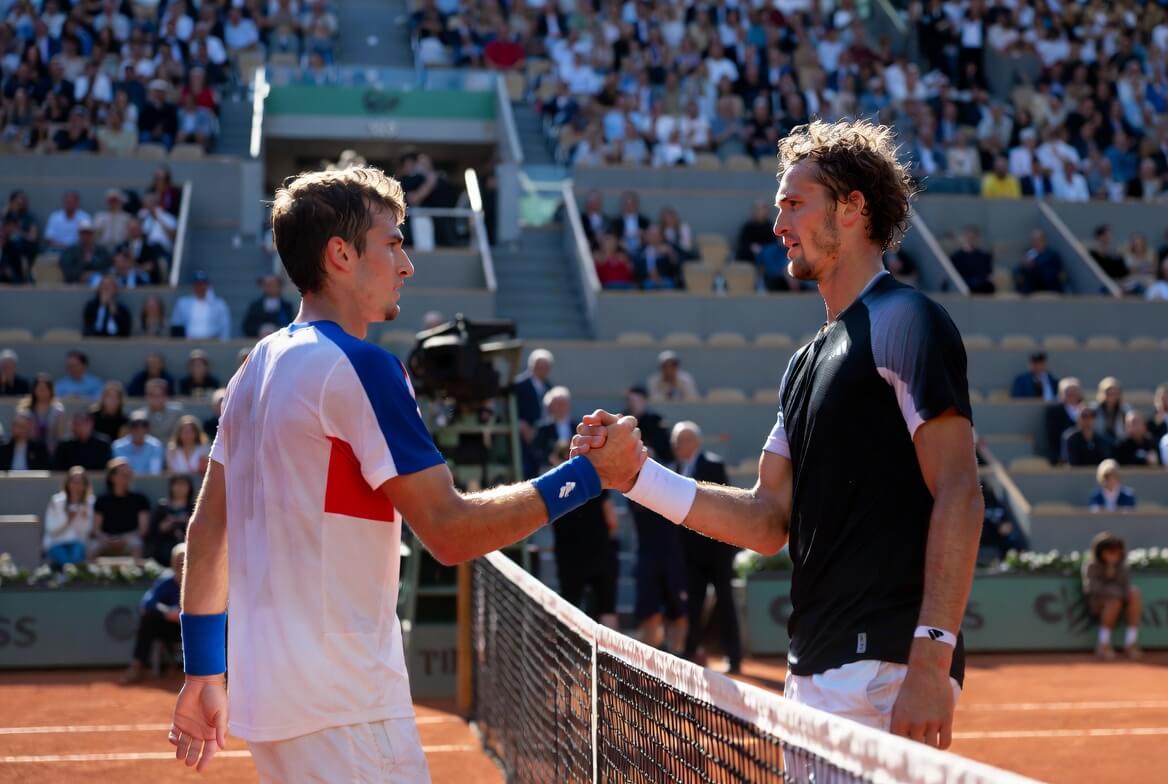

Some will question what the title says about the state of men’s tennis. Zverev himself would argue, with justification, that a champion can only beat the players put in front of him and that taking advantage of opportunity is itself a form of greatness.