Cuba’s once-thriving tourism industry is facing one of its most difficult periods in decades as Trump sanctions on Cuba continue to place heavy pressure on the island’s economy. Once known for its beautiful beaches, historic architecture, classic cars, and vibrant culture, the Caribbean nation is now struggling to attract international visitors.
The sharp decline in tourism has left hotels empty, businesses without customers, and thousands of workers uncertain about their future. As economic conditions continue to worsen, many experts believe the country’s heavy dependence on tourism has become one of its biggest vulnerabilities.
Trump Sanctions on Cuba Continue to Impact Tourism
The latest Trump sanctions on Cuba have intensified economic challenges already facing the country.
Following military action against Venezuela earlier this year, Cuba’s access to vital oil supplies was significantly disrupted. Additional restrictions affecting fuel shipments and foreign companies operating with Cuba have further weakened the island’s economy.
Several international airlines have reduced or suspended flights after fuel shortages made operations increasingly difficult. At the same time, some international hotel operators have reportedly ended partnerships due to new restrictions affecting businesses connected to Cuba’s military-controlled tourism sector.
The combination of travel disruptions and economic uncertainty has discouraged many potential visitors from choosing Cuba as a holiday destination.
Tourist Numbers Fall to Record Lows
The impact of Trump sanctions on Cuba is reflected in the country’s tourism statistics.
Government figures show that only about 360,000 international tourists visited Cuba during the first five months of 2026. That represents a dramatic decline of approximately 58 percent compared to the same period last year.
For comparison, neighboring Dominican Republic welcomed more than ten times that number of visitors during the same period, highlighting the growing gap between the two Caribbean destinations.
Many of Cuba’s famous tourist attractions now experience far fewer visitors than in previous years.
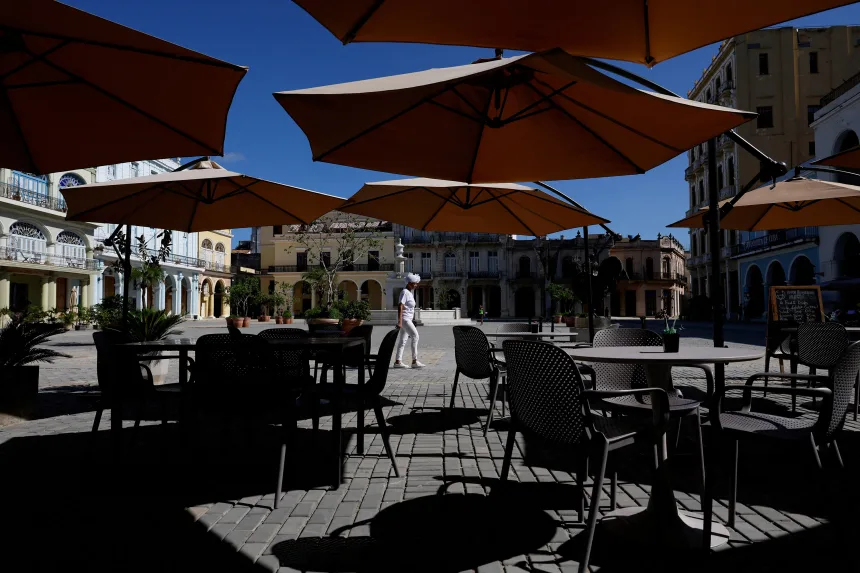
Historic districts such as Old Havana, once crowded with travelers exploring centuries-old colonial buildings, now appear unusually quiet.
Local musicians, restaurant owners, taxi drivers, souvenir vendors, and tour guides all report a significant drop in business.
Local Businesses Feel the Economic Pain
For thousands of Cubans, tourism has long provided an important source of income.
With fewer international visitors arriving, many small businesses are struggling to survive.
Musicians who once entertained crowds in Havana’s historic plazas now wait long periods before seeing a single tourist. Restaurants and family-owned guesthouses face similar difficulties as customer numbers continue to decline.
Some international tour companies have also suspended trips to Cuba, citing concerns about deteriorating economic conditions and the overall visitor experience.
Industry experts say many travelers are reluctant to visit a destination where shortages of food, fuel, transportation, and basic services have become increasingly common.
Humanitarian Concerns Grow Across the Island
As the tourism industry contracts, humanitarian concerns are also increasing.
Some foreign travel companies that previously organized vacations to Cuba have shifted their attention toward relief efforts.
Instead of bringing tourists, they are now helping provide food assistance to vulnerable communities while creating temporary work opportunities for local staff who have lost their tourism-related income.
Supporters of these initiatives acknowledge that the assistance cannot solve the country’s broader economic problems but believe it offers much-needed relief for families facing severe hardship.
Government Looks for New Solutions
Faced with declining tourism revenue, the Cuban government has announced new economic reforms aimed at attracting investment.
President Miguel Díaz-Canel recently said Cuban citizens, including those living abroad, could be allowed to manage government-owned hotels under new business arrangements.
Although the government would continue owning the properties, officials hope the changes could improve hotel operations and encourage greater private-sector participation.
The proposal represents one of the latest attempts to revive an industry that has traditionally generated valuable foreign currency for the country.
Economists Question the New Plan
Not everyone believes the government’s strategy will succeed.
Several economists argue that managing large international hotels requires significant financial resources, global business experience, established supply chains, and international marketing networks.
Many believe Cuba’s emerging private sector currently lacks the capital needed to replace experienced international hotel operators.
Experts also suggest the government invested too heavily in hotel construction over the past decade while allocating fewer resources to agriculture, healthcare, education, and domestic food production.
As tourism revenues continue to fall, those investment decisions are now facing renewed criticism.
Empty Hotels Become a Symbol of Cuba’s Crisis
Despite falling visitor numbers, construction continues on several hotel projects across Cuba.
Many existing hotels already operate far below capacity, leaving newly built facilities with few guests.
These mostly empty buildings have become a visible reminder of how quickly the country’s tourism strategy has unraveled.
What was once promoted as the foundation of Cuba’s long-term economic growth now reflects the wider financial difficulties affecting businesses and ordinary citizens alike.
What’s Next for Cuba’s Economy?
The future of Cuba’s tourism industry remains uncertain as Trump sanctions on Cuba continue to reshape the country’s economic outlook.
Supporters of the sanctions argue they are designed to encourage political and economic reforms by increasing pressure on the Cuban government.
Critics, however, believe the restrictions are having their greatest impact on ordinary citizens whose livelihoods depend on tourism and small businesses.
With visitor numbers continuing to decline and economic challenges mounting, Cuba faces difficult choices about how to rebuild one of its most important industries while navigating an increasingly uncertain international environment.
Whether new reforms succeed or additional policy changes emerge, the recovery of Cuba’s tourism sector will likely remain one of the country’s biggest economic challenges in the years ahead