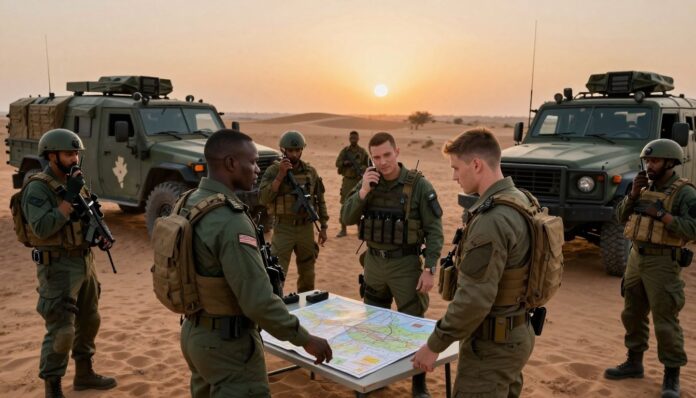
The killing of two senior Chadian generals in a Boko Haram ambush is more than another deadly attack in the Lake Chad Basin. It is a warning sign that one of Africa’s most militarized counterinsurgency campaigns may be entering a dangerous phase of territorial overstretch.
For more than a decade, governments surrounding Lake Chad have attempted to contain multiple insurgent movements across an enormous and unforgiving landscape stretching across Chad, Nigeria, Niger and Cameroon. Military offensives have repeatedly claimed victories against Boko Haram and its splinter factions, yet the insurgency continues to regenerate, adapt and spread.
The latest attacks suggest that despite years of operations, the region’s armed forces remain trapped in a cycle where territory can be temporarily controlled but rarely fully secured.
The illusion of control in the Lake Chad Basin
The Lake Chad Basin presents one of the most difficult military environments in Africa. Vast marshlands, isolated islands, seasonal waterways and porous borders create a geography that inherently favors insurgent warfare over conventional military control.
Governments can launch large scale offensives into militant strongholds, destroy camps and reclaim towns, but holding those areas over time requires enormous manpower, surveillance capacity and logistical coordination.
This is where the concept of territorial overstretch becomes critical.
Chad, Nigeria, Niger and Cameroon are attempting to secure an immense region with limited resources while simultaneously facing economic crises, political instability and humanitarian emergencies. Their militaries are stretched across thousands of kilometers of difficult terrain where insurgents can disappear into remote islands or cross borders faster than security forces can respond.
The result is a pattern seen repeatedly across the Sahel and Lake Chad region. Governments clear territory militarily but struggle to establish permanent governance, intelligence networks or economic stability afterward. Insurgent groups then return once military pressure eases.
This creates the illusion of territorial control rather than genuine stabilization.
Boko Haram’s evolution from insurgency to mobile warfare
The latest ambushes highlight how Boko Haram and the Islamic State West Africa Province have evolved tactically.
Rather than attempting to seize and govern large urban centers as they did during the height of Boko Haram’s territorial expansion in northeastern Nigeria a decade ago, militants increasingly rely on mobility, asymmetric warfare and psychological pressure.
Small highly mobile units now launch coordinated attacks on military convoys, isolated bases and supply routes before retreating into difficult terrain.
The killing of senior Chadian commanders demonstrates the sophistication of these tactics. Militants reportedly exploited intelligence gaps, terrain advantages and convoy vulnerabilities to isolate their targets. This was not simply a random assault. It reflected planning, surveillance and operational coordination.
Insurgent groups understand that they do not need to hold territory permanently to weaken the state. They only need to prove that governments cannot secure it consistently.
Each successful ambush undermines confidence in state authority, damages troop morale and forces governments to commit even more resources to already overstretched fronts.
The burden on Chad’s military machine
Chad has long been viewed as one of the Sahel’s strongest military powers. Its forces have played major roles in regional operations against Boko Haram, insurgencies in the Sahel and security missions backed by foreign allies.
However, Chad’s military reputation has come with growing strategic burdens.
The country faces simultaneous security pressures from Boko Haram around Lake Chad, instability spilling from Sudan and Libya, internal political tensions and economic strain at home. Maintaining deployments across multiple fronts places enormous pressure on manpower, logistics and command structures.
The deaths of two senior generals therefore carry symbolic and operational significance.
Experienced commanders are not easily replaced in prolonged insurgencies where local knowledge, tribal relationships and battlefield experience matter as much as conventional firepower. Their loss also exposes the vulnerability of senior leadership operating in increasingly dangerous and fluid environments.
The attack raises uncomfortable questions for Chad’s leadership. How long can the country sustain large scale regional military commitments while continuing to absorb casualties among elite commanders and frontline troops?
A regional coalition facing structural limits
The Multi National Joint Task Force, formed by Chad, Nigeria, Niger and Cameroon, was designed to create a coordinated regional response to Boko Haram and ISWAP.
In theory, the coalition prevents insurgents from exploiting borders to escape military pressure. In practice, however, the alliance faces serious structural limitations.
Each participating country has different political priorities, varying military capacities and domestic security pressures. Intelligence sharing is often inconsistent, logistics remain difficult and coordination across remote border regions is imperfect.
At the same time, insurgent groups operate with greater flexibility. They move fluidly across borders, adapt rapidly to military tactics and exploit areas where state presence is weakest.
This imbalance creates a paradox common in modern counterinsurgency warfare. States possess superior firepower and resources overall, yet insurgents retain strategic mobility and operational unpredictability.
Humanitarian collapse as a security multiplier
Territorial overstretch is not only a military issue. It is also a governance crisis.
Years of conflict have devastated communities around Lake Chad. Millions have been displaced, local economies have collapsed and access to education, healthcare and food security remains deeply limited in many areas.
Insecurity prevents governments from rebuilding infrastructure or extending services consistently into rural regions. This creates governance vacuums that insurgent groups exploit for recruitment, taxation and influence.
For many civilians living in isolated communities, the state is often absent except during military operations.
This dynamic is central to understanding why insurgencies survive even after repeated battlefield defeats. Military operations can weaken armed groups temporarily, but without functioning governance structures, economic opportunity and long term stability, insurgent movements continue finding space to regenerate.
The destruction of civilian infrastructure also deepens resentment and fear among local populations. In conflict zones where governments struggle to provide security or services, extremist narratives can gain traction more easily.
The broader Sahel crisis
The Lake Chad crisis is unfolding within a much wider pattern of instability across the Sahel.
From Mali and Burkina Faso to Niger and northern Nigeria, governments are confronting increasingly decentralized insurgencies operating across enormous territories where state authority is weak.
What connects these conflicts is not simply terrorism, but the growing inability of states to effectively govern peripheral regions under conditions of poverty, climate stress, demographic pressure and political fragility.
Territorial overstretch becomes both a military and political problem. States attempt to defend increasingly large unstable regions without the administrative capacity or economic resources needed to fully integrate them.
In this environment, military victories often become temporary achievements rather than lasting solutions.
The future of the Lake Chad conflict
The deaths of the two Chadian generals may ultimately represent more than a battlefield loss. They could symbolize a turning point in how regional governments approach the conflict.
Purely military solutions are proving insufficient against insurgent groups that thrive on mobility, weak governance and local instability. Regional forces may increasingly need to shift toward strategies focused not only on territorial control but also on governance, intelligence penetration, local partnerships and economic stabilization.
That will require far greater coordination between regional governments and sustained international support at a time when global attention is increasingly divided by other geopolitical crises.
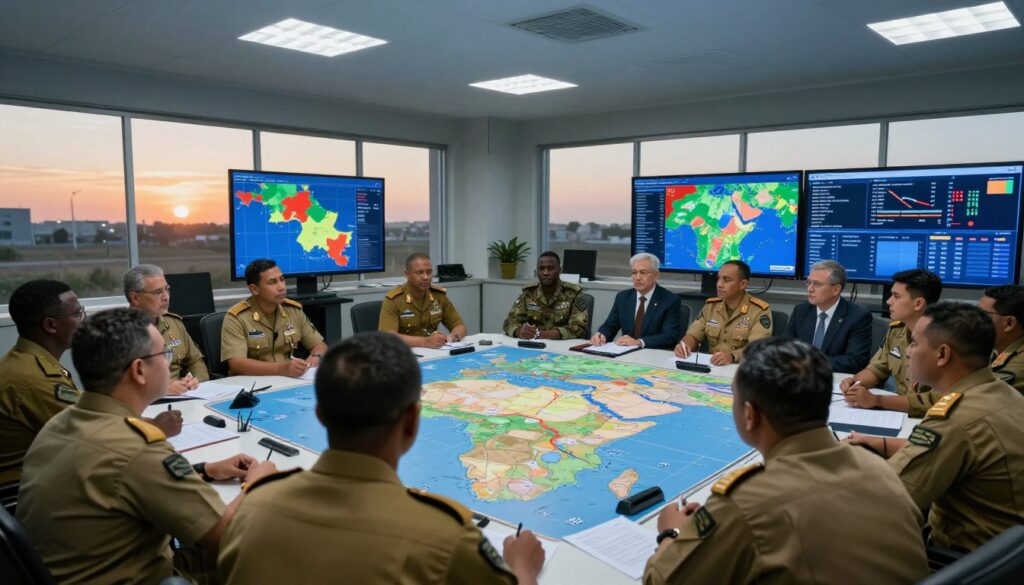
For now, the Lake Chad Basin remains caught in a dangerous equilibrium. Governments can prevent total insurgent takeover, but insurgent groups continue proving they are capable of surviving, adapting and inflicting serious damage.
The recent ambushes show that despite years of counteroffensives, the struggle for control of Lake Chad is far from over.